
Pula Observatory

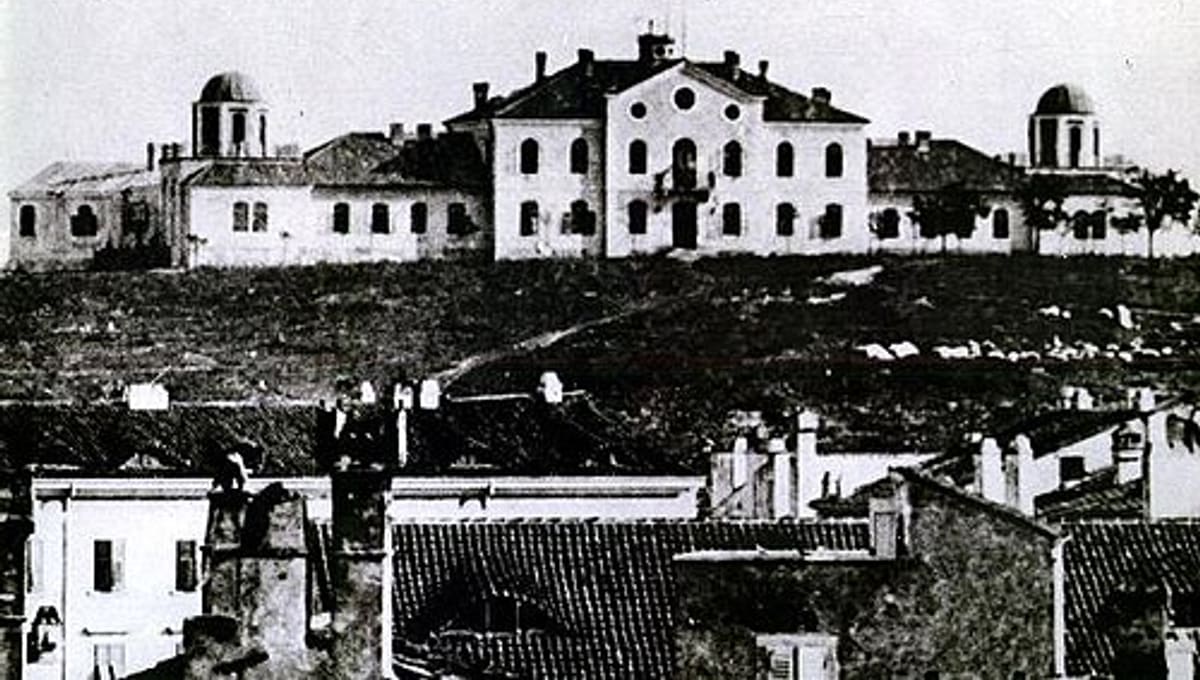
Image: Wikimedia Commons
Pula Observatory in Croatia is the oldest astronomical institution in the country still in operation, tracing its roots back to 1869 when Pula served as the main war port of the Austrian Empire.
About Pula Observatory
Originally founded as a Navy Observatory in 1869, Pula Observatory used instruments transferred from the Venice and Trieste observatories amid the wartime circumstances of the mid-19th century. Today it operates under the Astronomical Society Istria Pula, which has run the site since 1979.
History
Between 1871 and 1880, Austrian astronomer Johann Palisa carried out work at Pula that brought the observatory international recognition. In its early role it also provided time-keeping, chronometer, meteorological and geomagnetic services, and observers working from Pula are credited with discovering 28 planetoids, including Polana, Adria and Istria. The site was declared a cultural monument in 1983.
Telescopes & research
The observatory today holds two large telescopes alongside several portable telescopes, binoculars, telephoto lenses and filters, used for both public observing and ongoing amateur research.
Location & getting there
Pula Observatory is located in Pula, on Croatia's Istrian peninsula.
Visiting Pula Observatory
The Astronomical Society Istria Pula runs tours and lectures covering the observatory's history and activities, along with telescope observations for visitors who give prior notice.
See your named star from here
With two large telescopes and 28 planetoid discoveries already to its name, Pula Observatory has both the equipment and the experience to help track down a star named through Star Register. Name a star or find one already listed in the catalogue.
Opening hours and public-visit programs vary by season. Check Google Maps for current times before you travel.
Institutional and reference sources used to verify this guide.
Satellite imagery: Esri, Maxar, Earthstar Geographics

 48 km
48 km
 71 km
71 km
 87 km
87 km