
Panagjurishte Magnetic Observatory
Satellite imagery: Esri, Maxar, Earthstar Geographics
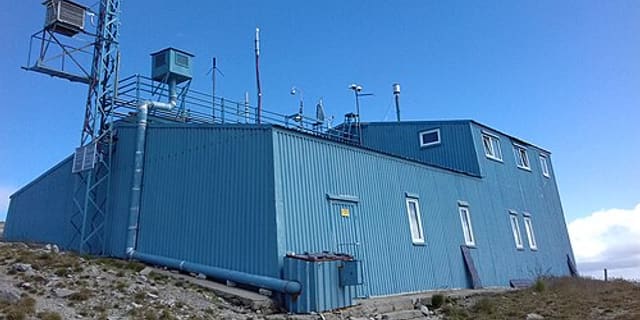
Panagjurishte Magnetic Observatory keeps a continuous watch on the Earth's magnetic field from a hillside site in central Bulgaria, at 556 metres above sea level.
About Panagjurishte Magnetic Observatory
Panagjurishte was the first geomagnetic observatory on the Balkan Peninsula and remains the only one of its kind in Bulgaria. It has recorded absolute measurements of the geomagnetic field since 1937 and today provides real-time variation data and long-term series used by researchers worldwide.
History
The observatory was established in 1937 and has operated continuously since, making it one of the longest-running geomagnetic monitoring stations in the region. It works in cooperation with Bulgaria's National Institute of Geophysics, Geodesy and Geography, and has partnered with the German research centre GFZ since 2005.
Telescopes & research
Rather than telescopes, Panagjurishte houses precision magnetometers that track the strength and direction of the Earth's magnetic field. It is a member of INTERMAGNET, the global network of standardised geomagnetic observatories, and contributes its data to international geophysical research.
Location & getting there
The station sits at 556 m elevation near Panagyurishte in central Bulgaria, in the country's mountainous interior.
Visiting Panagjurishte Magnetic Observatory
As a specialist geophysical research station, Panagjurishte does not advertise public visiting hours. Check with the National Institute of Geophysics, Geodesy and Geography for current access information before visiting.
See your named star from here
Panagjurishte's instruments are tuned to the planet beneath our feet rather than the stars above, but central Bulgaria's clear inland nights are still worth looking up at. Name a star to mark this part of the world, or explore other night-sky destinations via our observatories page and star catalogue.
Opening hours and public-visit programs vary by season. Check the official website and Google Maps for current times before you travel.
Institutional and reference sources used to verify this guide.
Satellite imagery: Esri, Maxar, Earthstar Geographics

 62 km
62 km
 103 km