
Oslo Observatory

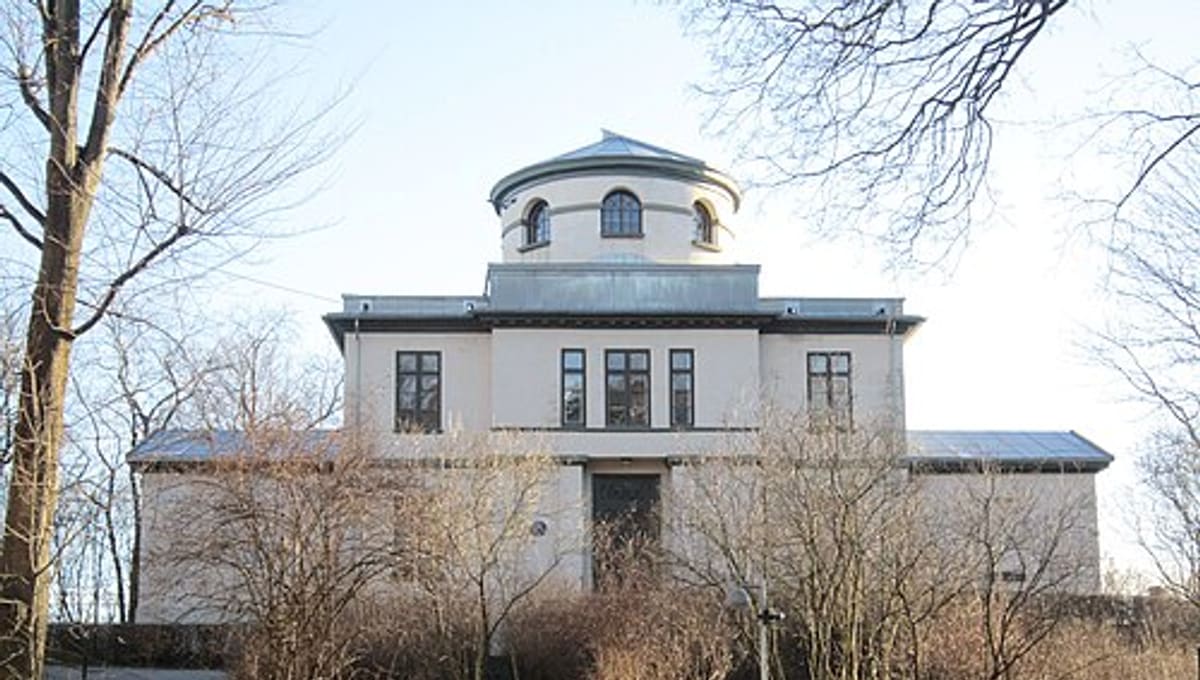
Image: Wikimedia Commons
In the heart of Oslo, Norway, stands one of the university's oldest buildings: Oslo Observatory, founded in 1815 as the country's first dedicated site for astronomical research.
About Oslo Observatory
The Astronomical Observatory at Christiania, now the University of Oslo, was founded in 1815, with its cornerstone laid in 1830 and the building completed in the early 1830s. It was one of the earliest buildings anywhere designed specifically for scientific education, and remains the oldest building belonging to the University of Oslo.
History
The observatory was designed by architect Christian Heinrich Grosch (1801-1865), and its first director was Christopher Hansteen (1784-1873). An inscription on the building reads Et nos petimus astra, meaning we too seek the stars. The observatory closed in 1934, and the site is now home to the university's Institute of Theoretical Astrophysics. It is recognised today as an astronomical heritage site.
Location and getting there
The observatory stands in central Oslo, Norway, on the University of Oslo's historic city-centre campus.
Visiting Oslo Observatory
As a historic building on an active university campus, the observatory is best viewed from the outside as part of a walk around the University of Oslo's older buildings. Check current University of Oslo visitor information before planning a visit inside.
See your named star from here
Nearly two centuries after Christopher Hansteen first sought the stars from this site, you can do the same. Name a star with Star Register and get its exact coordinates, ready to find in our catalogue or point a telescope at from anywhere with a clear night sky.
Opening hours and public-visit programs vary by season. Check Google Maps for current times before you travel.
Institutional and reference sources used to verify this guide.
Satellite imagery: Esri, Maxar, Earthstar Geographics

 under 1 km
 33 kmSolar
 289 kmSpace