
Harestua Solar Observatory

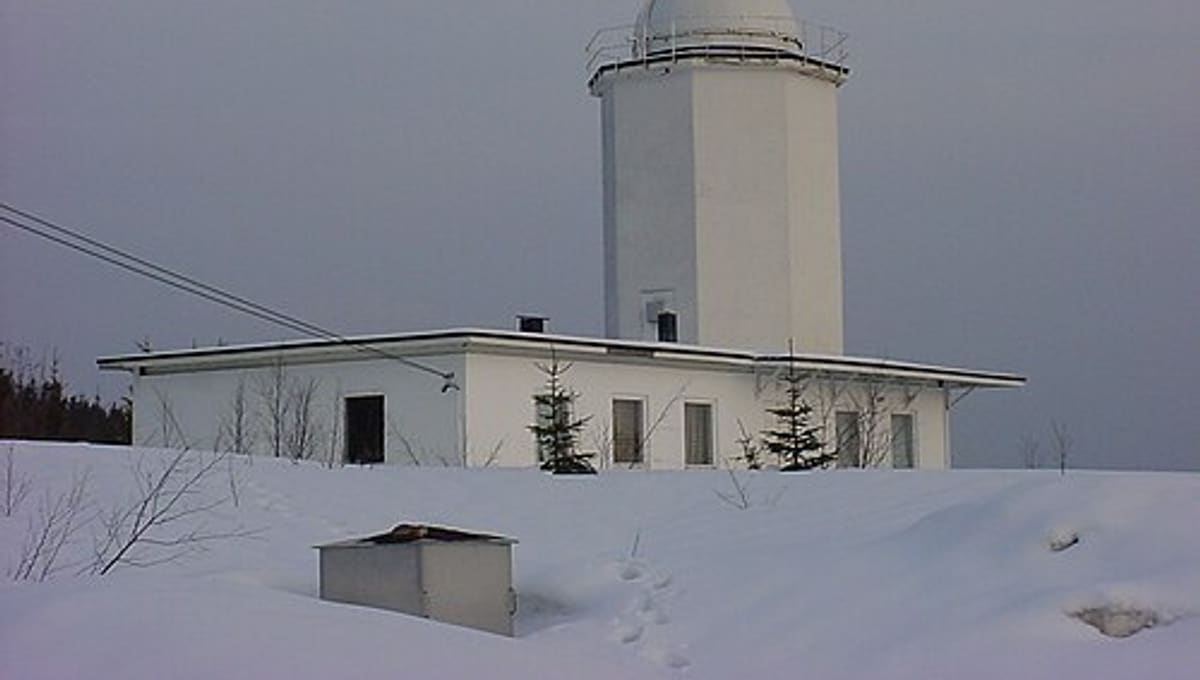
Image: Wikimedia Commons
Harestua Solar Observatory stands near the village of Harestua in Lunner, Norway, north of Oslo. Built to watch the 1954 total solar eclipse, it later became a fixture of Norwegian solar research and now serves as a science education centre.
About Harestua Solar Observatory
The observatory is built around a 12-metre research tower that extends a further 8 metres below ground, a design suited to solar telescope work. It was subordinated to the University of Oslo for most of its research career.
History
Harestua Solar Observatory was constructed by the University of Oslo for the total solar eclipse of 1954 and went on to serve as a dedicated solar research site from 1954 to 1986. In 1987 it was converted into a science centre for astronomy education, running programmes for Norwegian schools and the public. Since 2008 it has been operated by Tycho Brahe Instituttet AS, which has broadened its programme to cover the natural sciences more widely.
Location & getting there
The observatory is located near Harestua in the municipality of Lunner, in Norway's Oppland region, within reach of Oslo. Its tower design and elevated setting made it well suited to solar observation.
Visiting Harestua Solar Observatory
As an active science and education centre, Harestua Solar Observatory hosts school groups and public events; check its official website for the current programme and opening times before visiting.
See your named star from here
Solar research towers like Harestua's are built for precise pointing at the sky, the same principle that lets any location on Earth be aimed at the right ascension and declination of a star named through Star Register. See the catalogue for your star's coordinates.
Opening hours and public-visit programs vary by season. Check the official website and Google Maps for current times before you travel.
Institutional and reference sources used to verify this guide.
Satellite imagery: Esri, Maxar, Earthstar Geographics

 33 km
33 km
 33 km
33 km
 320 kmSpace