
NEVOD

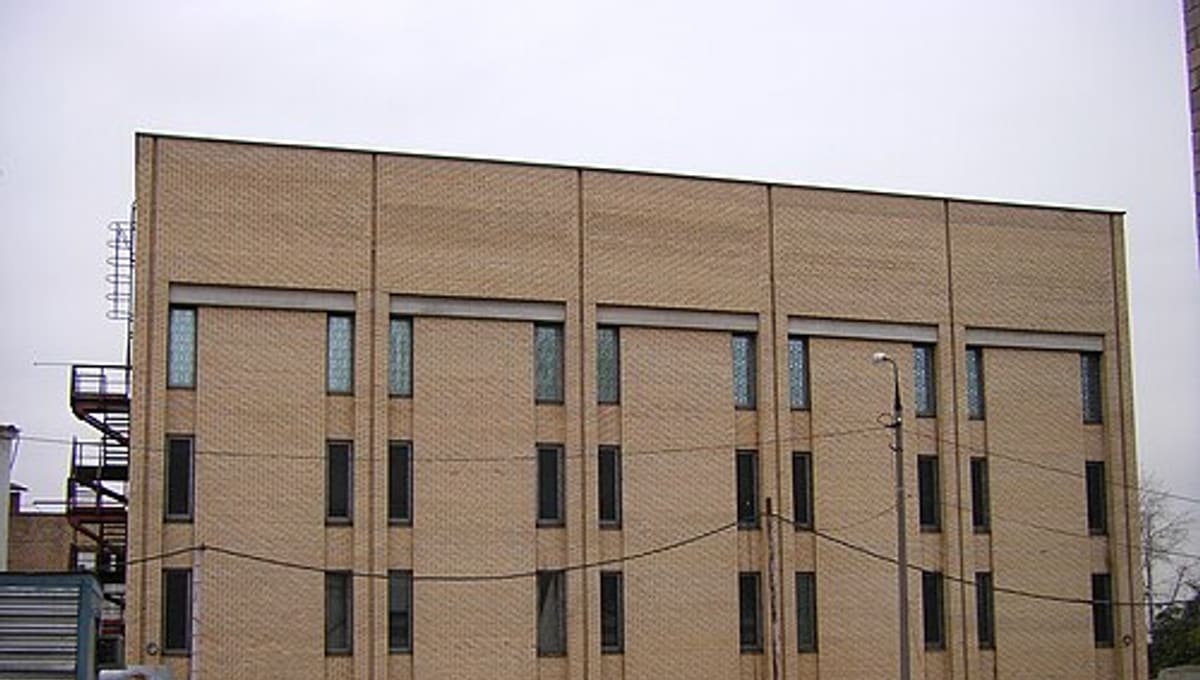
Image: Wikimedia Commons
NEVOD is a neutrino detector and cosmic ray experiment based at the Moscow Engineering Physics Institute (MEPhI) in Russia, using water rather than a telescope to catch traces of high-energy particles.
About NEVOD
NEVOD, Russian for "Neutrino Water Detector," and also the Russian word for "dragnet," detects Cherenkov radiation produced when charged particles, mostly muons, interact with water. It was the first experiment of its kind to attempt these measurements at the Earth's surface, which also allows it to study cosmic rays.
History
The facility was founded in 1994 at the Moscow Engineering Physics Institute (MEPhI). Since then it has grown from a single water Cherenkov detector into a larger complex of instruments studying particle physics and cosmic rays.
Telescopes & research
The NEVOD experimental complex now includes the original Cherenkov water detector, the DECOR coordinate-tracking detector, the CTS array of scintillation calibration telescopes, and the PRISMA array of thermal neutron detectors. As of 2018 it was being expanded with three further cosmic ray detectors: NEVOD-EAS, for measuring cosmic ray air showers; URAN, a neutron detector; and TREK, a drift chamber detector. An earlier instrument, the URAGAN muon hodoscope, was operational through 2016.
Location & getting there
NEVOD is located within the Moscow Engineering Physics Institute campus in Moscow, Russia, placing it firmly within a major research university rather than a remote dark-sky site.
Visiting NEVOD
As a working physics research facility on a university campus, NEVOD is not set up as a public visitor attraction; those interested should contact MEPhI directly for information on tours or access.
See your named star from here
NEVOD studies particles rather than starlight, but its underlying discipline, fixing precise coordinates to detect something real, is the same idea behind every star named through Star Register, each given its own exact right ascension and declination. Browse the catalogue to find a star, or choose a naming package to name one yourself.
Opening hours and public-visit programs vary by season. Check Google Maps for current times before you travel.
Institutional and reference sources used to verify this guide.
Satellite imagery: Esri, Maxar, Earthstar Geographics

 30 km
30 km
 57 km
57 km
 175 kmRadio
 632 km