
Neutrino Ettore Majorana Observatory
Satellite imagery: Esri, Maxar, Earthstar Geographics
The Neutrino Ettore Majorana Observatory, known as the NEMO experiment, is an international physics collaboration hunting for one of the rarest processes in nature, hidden deep beneath a mountain in the French Alps.
About Neutrino Ettore Majorana Observatory
NEMO searches for neutrinoless double beta decay (0νββ), a hypothetical nuclear process that, if observed, would show that neutrinos are their own antiparticles — so-called Majorana particles — and could help measure the neutrino's mass. The collaboration has been active since 1989 and is based in the Modane Underground Laboratory (LSM), located inside the Fréjus Road Tunnel.
History
NEMO's early prototype detectors, NEMO-1 and NEMO-2, ran until 1997. The main NEMO-3 detector was designed and built starting in 1994, collected data from January 2003 to January 2011, and its final analysis was published in 2018. Over the years the experiment measured ordinary double neutrino decays and set limits on the neutrinoless variety for elements including molybdenum-100 and selenium-82, results that feed directly into our understanding of neutrino mass.
Telescopes & research
The collaboration remains active, now building an improved successor called SuperNEMO. As of 2019, a demonstrator module for SuperNEMO was in the process of being commissioned, continuing the decades-long search for this elusive nuclear decay.
Location & getting there
The observatory is located deep inside the Fréjus Road Tunnel, which connects France and Italy through the Alps — the mountain rock above shields the sensitive detectors from cosmic ray interference.
Visiting Neutrino Ettore Majorana Observatory
As an underground physics laboratory rather than a public astronomy site, NEMO is not generally open for casual visits. Anyone interested should check with the Modane Underground Laboratory for any organised access.
See your named star from here
NEMO looks for subatomic particles far from any starlight, but the mountains above the Fréjus Tunnel still offer dark Alpine skies nearby. If you've named a star with Star Register, check its position in our star catalogue and enjoy the stars from a dark spot in the region.
Opening hours and public-visit programs vary by season. Check Google Maps for current times before you travel.
Institutional and reference sources used to verify this guide.
Satellite imagery: Esri, Maxar, Earthstar Geographics

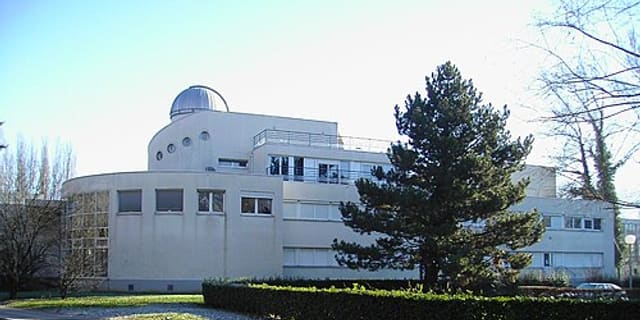 73 kmResearch
Planetology and Astrophysics Institute of Grenoble
research unit of Grenoble’s Universe Sciences Observatory

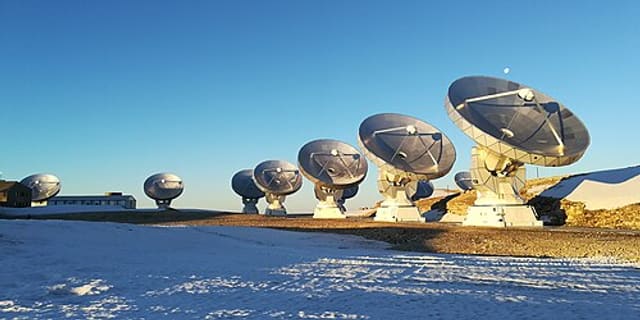 73 kmRadio
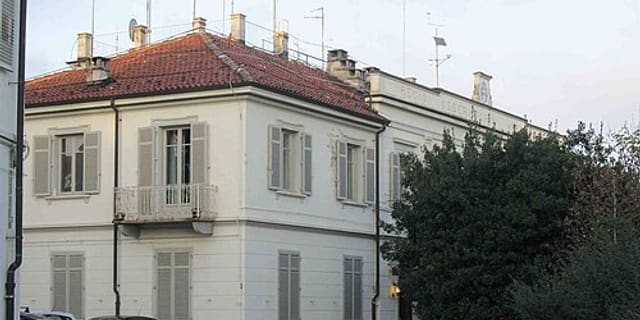 86 km
86 km