
National Observatory of Athens

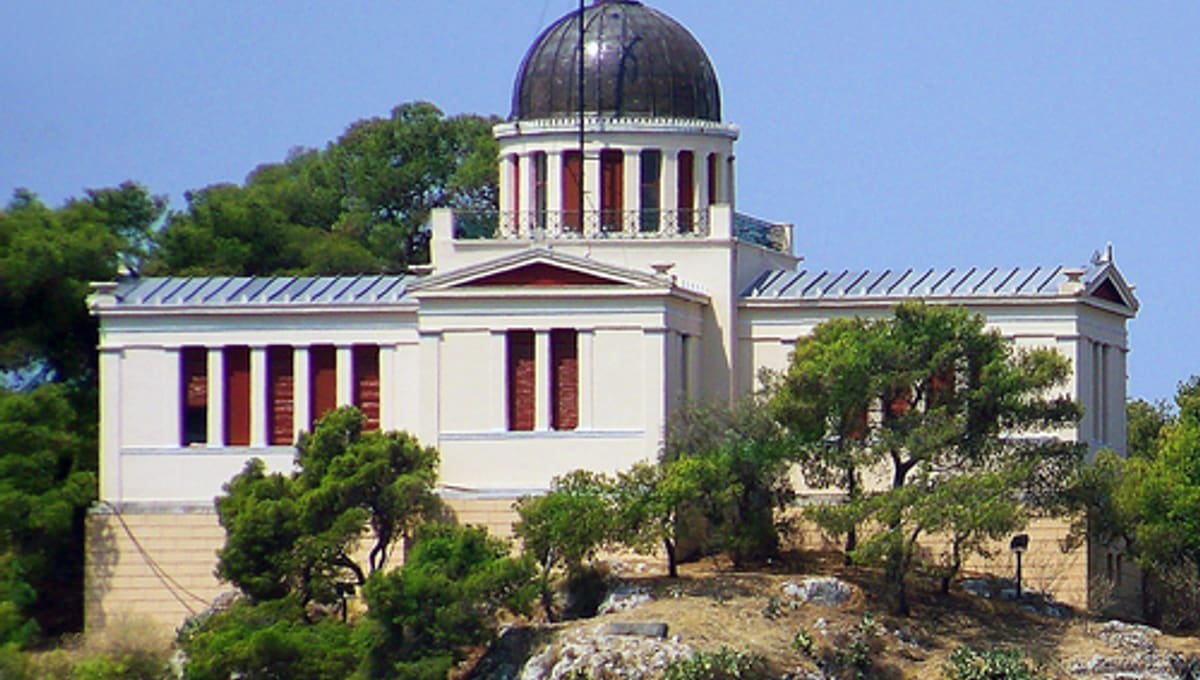
Image: Wikimedia Commons
Perched above the old town on the Hill of the Nymphs, the National Observatory of Athens is Greece's oldest research institution and one of the oldest in Southern Europe, still active nearly two centuries after it first opened its dome.
About the National Observatory of Athens
Founded in 1842, the observatory was built with funding from the Greek-Austrian banker Georgios Sinas after astronomer Georgios Konstantinos Vouris lobbied the newly independent Greek state to create it. Architects Theophil Hansen and Eduard Schaubert designed the neoclassical main building in Thissio, which today houses the observatory's historic core alongside three modern research institutes covering astronomy and astrophysics, geodynamics, and environment and sustainable development.
History
Generations of astronomers have worked from its domes. Early director Ioannis Papadakis observed the moons of Jupiter, while Johann Friedrich Julius Schmidt produced detailed maps of the lunar surface. Around the turn of the twentieth century, Demetrios Eginitis observed Halley's Comet from the site, and mid-century director Stavros Plakidis built a long research career studying variable stars. A young assistant of Eginitis and Plakidis, Jean Focas, went on to earn a doctorate in astronomy in Paris; craters on both the Moon and Mars are now named in his honour.
Telescopes & research
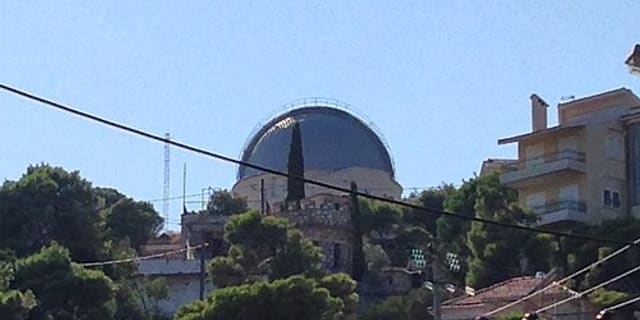
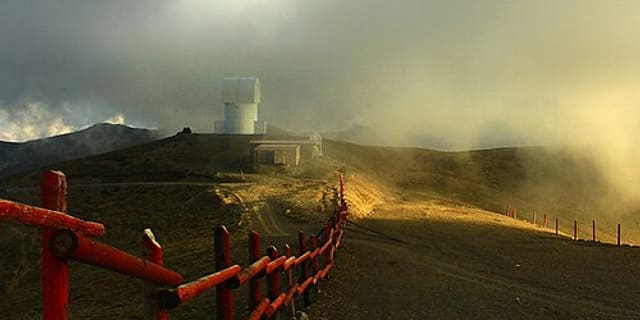
The observatory today operates across four sites: the historic Thissio building, the Penteli Astronomical Station, the Kryoneri Astronomical Station on Mount Kyllini, and the Chelmos Observatory high on Mount Chelmos. Between them these stations support ongoing work in astrophysics, space applications and remote sensing, with the institute also running visitor centres to bring its research to the public.
Location & getting there
The main Thissio site sits roughly 80 metres above sea level in central Athens, an easy walk from the Acropolis and the historic centre, while the Penteli, Kryoneri and Chelmos stations occupy darker mountain sites further from the city.
Visiting the National Observatory of Athens
The observatory's visitor centres welcome the public for tours and events; contact details are listed on its official website, and it's worth checking current opening times and any booking requirements before you go, since access differs between the four sites.
See your named star from here
Every star named through Star Register comes with exact coordinates, and staff at an observatory like this one can point a telescope at those coordinates to help you find it in the night sky. Explore the star catalogue or choose a naming package to get your own star and certificate.
Opening hours and public-visit programs vary by season. Check the official website and Google Maps for current times before you travel.
Institutional and reference sources used to verify this guide.
Satellite imagery: Esri, Maxar, Earthstar Geographics

 15 kmResearch
 133 km