
Montana Cabreja observatory
Satellite imagery: Esri, Maxar, Earthstar Geographics
High above Gran Canaria in the town of Vega de San Mateo, the Montana Cabreja observatory has spent three decades combining amateur astronomy with public outreach, from comet hunts to broadcasts of major celestial events.
About Montana Cabreja Observatory
Founded in 1995, the observatory sits at around 900 metres elevation under a 2.26-metre polyethylene dome. It is dedicated to amateur research, astrophotography, and outreach, and is part of the AstroEduca educational network.
History
Since founding in 1995, the observatory has broadcast notable astronomical phenomena to the public since 1999, building a long track record of sharing the sky with visitors as well as pursuing its own observations.
Telescopes & research
Montana Cabreja is a validated Minor Planet Center observing site (code J45), conducting scientific observations of comets and asteroids alongside its outreach work. Observers there track meteors, comets, eclipses, and other astronomical events, and the site offers around 75% visibility of the celestial dome, with a visual limiting magnitude of 6.8 on its best nights.
Location & getting there
The observatory is located in Vega de San Mateo on Gran Canaria, in Spain's Canary Islands, at roughly 900 metres above sea level - high enough to benefit from the island's famously clear skies.
Visiting Montana Cabreja Observatory
The observatory runs educational sessions for tourists and individuals alike. Check ahead for current session times and booking details before visiting.
See your named star from here
With dark Canary Island skies and a nearly 7-magnitude limiting brightness, Montana Cabreja is a strong candidate for spotting a star you've named. Explore our star-naming packages or browse the catalogue of stars already named through Star Register.
Opening hours and public-visit programs vary by season. Check Google Maps for current times before you travel.
Institutional and reference sources used to verify this guide.
Satellite imagery: Esri, Maxar, Earthstar Geographics

 101 km
 101 km
 101 km
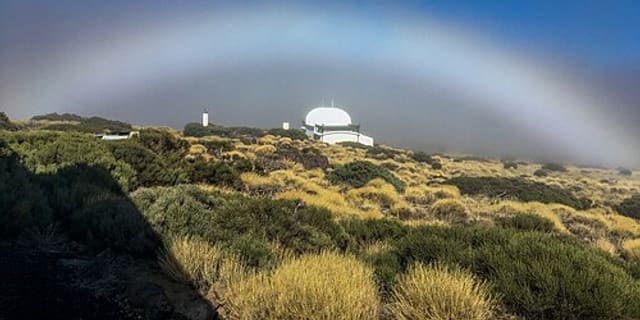
ATLAS–TDO observatory
ATLAS astronomical observatory at Teide Observatory in Tenerife island (Spain)

 101 km