
ATLAS–TDO observatory

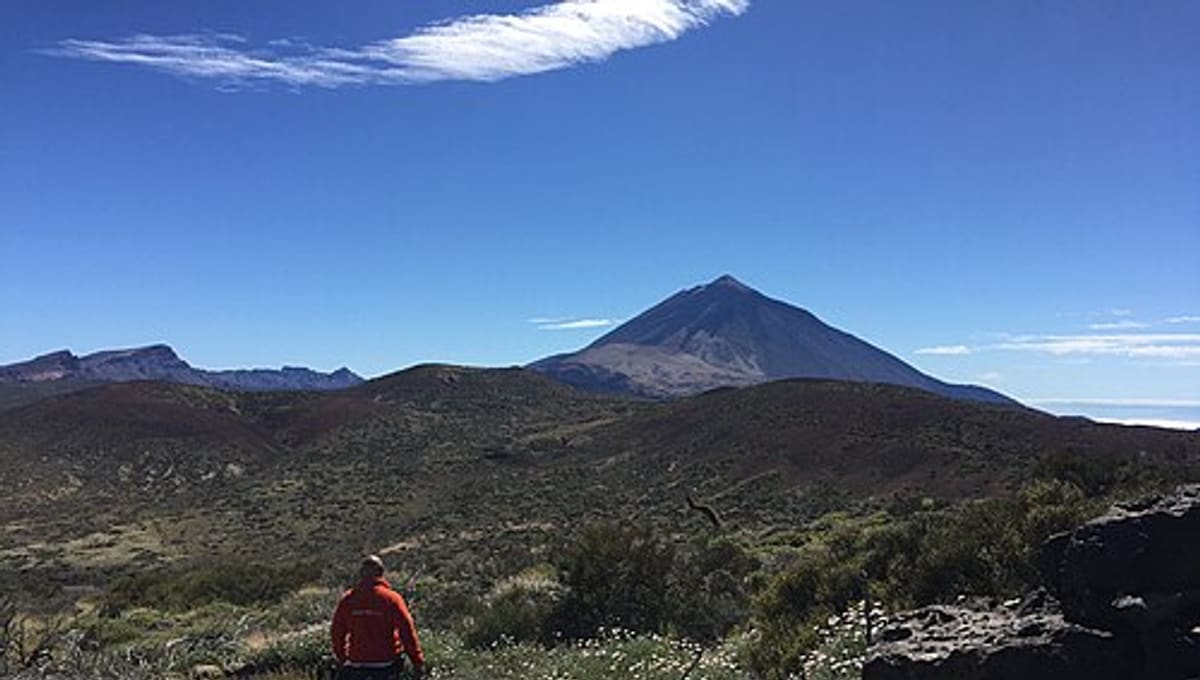
Image: Wikimedia Commons
ATLAS-TDO is a robotic asteroid and transient detection observatory located at Teide Observatory on Mount Teide in Tenerife, Spain, at 2,370 metres elevation. Operated by the Instituto de Astrofísica de Canarias (IAC), it represents the latest generation of the ATLAS (Asteroid Terrestrial-impact Last Alert System) network.
About ATLAS–TDO
The ATLAS-TDO facility was commissioned in 2021 with Spanish research infrastructure funding. Unlike traditional single-instrument observatories, ATLAS-TDO uses a modular design featuring four separate modules, each containing four Celestron RASA 11 telescopes equipped with QHY600 CMOS cameras. This configuration provides a combined effective aperture equivalent to a 56-centimetre telescope with a 7.3-square-degree field of view and exceptional sensitivity to faint objects.
Scientific Purpose
ATLAS-TDO serves as an early-warning system for potentially hazardous near-Earth asteroids and detects transient astronomical events, including supernovae and gravitational wave counterparts. The facility integrates with the international ATLAS network through a collaboration between the IAC and the University of Hawaii's Institute for Astronomy.
Location & Getting There
Positioned at the high-altitude Teide Observatory site, ATLAS-TDO benefits from the Canary Islands' exceptional atmospheric conditions. The location atop Mount Teide provides clear skies and minimal atmospheric distortion, ideal for precise astronomical measurements. Teide Observatory sits within Teide National Park, a UNESCO World Heritage Site.
Visiting Teide Observatory
Public access to Teide Observatory is limited and requires advance arrangements. The site operates as a working research facility. For visitor information, contact the Instituto de Astrofísica de Canarias or consult their official website at iac.es.
See Your Named Star from Here
At any observatory with a telescope, including ATLAS-TDO, the coordinates of your named star can be observed by trained staff. A star's position in the sky (its right ascension and declination) can be entered into telescope control systems for viewing. Visit our star-naming packages and star catalogue to register your star and find its coordinates.
Opening hours and public-visit programs vary by season. Check Google Maps for current times before you travel.
Institutional and reference sources used to verify this guide.
Satellite imagery: Esri, Maxar, Earthstar Geographics

 under 1 km
 under 1 km
 under 1 km