
MASTER-II Observatory
Satellite imagery: Esri, Maxar, Earthstar Geographics
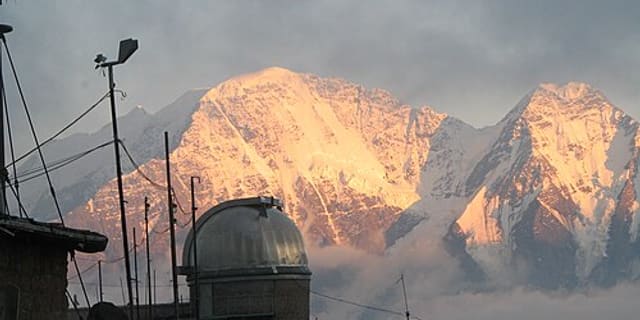
This MASTER-II Observatory stands in the Caucasus near Kislovodsk, Russia, scanning the sky automatically for the brief flashes of light produced by gamma-ray bursts.
About MASTER-II Observatory
Located in the Caucasus region near Kislovodsk, this MASTER-II Observatory is a station of the Global MASTER-Net, a network of robotic telescopes operated by Lomonosov Moscow State University.
History
The station was installed and tested jointly with the Sternberg Astronomical Institute and Pulkovo Observatory, two of Russia's leading astronomical institutions, before joining the wider MASTER-Net array.
Telescopes & research
The observatory searches for the prompt optical emission of gamma-ray bursts and carries out wide-field sky surveys to catch other fast-changing, or transient, astronomical phenomena as they happen.
Location & getting there
The site sits in the Caucasus mountains near Kislovodsk in southern Russia, a region whose altitude and distance from major cities help provide the dark, stable skies that automated transient-hunting telescopes need.
Visiting MASTER-II Observatory
As a fully robotic research station, this MASTER-II site is not set up for public visits; anyone interested in the MASTER-Net programme should contact Lomonosov Moscow State University directly.
See your named star from here
Even a robotic observatory built to hunt gamma-ray bursts is watching the same sky that holds a star named through Star Register. Check your star's exact position any time in the star catalogue.
Opening hours and public-visit programs vary by season. Check Google Maps for current times before you travel.
Institutional and reference sources used to verify this guide.
Satellite imagery: Esri, Maxar, Earthstar Geographics

 50 km
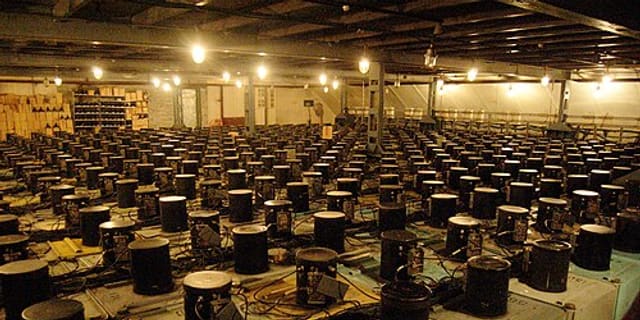
50 kmBaksan Neutrino Observatory
scientific laboratory mainly studying neutrinos; located in the Caucasus mountains in Russia

 54 km
54 km
 54 km
54 km