
ISON-Terskol observatory


Image: Wikimedia Commons
Perched at 3,100 metres near Mount Elbrus in Russia's Northern Caucasus, the ISON-Terskol Observatory is home to one of the region's largest research telescopes and a key node in international efforts to track hazardous asteroids.
About ISON-Terskol Observatory
ISON-Terskol Observatory stands on Terskol Peak in the Northern Caucasus, close to Mount Elbrus, Europe's highest mountain. Since 1993 it has been run by the International Center for Astronomical, Medical and Ecological Research (ICAMER), a joint Ukrainian–Russian institution, and it also contributes to the International Scientific Optical Network (ISON).
History
The observatory was built between 1970 and 1991 by the Main Astronomical Observatory of the Ukrainian Academy of Sciences, taking advantage of the high-altitude, thin-air site near Elbrus. Since 1993, ICAMER has operated it as a shared Ukrainian–Russian research facility.
Telescopes & research
The observatory's main instrument is a 2-metre RCC telescope equipped with a photometric complex, a spectrograph and an Echelle spectrometer. It is supported by a 60-centimetre photometric telescope and a 65-centimetre solar telescope. Astronomers here detect and monitor asteroids and comets, including potentially hazardous objects, carry out precise astrometry and photometry, and track space debris.
Location & getting there
At roughly 3,100 metres above sea level, ISON-Terskol is one of the highest-altitude observatories in Europe, set in the dramatic high-mountain landscape of the Northern Caucasus near Mount Elbrus.
Visiting ISON-Terskol Observatory
As an active research station at high altitude, ISON-Terskol does not run regular public tours. Anyone wishing to visit should contact ICAMER directly to check current access before travelling.
See your named star from here
With a 2-metre telescope among its instruments, a site like this has the reach to locate faint objects at precise coordinates. Name a star with Star Register and find its right ascension and declination in the star catalogue.
Opening hours and public-visit programs vary by season. Check Google Maps for current times before you travel.
Institutional and reference sources used to verify this guide.
Satellite imagery: Esri, Maxar, Earthstar Geographics

 under 1 km
 16 km
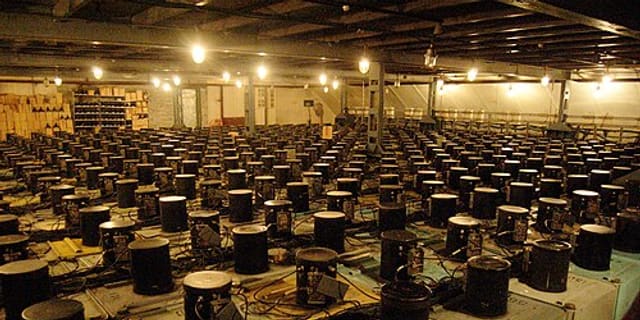
16 kmBaksan Neutrino Observatory
scientific laboratory mainly studying neutrinos; located in the Caucasus mountains in Russia

 96 kmResearch
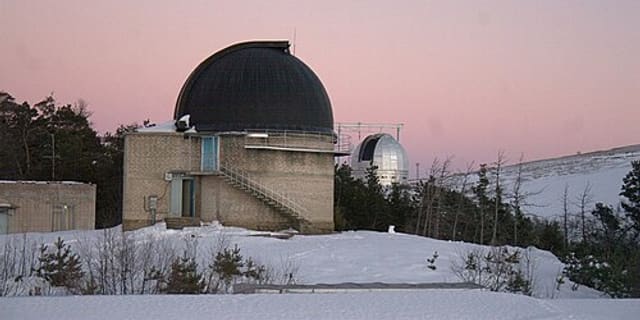
Astronomical station at North Caucasus of Kazan Federal University
astronomical observatory in Russia