
Maragheh Observatory

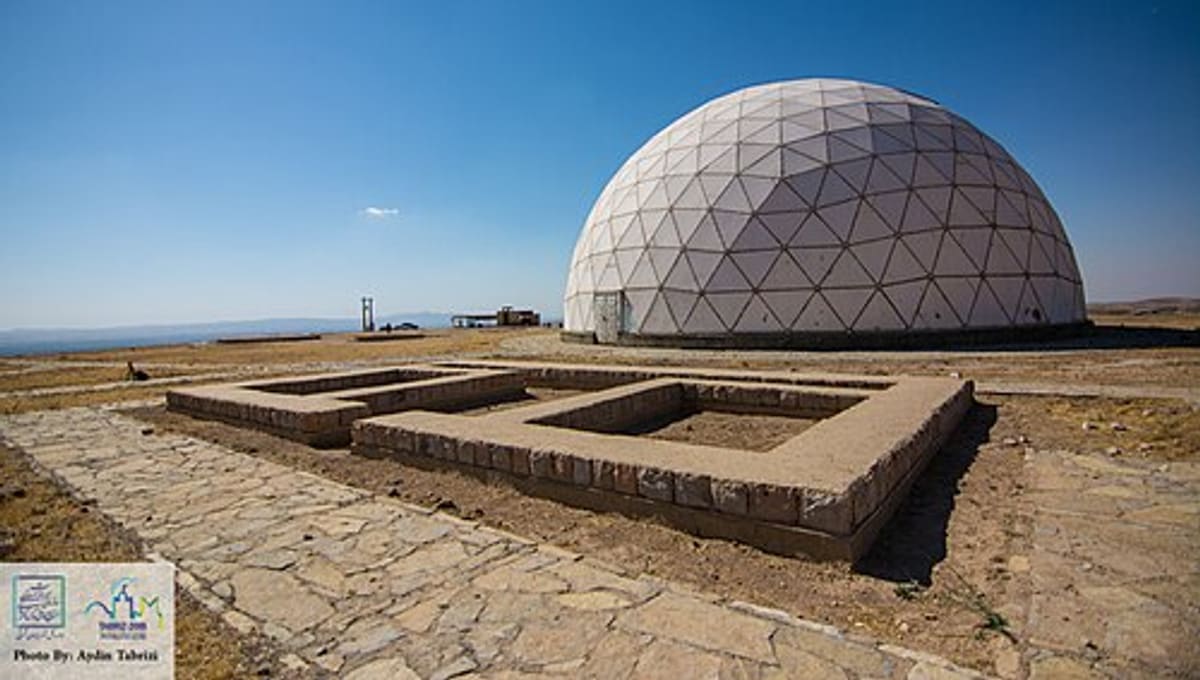
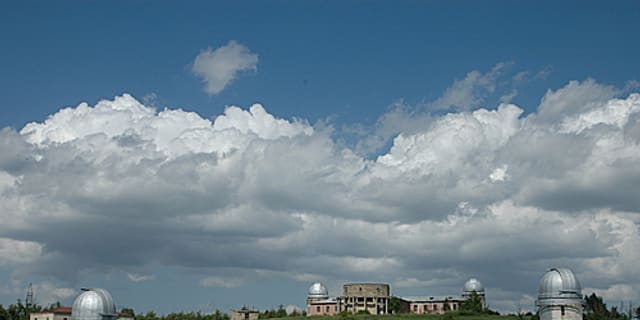
Image: Wikimedia Commons
Founded in 1259 under the patronage of the Mongol ruler Hulagu, Maragheh Observatory was one of the most advanced scientific institutions of the medieval world.
About Maragheh Observatory
Maragheh Observatory stands on the west side of Maragheh, in Iran's East Azerbaijan Province. Established under the Ilkhanid ruler Hulagu and directed by the Persian scientist and astronomer Nasir al-Din al-Tusi, it combined an observing institution with an extensive library and served as a centre of astronomical and mathematical education.
History
Built in the mid-13th century, in 1259, the observatory became one of the most advanced scientific institutions in Eurasia at the time, housing a large collection of astronomical instruments and books under al-Tusi's direction. Its design and methods later influenced the construction of the Ulugh Beg Observatory in Samarkand, the Taqi al-Din observatory in Constantinople, and the Jantar Mantar observatories in Jaipur.
Telescopes & research
Long before the telescope was invented, Maragheh's astronomers carried out groundbreaking calculations in mathematics and astronomy using large-scale masonry and metal instruments, supported by one of the era's most significant astronomical libraries.
Location & getting there
The observatory site is located on the west side of Maragheh, a city in Iran's East Azerbaijan Province in the country's northwest.
Visiting Maragheh Observatory
As a centuries-old historical site, current opening hours and access arrangements are best confirmed with local or national Iranian tourism resources before travelling.
See your named star from here
Maragheh's astronomers spent generations mapping the sky with painstaking precision — the same spirit behind giving a star its own recorded coordinates today. If you've named a star with Star Register, see where it sits in our star catalogue.
Opening hours and public-visit programs vary by season. Check Google Maps for current times before you travel.
Institutional and reference sources used to verify this guide.
Satellite imagery: Esri, Maxar, Earthstar Geographics

 179 km
 195 km
 367 km
 429 km