
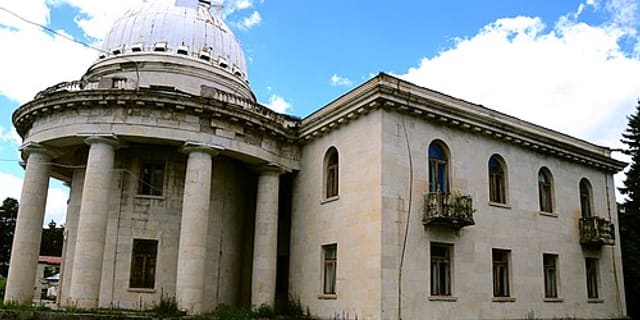
Batabat Astrophysical Observatory

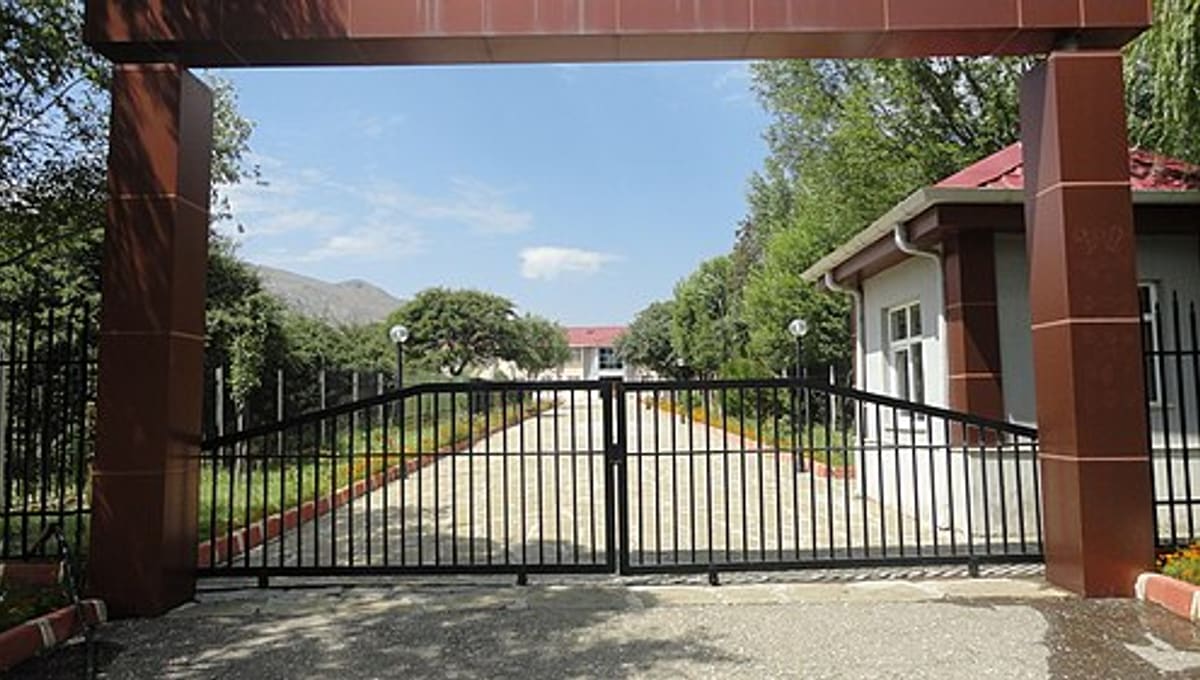
Image: Wikimedia Commons
High in the Nakhchivan Autonomous Republic of Azerbaijan, at 2,100 metres in a mountainous, low-light-pollution corner of the country, Batabat Astrophysical Observatory has been a base for Azerbaijani solar and stellar research for decades.
About Batabat Astrophysical Observatory
The observatory sits at 2,100 metres elevation in Nakhchivan, Azerbaijan, and operates as an astrophysical research centre with instruments including a 70cm Lunar-Planetary telescope, a Zeiss-600 telescope, and a large solar Lyot coronograph used for observing the Sun's outer atmosphere.
History
Batabat Astrophysical Observatory was founded in 1967. It later operated as a section of the Shamakhi Astrophysical Observatory before the two were merged in 1973.
Telescopes & research
Research at the observatory has centred on observations of the Solar System, studies of bright stars, and the physics of solar-terrestrial connections, including their influence on biological systems. Its solar Lyot coronograph allows dedicated study of the Sun, while the 70cm and Zeiss-600 telescopes support wider Solar System and stellar work.
Location & getting there
The observatory is located at high altitude in the Nakhchivan Autonomous Republic, a mountainous exclave of Azerbaijan, at 2,100 metres above sea level.
Visiting Batabat Astrophysical Observatory
As a research facility, Batabat Astrophysical Observatory is primarily used by scientists rather than run as a public visitor site; check with Azerbaijan's national science authorities for any current public access arrangements before planning a visit.
See your named star from here
At 2,100 metres, far from city lights, Batabat's mountain setting is the kind of place where a star named through Star Register would be genuinely visible on a clear night. Name a star for someone special, or browse the star catalogue.
Opening hours and public-visit programs vary by season. Check Google Maps for current times before you travel.
Institutional and reference sources used to verify this guide.
Satellite imagery: Esri, Maxar, Earthstar Geographics

 194 km
 293 km
 311 km
 392 km
Georgian National Astrophysical Observatory
observatory in Abastumani, Adigeni Municipality, Georgia