
Lowell Observatory

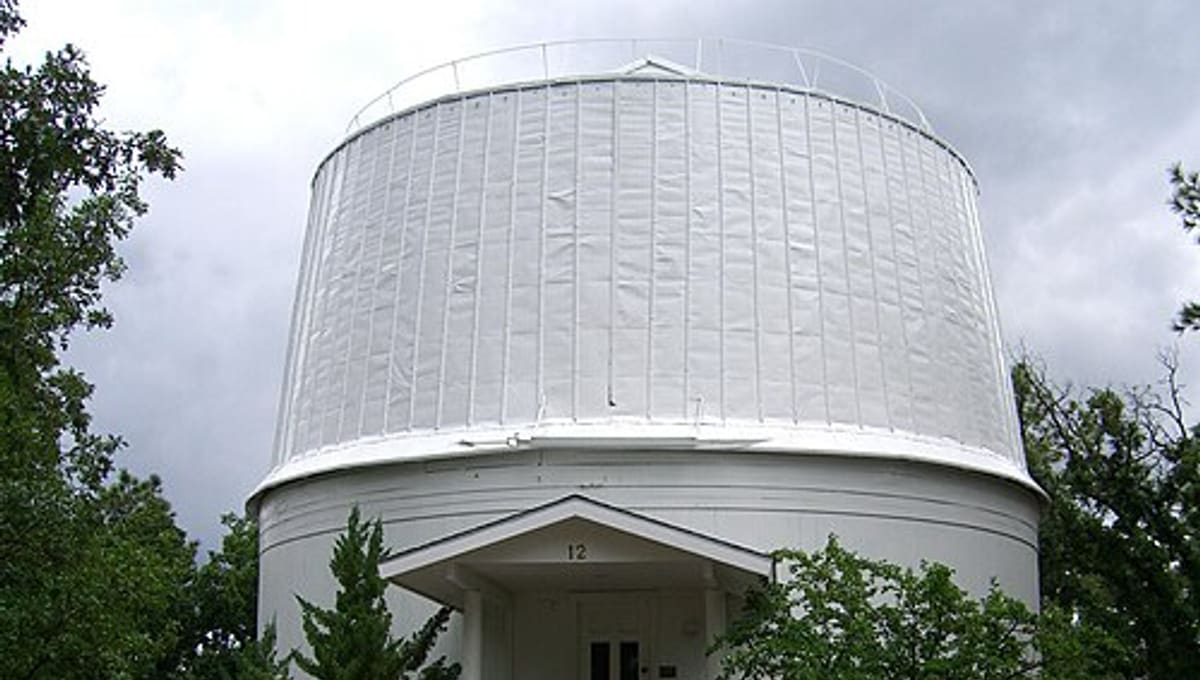
Image: Wikimedia Commons
Lowell Observatory in Flagstaff, Arizona is one of the most historically important observatories in the United States, and the place where the dwarf planet Pluto was discovered.
About Lowell Observatory
Founded in 1894 by astronomer Percival Lowell of Boston's Lowell family, the observatory is among the oldest in the country. It was designated a National Historic Landmark in 1965 and was named one of "The World's 100 Most Important Places" by Time magazine in 2011. Lowell welcomes more than 150,000 visitors annually and is active in exoplanet and minor planet research.
History
The observatory is overseen by a sole trustee, a role historically passed down through the Lowell family: Guy Lowell (1916-1927), Roger Putnam (1927-1967), Michael Putnam (1967-1987), William Lowell Putnam III (1987-2013), and current trustee W. Lowell Putnam. The trustee appoints an Executive Director to run day-to-day operations; the current Director is Dr. Amanda Bosh. In 1930, astronomer Clyde Tombaugh discovered the dwarf planet Pluto at Lowell Observatory, one of the defining moments in 20th-century astronomy. Decades later, in 1963, astronauts preparing for the Apollo Program visited the observatory and observed through its telescope while the Moon was being mapped.
Telescopes & research
Lowell is home to the 24-inch Clark Refracting Telescope, built in 1896, which remains in use today for public observing more than a century after its construction.
Location & getting there
The observatory sits in Flagstaff, Arizona, in the North America region, a city long favoured by astronomers for its clear, high-altitude skies.
Visiting Lowell Observatory
Lowell Observatory is open to the public and draws over 150,000 visitors a year, though we'd recommend checking its official website for current hours, tickets and programme times before you go.
See your named star from here
Standing where Pluto was discovered and where astronauts once studied the Moon, it's easy to imagine locating your own point in the sky. Name a star and bring its coordinates along, or browse the star catalogue to see what's already been named.
Opening hours and public-visit programs vary by season. Check the official website and Google Maps for current times before you travel.
Institutional and reference sources used to verify this guide.
Satellite imagery: Esri, Maxar, Earthstar Geographics