
Kilodegree Extremely Little Telescope
Satellite imagery: Esri, Maxar, Earthstar Geographics
The Kilodegree Extremely Little Telescope, known as KELT, is not a single dome but a pair of small robotic telescopes working together to find planets orbiting bright, nearby stars. Despite its modest hardware, the project has made an outsized contribution to exoplanet science.
About Kilodegree Extremely Little Telescope
KELT is an astronomical observation system built from off-the-shelf components, each unit carrying just a 4.2 cm aperture lens paired with a 4k × 4k Apogee CCD camera. That small aperture gives each telescope an unusually wide 26° × 26° field of view, letting it monitor huge swaths of sky at once in search of the tiny brightness dips caused by a planet passing in front of its star.
History
KELT-North was deployed in 2005 at Winer Observatory in Arizona and operated there until it was decommissioned in 2022. Its southern-hemisphere twin, KELT-South, followed in 2009 at Sutherland, South Africa. The project is jointly administered by Ohio State University's Department of Astronomy, Vanderbilt University's Department of Physics and Astronomy, Lehigh University's Department of Physics, and the South African Astronomical Observatory (SAAO).
Telescopes & research
KELT surveys stars with an apparent magnitude between roughly 8 and 10 — brighter than most exoplanet-survey targets, which makes any planets it finds easier to study in detail afterward. Over its run, the project has identified more than 26 exoplanets, along with at least one brown dwarf, KELT-1b.
Location & getting there
KELT-North's Arizona site sits in the North American desert skies around Winer Observatory, while KELT-South operates from Sutherland, South Africa, home to some of the darkest skies in the southern hemisphere. Because KELT is a robotic survey rather than a visitor facility, there is no public dome to tour here in the usual sense.
See your named star from here
KELT's own targets are bright stars visible from both hemispheres — a reminder of how much can be learned by simply watching a star's light change over time. If you'd like a star of your own to track, you can name a star and look it up afterward in our star catalogue.
Opening hours and public-visit programs vary by season. Check Google Maps for current times before you travel.
Institutional and reference sources used to verify this guide.
Satellite imagery: Esri, Maxar, Earthstar Geographics
Anderson Mesa Station
astronomical observatory in Coconino County, Arizona, United States of America

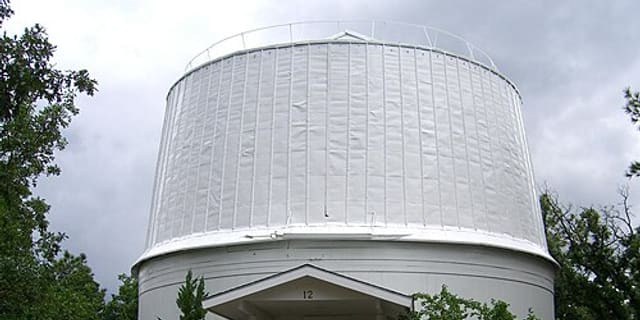 102 km
Desert Beaver Observatory
a private astronomical observatory near Eloy, Arizona

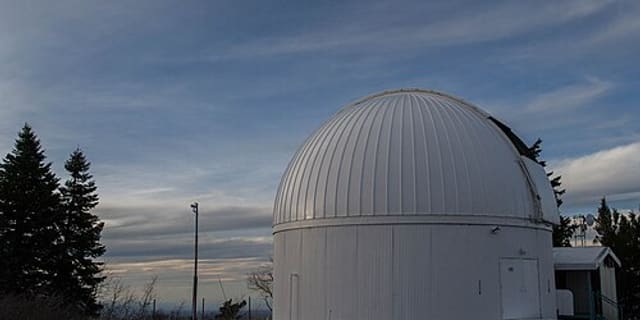 220 km
Catalina 40" Telescope
telescope facility in the Catalina Sky Survey, located on Mount Lemmon in Arizona, U.S.