
Kjell Henriksen Observatory
Satellite imagery: Esri, Maxar, Earthstar Geographics
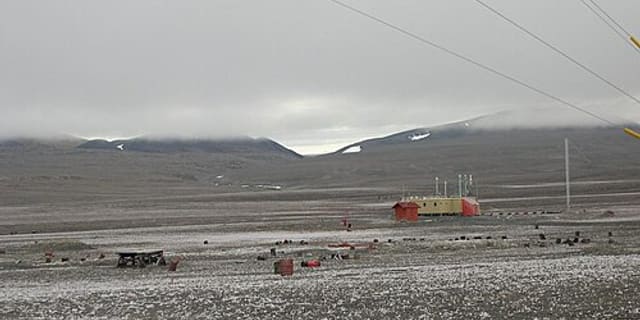
High above the Arctic Circle on Svalbard, Norway, at roughly 78 degrees north, the Kjell Henriksen Observatory studies the aurora and airglow in one of the most remote research settings on Earth.
About Kjell Henriksen Observatory
Run by the University Centre in Svalbard (UNIS), Kjell Henriksen Observatory is described as the world's largest optical observatory dedicated to auroral and airglow measurements, housing more than 25 optical instruments.
Telescopes & research
The observatory sits on a mountainside directly above the EISCAT Svalbard Radar and is co-located with the SuperDARN radar network, giving researchers a combined optical and radar view of the upper atmosphere. EISCAT itself is a collaboration among research institutions from China, Finland, Japan, Norway, Sweden, and the United Kingdom, reflecting the international scale of the science carried out at this single Arctic site.
Location & getting there
Svalbard lies about 1,000 kilometres north of mainland Norway, making Kjell Henriksen Observatory one of the northernmost professional astronomical facilities in the world, and a site where the polar night offers unusually long viewing conditions for auroral science each winter.
Visiting Kjell Henriksen Observatory
As a working research facility run through UNIS, access is generally arranged for researchers and students rather than casual visitors; check with UNIS directly for any public visiting options before planning a trip.
See your named star from here
The polar night above Svalbard gives extraordinarily dark, long viewing windows, ideal conditions for tracking down the coordinates of a named star from Star Register. Look up your star's position in the star catalogue.
Opening hours and public-visit programs vary by season. Check Google Maps for current times before you travel.
Institutional and reference sources used to verify this guide.
Satellite imagery: Esri, Maxar, Earthstar Geographics

 1,412 km
China-Iceland Arctic Science Observatory
joint Chinese-Icelandic polar science facility