
Kilpisjärvi Atmospheric Imaging Receiver Array

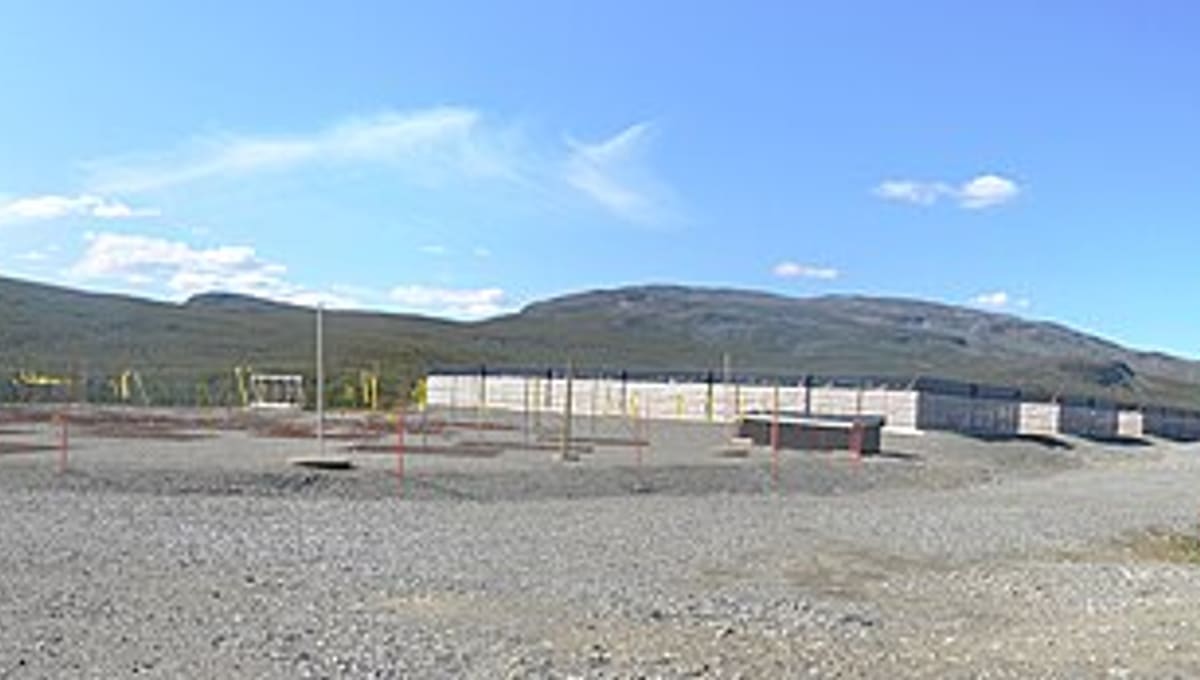
Image: Wikimedia Commons
Near Finland's border with Norway, at Kilpisjärvi in Enontekiö, the Kilpisjärvi Atmospheric Imaging Receiver Array — KAIRA — listens to the sky rather than looking at it, using radio antennas to study the aurora and the upper atmosphere.
About Kilpisjärvi Atmospheric Imaging Receiver Array
KAIRA is a radio observatory built from LOFAR-derived phased-array antennas, sitting at an elevation of 495 metres. It is operated by the Sodankylä Geophysical Observatory on behalf of Oulu University and is used for atmospheric, near-Earth space and astronomical research.
History
KAIRA was founded in 2011 and was also built as a pathfinder for the EISCAT_3D system, a planned network of similar phased-array installations designed for three-dimensional imaging of the upper atmosphere.
Telescopes & research
The array is split into two systems: a Low-Band Antenna (LBA) array of 48 antennas covering the 10–90 MHz band, and a High-Band Antenna (HBA) array, also 48 antennas, covering 110–270 MHz. Because the phased-array design has no moving parts, KAIRA can scan huge areas of sky almost instantly under digital control, giving it a very large field of view. It produces continuous all-sky images of the ionosphere's radio transparency using cosmic radio noise — a technique called riometry — and can also measure electron density profiles in the atmosphere. This lets researchers study how the solar wind interacts with Earth's atmosphere, including phenomena like the aurora borealis. KAIRA can work as a stand-alone passive receiver or in tandem with the EISCAT VHF incoherent scatter radar near Tromsø, Norway, and has also been used for long-baseline interferometry observations of pulsars.
Location & getting there
Kilpisjärvi lies in the far northwest of Finnish Lapland, in a remote, sparsely populated stretch of Enontekiö close to the Norwegian border — one of the best places in Europe to see the aurora that KAIRA itself studies.
Visiting KAIRA
KAIRA is a research installation rather than a public observatory; anyone planning a visit should check the operator's website before travelling, as access is not guaranteed.
See your named star from here
While KAIRA tunes in to radio waves rather than starlight, its Arctic setting is a spectacular place to think about the night sky. If you name a star through Star Register, you can find its exact coordinates in our star catalogue and take them to any optical observatory nearby, or explore our naming packages to get started.
Opening hours and public-visit programs vary by season. Check the official website and Google Maps for current times before you travel.
Institutional and reference sources used to verify this guide.
Satellite imagery: Esri, Maxar, Earthstar Geographics

 956 km
 961 km