
Irkutsk Magnetic Observatory
Satellite imagery: Esri, Maxar, Earthstar Geographics
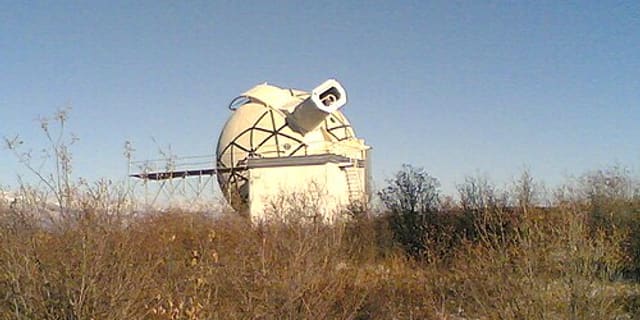
The Irkutsk Magnetic Observatory in Irkutsk, Russia has been recording Earth's magnetic field for well over a century, making it one of the longest-running geomagnetic stations in the region.
About Irkutsk Magnetic Observatory
Originally established as a Magneto-Meteorological Observatory in the mid-1880s and opened in 1886, the station now operates under the Institute of Solar-Terrestrial Physics of the Siberian Branch of the Russian Academy of Sciences (ISTP SB RAS). It carries the IAGA code IRT within international geomagnetic networks.
History
Between 1957 and 1959 the observatory was equipped with Eschenhagen variation stations and La Cour variometers, instruments of the era for tracking magnetic variation. It later developed digital quartz variation magnetometers of its own and today contributes continuous data to INTERMAGNET, the international network of standardised magnetic observatories.
Location & getting there
The observatory is located in Irkutsk, Russia, in Siberia near Lake Baikal, a region with a long tradition of geophysical and astronomical research.
Visiting Irkutsk Magnetic Observatory
As a scientific research station, the observatory is not set up as a general tourist site; anyone interested in visiting should check with ISTP SB RAS for current access arrangements before travelling.
See your named star from here
Siberia's clear night skies make Irkutsk a fine backdrop for stargazing, and an observatory capable of pointing at precise coordinates can locate your named star just as easily as it tracks the planet's magnetic field. See your star's coordinates in the catalogue.
Opening hours and public-visit programs vary by season. Check Google Maps for current times before you travel.
Institutional and reference sources used to verify this guide.
Satellite imagery: Esri, Maxar, Earthstar Geographics

 56 km
56 km
 252 kmSolar