
High Altitude Water Cherenkov Experiment

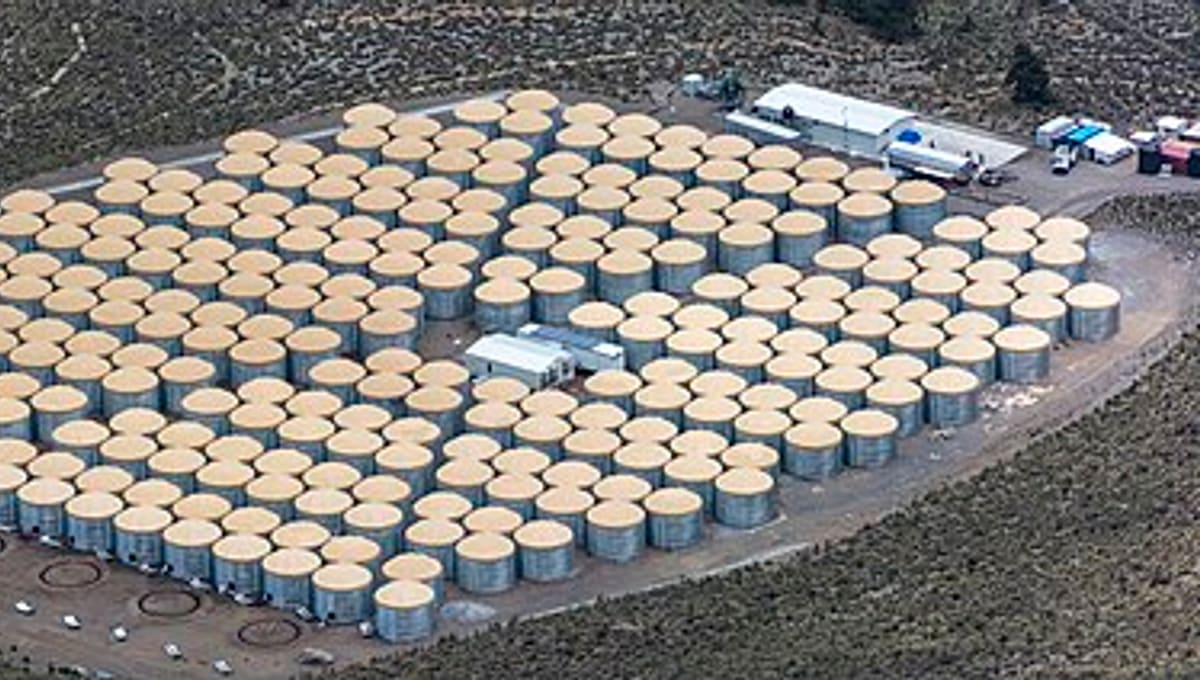
Image: Wikimedia Commons
The High Altitude Water Cherenkov Experiment, known as HAWC, is a gamma-ray and cosmic-ray observatory on the flanks of the Sierra Negra volcano in the Mexican state of Puebla.
About High Altitude Water Cherenkov Experiment
Sitting at an altitude of 4,100 metres, HAWC has been operational since 2015. Rather than pointing at a single target, it uses a wide field of view covering about 15% of the sky at any moment, scanning roughly two-thirds of the sky over a 24-hour period as the Earth rotates.
Telescopes & research
HAWC detects gamma rays in the TeV energy range using the water Cherenkov method, and is the successor to the earlier Milagro gamma-ray observatory in New Mexico. It is run by a large international collaboration, including the University of Maryland, the National Autonomous University of Mexico, the National Institute of Astrophysics, Optics and Electronics, Los Alamos National Laboratory, NASA's Goddard Space Flight Center, and several other US and Mexican universities.
Location & getting there
HAWC is in the North America region, in Puebla, Mexico, high on the slopes of the Sierra Negra volcano. Its 4,100-metre altitude is central to the science: thinner atmosphere at that height lets its water tanks detect the particle showers gamma rays trigger when they strike the air.
Visiting HAWC Observatory
As a high-altitude scientific facility, HAWC is not set up for casual visits. Check the official HAWC website for any current public information before planning a trip.
See your named star from here
HAWC scans almost the whole sky every day, watching for gamma rays invisible to the naked eye. If you've named a star with Star Register, the same patch of sky HAWC studies also holds the ordinary, visible star carrying your name. Find its coordinates in the star catalogue.
Opening hours and public-visit programs vary by season. Check the official website and Google Maps for current times before you travel.
Institutional and reference sources used to verify this guide.
Satellite imagery: Esri, Maxar, Earthstar Geographics

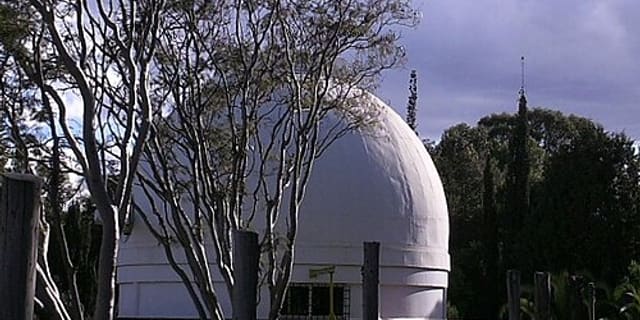 106 km
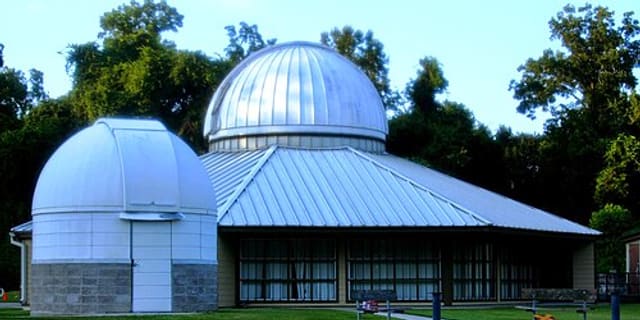 1,410 km
 1,430 kmRadio
Millimeter Anisotropy eXperiment IMaging Array
Cosmic Microwave Background experiment