
Harvard–Smithsonian Center for Astrophysics


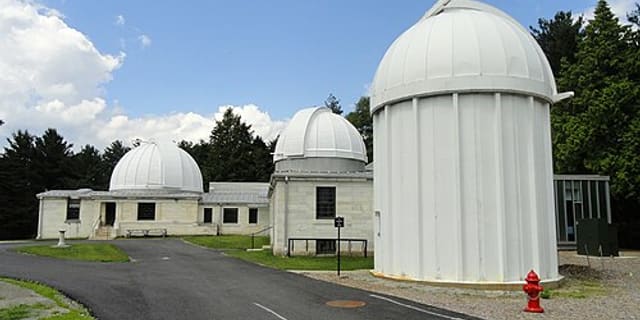
Image: Wikimedia Commons
The Center for Astrophysics | Harvard & Smithsonian, long known as the Harvard-Smithsonian Center for Astrophysics, is one of the world's largest astronomy research institutes, based in Cambridge, Massachusetts.
About the Center for Astrophysics
The CfA is a joint venture of the Harvard College Observatory and the Smithsonian Astrophysical Observatory, bringing more than 850 scientists, engineers, and support staff together under one roof. It leads or takes part in more than fifteen ground- and space-based observatories across the electromagnetic spectrum, including the Chandra X-ray Observatory, one of NASA's Great Observatories, and the forthcoming Giant Magellan Telescope.
History
Founded in 1973 and headquartered in Cambridge, the institute was known for most of its history as the Harvard-Smithsonian Center for Astrophysics before rebranding in 2018 to better reflect its status as a joint Harvard-Smithsonian collaboration. Lisa Kewley has served as its director since 2022.
Telescopes & research
The CfA's work has produced Nobel Prize-winning advances in cosmology and high-energy astrophysics, the discovery of numerous exoplanets, and the first-ever image of a black hole. Its Astrophysics Data System (ADS) has become the world's standard online database of astronomy and physics research papers.
Location & getting there
The center is based in Cambridge, Massachusetts, sharing its campus with Harvard College Observatory near the Harvard University grounds.
Visiting the Center for Astrophysics
Public astronomy events in Cambridge are often run by student groups such as the Student Astronomers at Harvard-Radcliffe, associated with the site; check current schedules, since the CfA's research facilities are not generally open for casual visits.
See your named star from here
An institute involved in imaging a black hole is a fitting place to think about the precise coordinates behind your own named star. Pick one through the naming packages or search the star catalogue.
Opening hours and public-visit programs vary by season. Check the official website and Google Maps for current times before you travel.
Institutional and reference sources used to verify this guide.
Satellite imagery: Esri, Maxar, Earthstar Geographics
Clay Center Observatory, Brookline
astronomical observatory in Massachusetts, United States

 14 kmResearch
 17 km
17 km
 38 km
38 km