
Hard Labor Creek Observatory
Satellite imagery: Esri, Maxar, Earthstar Geographics
Hard Labor Creek Observatory is Georgia State University's astronomy field site inside Hard Labor Creek State Park, about 50 miles east of the university's Atlanta campus. Under genuinely dark rural skies, it supports both student training and public stargazing nights.
About Hard Labor Creek Observatory
Owned and operated by Georgia State University's Department of Physics and Astronomy, Hard Labor Creek Observatory anchors the largest astronomy program in Georgia. The site is used for visual observation, astrophotography, and speckle photometry by students and researchers.
History
The observatory was established in the late 1980s, originally built around a 16-inch Boller and Chivens telescope decommissioned from Kitt Peak National Observatory. In 2022, the facility was upgraded with a PlaneWave CDK700 0.7-metre telescope on a modern direct-drive mount.
Telescopes & research
The current centrepiece is the 0.7-metre PlaneWave CDK700, used alongside supporting instrumentation for visual observing, astrophotography, and speckle photometry, an imaging technique used to resolve close double stars and other fine detail.
Location & getting there
The observatory sits inside Hard Labor Creek State Park in Rutledge, Georgia, roughly 50 miles east of Georgia State University's Atlanta campus. The rural park setting gives the site reduced light pollution compared with the city.
Visiting Hard Labor Creek Observatory
Hard Labor Creek Observatory holds a free public open house one Saturday per month from March through October. Check Georgia State University's astronomy department for the current schedule before planning a visit.
See your named star from here
A 0.7-metre research telescope like the one at Hard Labor Creek is capable of tracking to precise sky coordinates, including the right ascension and declination of a star named through Star Register. Check the catalogue for your star's position.
Opening hours and public-visit programs vary by season. Check Google Maps for current times before you travel.
Institutional and reference sources used to verify this guide.
Satellite imagery: Esri, Maxar, Earthstar Geographics

 66 km
66 km
 182 kmResearch
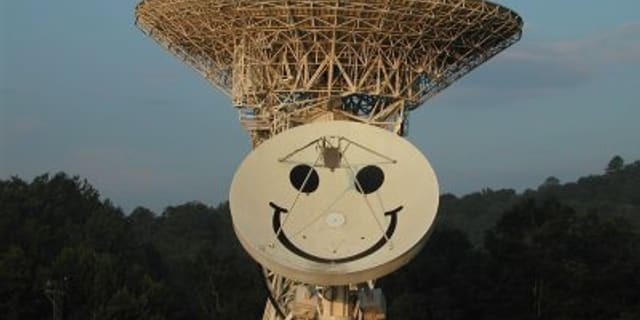
Pisgah Astronomical Research Institute
astronomical observatory near Asheville, NC