
CEAMIG-REA Observatory
Satellite imagery: Esri, Maxar, Earthstar Geographics
CEAMIG-REA Observatory is based in Belo Horizonte, in the Brazilian state of Minas Gerais, home to one of the country's longest-running amateur astronomy organisations.
About CEAMIG-REA Observatory
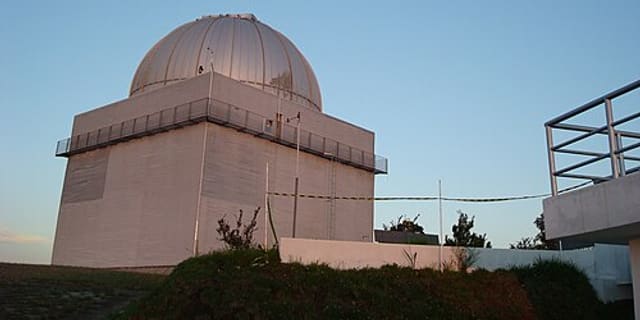
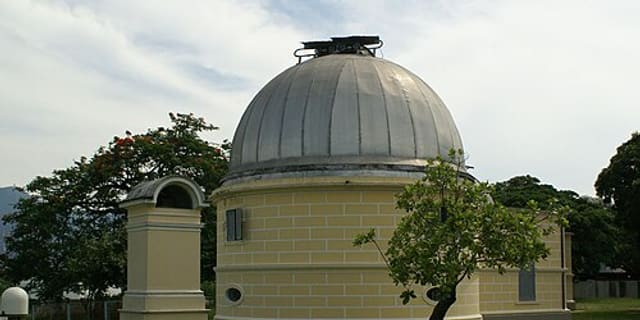
The observatory is operated by CEAMIG — the Centro de Estudos Astronômicos de Minas Gerais — an astronomy club recognised as a public-interest entity for the study and popularisation of astronomy. It is housed within the Oswaldo Nery Observatory building at Colégio Santo Agostinho in Belo Horizonte. The "REA" in the site's name refers to a collaborative meteor-observation network using all-sky cameras, an initiative developed by Cristóvão Jacques.
History
CEAMIG was founded in 1954, making it a long-established fixture of Brazilian amateur astronomy, predating the space age by several years and continuing its work through decades of change in observational technology.
Telescopes & research
Members of CEAMIG carry out research into asteroids, comets, supernovae, and stellar occultations, with findings that have contributed to international publications. The club is organised into working groups covering telescope construction, astrophotography, asteroid observation, and radio astronomy, reflecting a broad and active membership rather than a single narrow specialism.
Location & getting there
The observatory sits in Belo Horizonte, the capital of Minas Gerais in southeastern Brazil, within the grounds of Colégio Santo Agostinho. Being based in a major metropolitan area, it is more accessible than many remote observatories, though its programme is organised around club activities and events rather than casual daily visits.
Visiting CEAMIG-REA Observatory
CEAMIG offers courses, lectures, and organised sky-observation sessions to the public. Because scheduling follows the club's own programme, it's worth checking CEAMIG's website or contacting the group directly before planning a visit.
See your named star from here
With CEAMIG's mix of amateur and research-grade equipment, its members are well placed to help locate a specific point in the sky. If you've named a star with Star Register, its coordinates can guide an observation from a site like this; you can also explore the star catalogue to find one worth dedicating.
Opening hours and public-visit programs vary by season. Check Google Maps for current times before you travel.
Institutional and reference sources used to verify this guide.
Satellite imagery: Esri, Maxar, Earthstar Geographics

 343 km
 350 kmResearch