
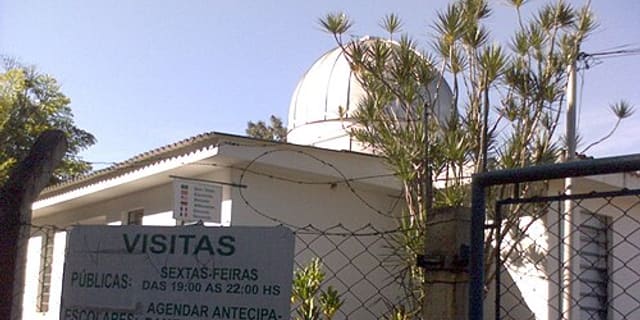
Pico dos Dias Observatory

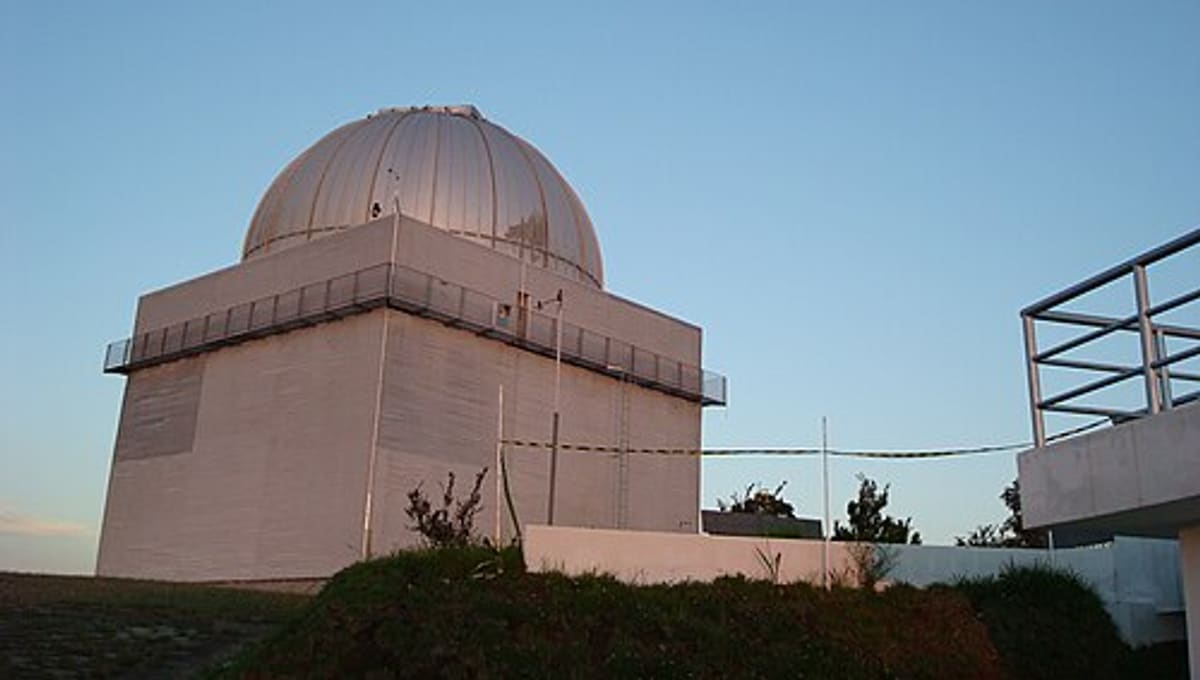
Image: Wikimedia Commons
Pico dos Dias Observatory rises above the hills of Minas Gerais, Brazil, 37 kilometres from the city of Itajubá, at an elevation of 1,864 metres.
About Pico dos Dias Observatory
Pico dos Dias Observatory (Observatório Pico dos Dias, OPD) is owned and operated by Brazil's National Laboratory for Astrophysics (Laboratório Nacional de Astrofísica, LNA). It's the country's principal optical observing site, chosen for its dark skies and elevation well above the haze of the surrounding lowlands.
History
The observatory achieved first light on 22 April 1980 and opened the following year, in February 1981, as the Brazilian Astrophysical Observatory (OAB). In 1985 it was reorganised as the National Laboratory for Astrophysics, the name and role it retains today.
Telescopes & research
The observatory's main instrument is a 1.6-metre Cassegrain reflector built by Perkin-Elmer, operational since 1981 and still the largest optical telescope in Brazil. A second, 0.6-metre Ritchey-Chrétien telescope was added in 1992, jointly operated by LNA and the University of São Paulo.
Location & getting there
At 1,864 metres above sea level in Minas Gerais, 37 km from Itajubá, the observatory's mountain setting keeps it clear of city lights and much of the lower atmosphere, making it one of Brazil's best sites for optical astronomy.
Visiting Pico dos Dias Observatory
Public access is limited, as the site is primarily a working research observatory; check with LNA directly or its official website for any scheduled open days or tour arrangements before planning a visit.
See your named star from here
A star named through Star Register comes with precise right ascension and declination coordinates that work with any telescope, including instruments as capable as those at Pico dos Dias. Name a star or explore the star catalogue to find your star's coordinates.
Opening hours and public-visit programs vary by season. Check the official website and Google Maps for current times before you travel.
Institutional and reference sources used to verify this guide.
Satellite imagery: Esri, Maxar, Earthstar Geographics

 123 kmRadio
 134 km
 155 km
 183 km