
Calar Alto-CASADO observatory

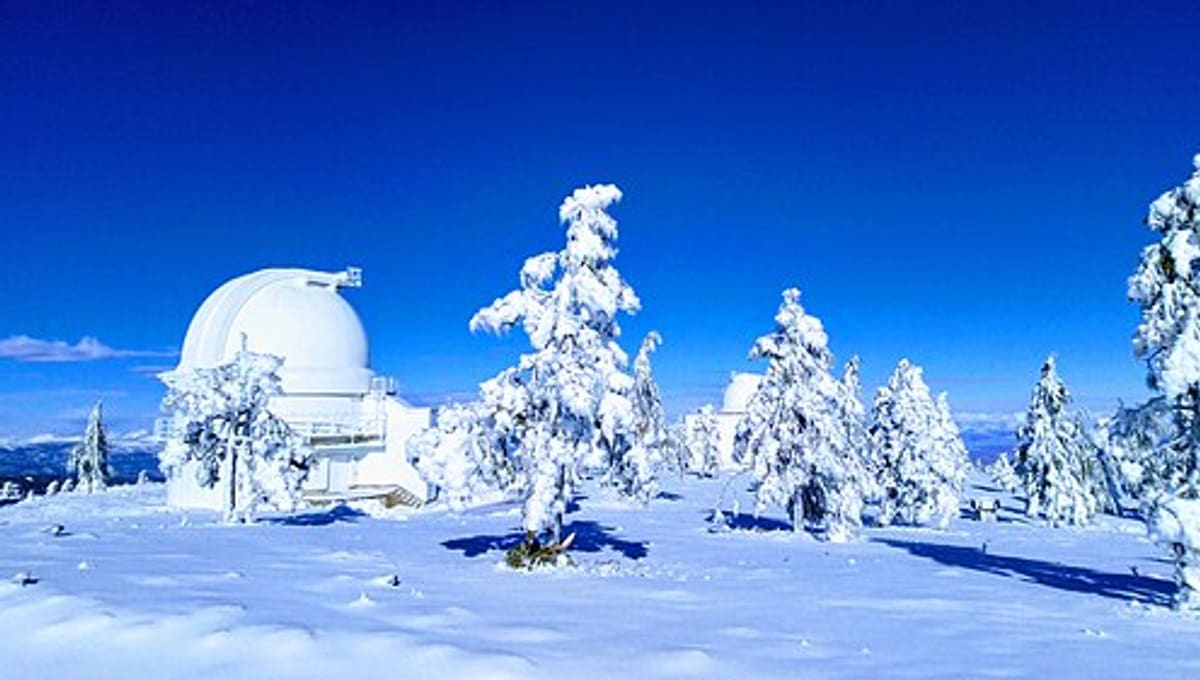
Image: Wikimedia Commons
Calar Alto-CASADO observatory is a research programme based at Calar Alto Observatory in Almería, southern Spain, dedicated to finding asteroids.
About Calar Alto-CASADO observatory
CASADO stands for the Calar Alto Serendipitous Asteroid Discovery and Observation Program, which began in October 2012. It runs on the 1.23-metre telescope at the wider Calar Alto Observatory complex, itself jointly operated by CSIC and the Max Planck Institute.
Telescopes & research
The programme uses semi-automated software to calibrate images astrometrically and detect asteroids in the data. By March 2014 it had produced 151 provisional designations, including 2013 SA87, the only trans-Neptunian object discovered that year. Its observers also carry out secondary analysis of the observational data collected.
Location & getting there
The site sits high in the Sierra de los Filabres, in Almería province, Spain, within the Europe region — the same mountain range that hosts the rest of the Calar Alto complex.
Visiting Calar Alto-CASADO observatory
Visiting information for the wider Calar Alto site is published on its official website; this particular programme runs as part of that larger research facility rather than as a separate attraction.
See your named star from here
An asteroid-hunting programme built around precise astrometric calibration works with exactly the kind of coordinate data that comes with a named star. Browse our star-naming packages or the star catalogue to name your own.
Opening hours and public-visit programs vary by season. Check Google Maps for current times before you travel.
Institutional and reference sources used to verify this guide.
Satellite imagery: Esri, Maxar, Earthstar Geographics

 under 1 km
 70 km
70 km