
Calais Observatory

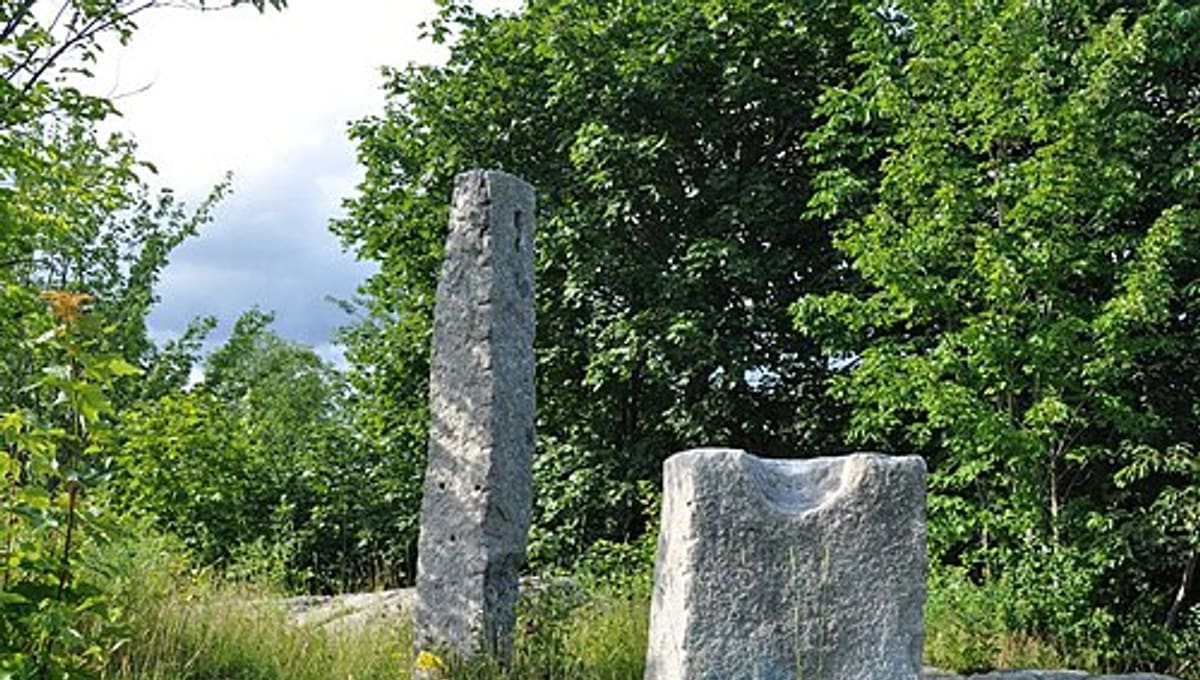
Image: Wikimedia Commons
The Calais Observatory is not a telescope dome but a pair of 19th-century granite survey markers in Meridian Park, Calais, Maine, once used to pin down the town's exact position on Earth.
About Calais Observatory
The Calais Observatory consists of two granite fixtures in Meridian Park in Calais, Maine, used for mounting scientific survey equipment. It was built for the United States Coast Survey's work in astronomical geodesy rather than for viewing the sky through a telescope.
History
The stones were used to precisely calculate Calais's longitude relative to meridians in Cambridge, Massachusetts, and Greenwich, England. By the time of its 1866 longitude determination against the Greenwich meridian, the site was arguably one of the most precisely located places in the United States. It was listed on the National Register of Historic Places in 2012 and is part of NOAA's Heritage Trail program.
Location & getting there
The site sits in Meridian Park in Calais, Maine, on the U.S. border with New Brunswick, Canada.
Visiting Calais Observatory
As a public park monument rather than a working telescope facility, the site can be visited during normal park hours. There is no dome, telescope, or visitor centre on site, so check with the town of Calais or NOAA's Heritage Trail information before planning anything beyond viewing the historic markers.
See your named star from here
Calais Observatory's granite markers were built for measuring the Earth rather than viewing the stars, so it's not the place to spot your named star in a telescope. Instead, browse the observatories directory for a working telescope near you, or look up your star's coordinates in the catalogue and name one today.
Opening hours and public-visit programs vary by season. Check Google Maps for current times before you travel.
Institutional and reference sources used to verify this guide.
Satellite imagery: Esri, Maxar, Earthstar Geographics

 304 km
 416 km
 441 kmResearch
 442 km