
Bothkamp Observatory

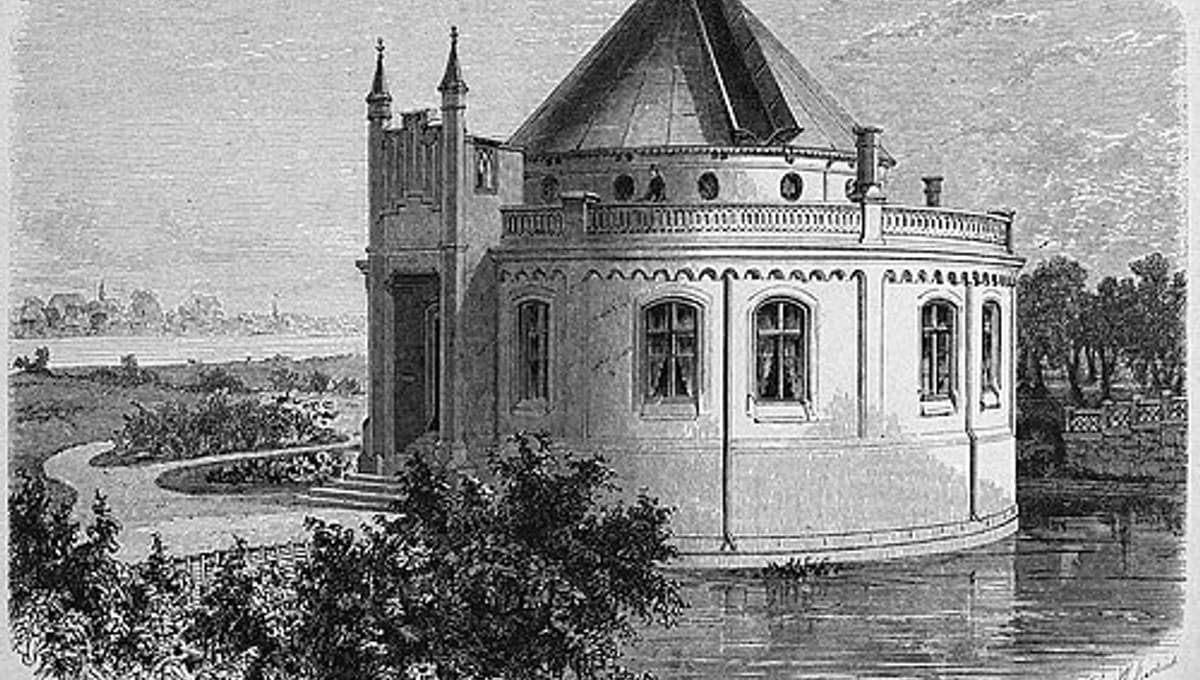
Image: Wikimedia Commons
Bothkamp Observatory once stood on the Bothkamp estate in eastern Schleswig-Holstein, Germany, and played an outsized role in the early history of astrophysics.
History
The observatory was founded in 1869/70 by the estate's chamberlain, Gustav von Bülow, after a suggestion from astronomer Karl Friedrich Zöllner. It operated from 1870 until 1914, with Hermann Carl Vogel as director and Wilhelm Oswald Lohse as his assistant. Their spectroscopic and photometric work there helped establish astrophysics as a discipline in its own right, ahead of the later Astrophysical Observatory in Potsdam. The observatory no longer exists: the building was demolished in the 1930s, after the First World War brought its research programme to an end.
Telescopes & research
Its main instrument was a 29.3 cm refractor with a 4.9 m focal length, housed in a rotunda with a hollow central column supporting the telescope. At the time it was built, this was the largest single telescope assembled in Germany, and the second largest on the European continent after the refractor at Pulkovo. Vogel and Lohse used it for detailed spectroscopic and photometric investigations.
Location & getting there
The former observatory site sits in the Europe region, on the Bothkamp estate in eastern Schleswig-Holstein, Germany. Use the map and directions button on this page for the current route to the area.
Visiting Bothkamp Observatory
Because the observatory building was demolished in the 1930s, there's no historic structure left to visit on site today.
See your named star from here
Vogel and Lohse's spectroscopic work at Bothkamp relied on precise positional data, the same kind of coordinates that come with every named star today. Browse the star catalogue to see stars named near this part of northern Germany.
Opening hours and public-visit programs vary by season. Check Google Maps for current times before you travel.
Institutional and reference sources used to verify this guide.
Satellite imagery: Esri, Maxar, Earthstar Geographics

 15 kmRadio
 55 kmPublic
 81 km
81 km