
Astronomic Observatory in Włocławek

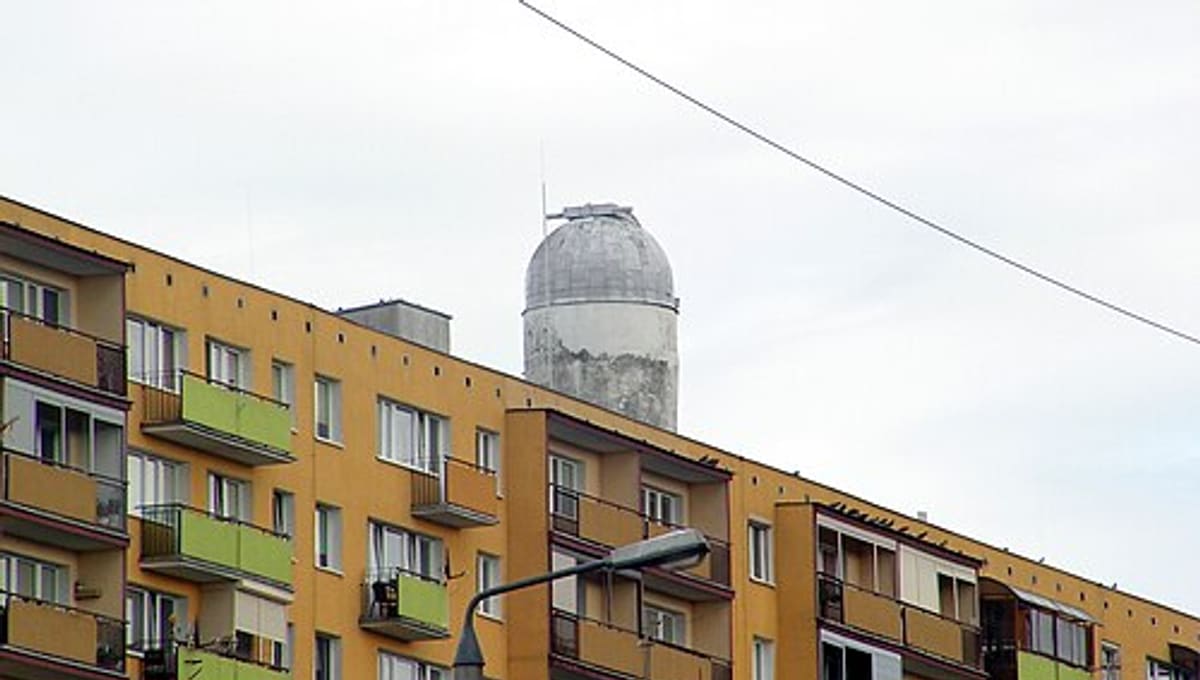
Image: Wikimedia Commons
The Astronomical Observatory in Włocławek is a small rooftop observatory in Poland, built above a residential school block at 16 Fredry Street and run for the benefit of students and the wider community.
About the Observatory
The observatory sits on the roof of a block of flats dating from 1984 and belongs to Team of Schools No. 4, named after the poet K. K. Baczyński. It is one of only a handful of schools in Poland to operate a genuine astronomical observatory, and it is formally registered with the US Naval Observatory and the International Occultation Timing Association in Tokyo, reflecting a level of activity beyond a typical classroom telescope.
History
Housed on the roof of a 1984-built residential block, the observatory was established to popularise astronomical knowledge among students at the school and residents of Włocławek more broadly, a mission it continues through regular public events.
Telescopes & research
The observatory's registration with international occultation-timing and naval observatory networks points to it contributing amateur observational data alongside its educational role, in addition to running its own public sky-viewing sessions.
Location & getting there
It stands in the city of Włocławek in central Poland, on Fredry Street, easily reached as part of the town rather than requiring travel to a remote dark-sky site.
Visiting the Observatory
Public sky shows are held every clear Friday night, with viewing times shifting through the year: around 8:00 pm in winter, 9:00 pm in spring, and both 8:00 pm and 10:30 pm in summer. The sessions are aimed at residents and visitors from the town and surrounding province, so arriving on a clear Friday evening is the simplest way to see the sky through the observatory's telescope.
See your named star from here
Since the Włocławek observatory regularly opens its telescope to the public on clear Fridays, it's a genuine option for locating the coordinates of a star named through Star Register. Check the star catalogue for details on how your named star's position is recorded.
Opening hours and public-visit programs vary by season. Check Google Maps for current times before you travel.
Institutional and reference sources used to verify this guide.
Satellite imagery: Esri, Maxar, Earthstar Geographics

 218 km