
Breslau observatory

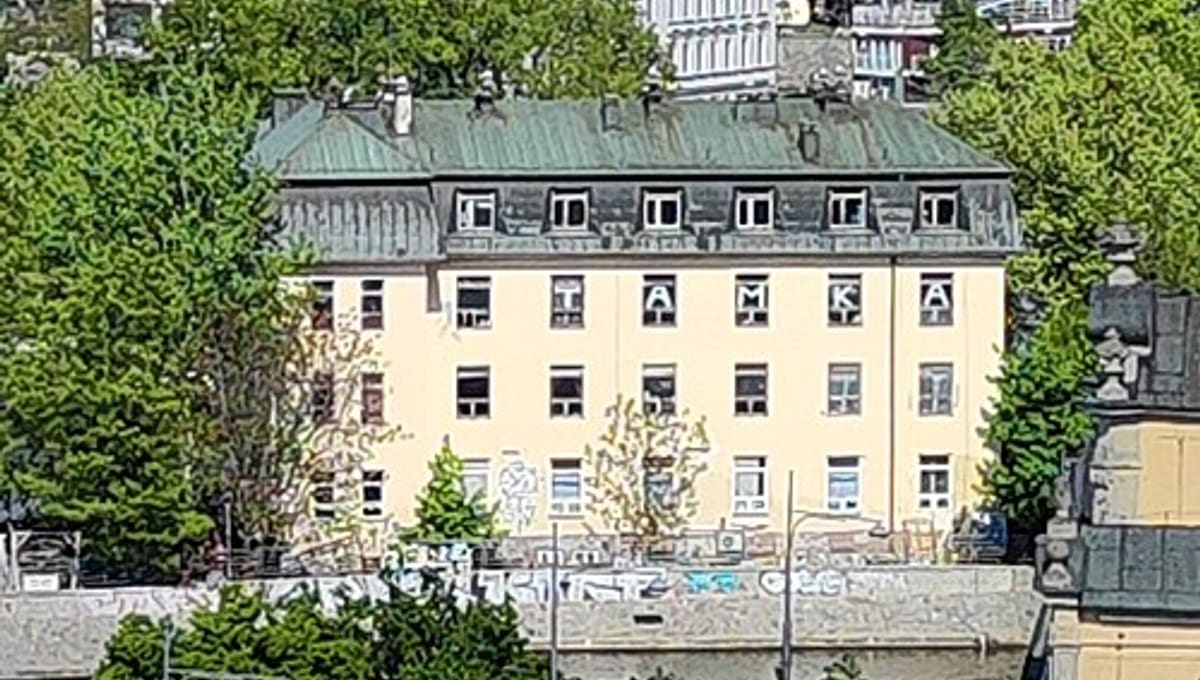
Image: Wikimedia Commons
Breslau observatory stands in Wrocław, Poland, one of Central Europe's oldest surviving astronomical institutions and a site with a genuine claim to fame in the history of planetary discovery.
About Breslau observatory
Housed in a red, three-storey Bauhaus-style building topped with a dome, the observatory contains a 20-centimetre Clark-Repsold refractor telescope. It is still used today for museum exhibitions and public outreach, connecting visitors with more than two centuries of astronomical work on the same site.
History
The observatory was founded in 1791 by Longinus Anton Jungnitz (1764–1831) at the University of Wrocław's Mathematical Tower. It was later led by a succession of notable astronomers: Ernst Julius Scholtz; Heinrich Ludwig von Bogusławski, who discovered a comet in 1835; and Johann Gottfried Galle, who went on to co-discover the planet Neptune in 1846. Over its history, the observatory specialised in geodetic astronomy, meteorology, comet and meteor observation, and photometry.
Telescopes & research
The observatory's historic 20-centimetre Clark-Repsold refractor remains on site, a direct link to the instrument-driven research that made Breslau a centre of nineteenth-century astronomy, including work on comets and precise positional measurements.
Location & getting there
Breslau observatory is located in Wrocław, Poland, in the Europe region. Use the map and directions button on this page for current travel information.
Visiting Breslau observatory
The building continues to host museum exhibitions and public outreach events; check the University of Wrocław's current listings for opening hours before visiting.
See your named star from here
An observatory once home to the co-discoverer of Neptune is a fitting place to think about your own named star and its exact position in the sky. Browse the star catalogue to find its coordinates.
Opening hours and public-visit programs vary by season. Check Google Maps for current times before you travel.
Institutional and reference sources used to verify this guide.
Satellite imagery: Esri, Maxar, Earthstar Geographics

 125 km
 141 kmNon-optical
 185 km