
Amundsen–Scott South Pole Station

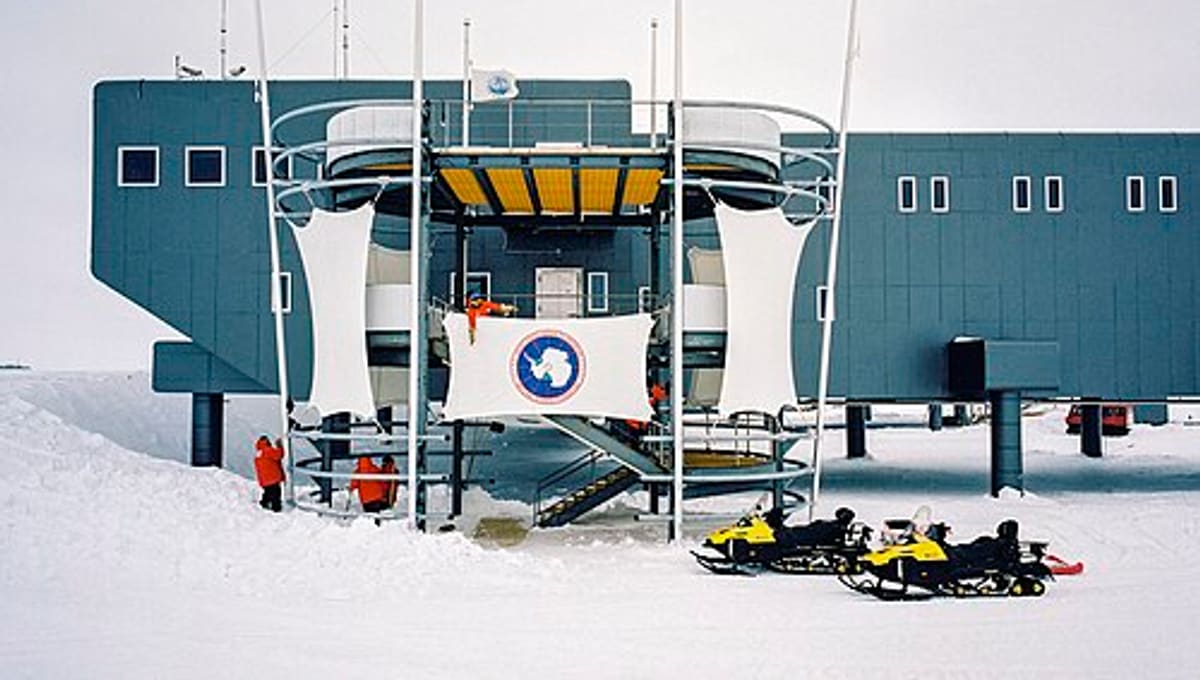
Image: Wikimedia Commons
Standing on the high plateau of Antarctica at 2,835 metres above sea level, the Amundsen–Scott South Pole Station is a United States research station that also happens to be one of the best astronomical observing sites on Earth.
About Amundsen-Scott South Pole Station
Named for polar explorers Roald Amundsen and Robert F. Scott, the station is administered by the National Science Foundation's United States Antarctic Program. It is the only inhabited place on Earth where the sun stays continuously visible for six months and continuously dark for the other six, giving it roughly five and three-quarter months of dry, dark, stable atmosphere ideal for astronomical observation.
History
The original station was built by US Navy Seabees in November 1956 as part of the International Geophysical Year, an international science effort running from January 1957 to June 1958. Before that, there was no permanent structure at the pole at all. The station has been continuously occupied ever since, and has been rebuilt, expanded and upgraded multiple times to support a peak summer population of around 150 people, dropping to roughly 50 through the dark winter months.
Telescopes & research
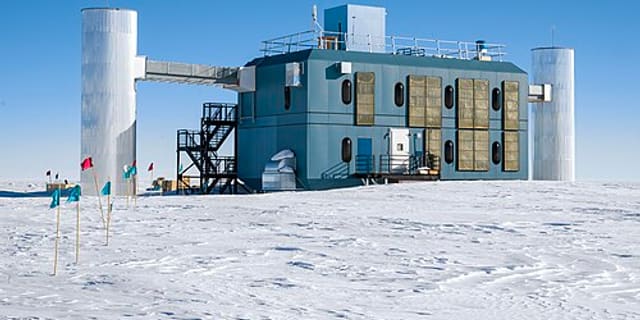
The station hosts the South Pole Telescope, a 10-metre dish built to study the cosmic microwave background and, as part of the Event Horizon Telescope network, one of the instruments that helped capture the first-ever image of a black hole. It also hosts the IceCube Neutrino Observatory, which uses over 5,000 optical sensors frozen deep in the polar ice to detect neutrinos, along with the Martin A. Pomerantz Observatory and an atmospheric research facility.
Location & getting there
The station sits at the geographic South Pole itself, reachable only by specialised aircraft during the brief Antarctic summer, with supplies also arriving via the South Pole Traverse route from McMurdo Station on Ross Island.
Visiting Amundsen-Scott South Pole Station
The station is a working scientific research facility, not a tourist destination, and access is tightly controlled by the US Antarctic Program for researchers and support staff. Travellers curious about the pole should look into organised polar expeditions rather than expecting entry to the station itself.
See your named star from here
Few places on Earth offer darker, drier skies for astronomy than the South Pole, home to instruments that have imaged a black hole and hunted neutrinos from across the universe. A star named through Star Register comes with the same kind of fixed celestial coordinates that make a site like this valuable. Name a star or browse the star catalogue to find one.
Opening hours and public-visit programs vary by season. Check Google Maps for current times before you travel.
Institutional and reference sources used to verify this guide.
Satellite imagery: Esri, Maxar, Earthstar Geographics

 1 km
1 km