

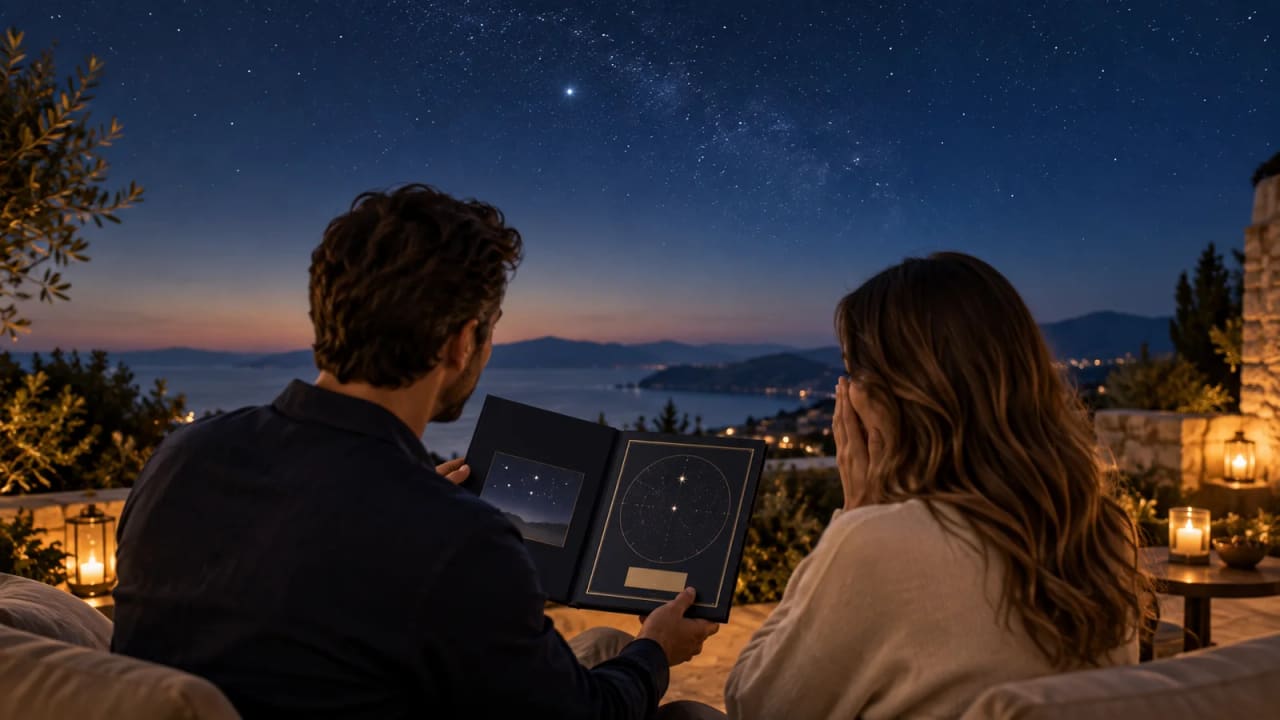
To name a star after someone, choose a reputable private star registry, select a package and constellation, enter the recipient's name and dedication date, carefully proofread the certificate, and keep the assigned coordinates and catalogue number. The result is a symbolic dedication of a real star—not an official scientific renaming or legal ownership.
Best approach: choose the meaning before the package. A familiar constellation, an important date and a short personal message usually matter more than expensive packaging.
How to name a star after someone in seven steps
- Choose the occasion and recipient. Decide what the star should represent: a birthday, relationship, new baby, achievement or remembrance.
- Compare private registries. Check their status statement, star data, package contents, delivery terms and independent reviews.
- Select a package. Choose digital delivery for speed or a printed presentation if the recipient would value a physical keepsake.
- Choose the name, date and message. Make them personal, readable and appropriate for the certificate.
- Choose a constellation or visibility level. If offered, match it to where and when the recipient is likely to look.
- Proofread before payment. Check spelling, accents, dates, delivery address and how corrections are handled.
- Plan the reveal. Keep the coordinates and catalogue ID, open the sky map in advance, and find the star together.
If you are ready to compare presentation formats, start with our name a star after someone gift page. The rest of this guide explains each choice and the mistakes worth avoiding.
What does it mean to name a star after someone?
A commercial star-naming service creates a personal dedication in a private registry. The provider links the name you choose to a real astronomical object, records the entry in its database and supplies identifying information—normally celestial coordinates, a constellation, a registration number and sometimes a scientific catalogue ID.
That personal name does not replace the designation used by astronomers. The International Astronomical Union coordinates official astronomical names and does not sell personal star names; NASA does not operate a commercial registry either. Our evidence-led article Can you buy a star, and is star naming legit? explains the distinction in detail.
The honest description is still compelling: you are dedicating an identifiable star to someone and creating a keepsake around that association. The star is real, the personal record can be permanent within the chosen registry, and the coordinates provide a genuine place in the sky to revisit.

What to decide before you order
Write down four things before opening a product configurator. This prevents the certificate from becoming a collection of rushed checkout choices.
| Decision | Useful question | Example |
|---|---|---|
| Meaning | What should this star represent in one sentence? | “A permanent reminder of the year we met.” |
| Name | What will still feel natural years from now? | A full name, family nickname or short shared phrase |
| Date | Which date belongs to the story? | Birthday, wedding, graduation or memorial date |
| Reveal | How will the recipient experience it? | Digital surprise, framed certificate or stargazing evening |
For a surprise, confirm the recipient's full spelling indirectly and avoid guessing at accents or a changed surname. For a memorial, ask a close family member whether the planned wording and public visibility feel appropriate.
Step 1: choose a trustworthy provider and package
A reliable provider should explain exactly what it sells. Look for a clear statement that the name is a symbolic private dedication, a legal business identity, secure payment, detailed fulfilment terms and a privacy policy. The assigned star should come with coordinates and enough information to distinguish it from a decorative certificate.
Provider checklist
- Real identification: celestial coordinates and ideally a recognised catalogue number.
- Retrievable record: a registration ID and working online lookup.
- Honest status: no claim that NASA or the IAU sells or approves the personal name.
- Transparent total: package price, tax, shipping and optional upgrades visible before payment.
- Proofing and corrections: a preview or a clearly stated way to fix a genuine production error.
- Delivery detail: realistic dispatch times and tracking where appropriate.
- Independent feedback: recent reviews that include both positive and critical experiences.
Digital packages suit last-minute gifts and let you print locally. Printed folders and framed presentations add ceremony. Premium options may include gift boxes, jewellery or brighter-star choices, but paying more does not make the name scientifically official. See our current star naming cost guide before comparing totals.
Step 2: choose a star name that will age well
The strongest name is recognisable to the recipient without needing a long explanation. A person's full name is timeless and formal; a nickname is warmer; a short phrase can capture a shared story. Avoid long sentences, private information the recipient would not want publicly searchable, and jokes that may feel dated when the certificate is displayed years later.
| Recipient | Name direction | Example style |
|---|---|---|
| Partner | Names, initials or a shared phrase | “Maya & Alex” or “Our First Night” |
| New baby | Full name or affectionate family name | “Elena Rose” |
| Parent or grandparent | Family title plus name | “Grandad Thomas” |
| Graduate | Name with a restrained achievement phrase | “Dr. Samira Khan” |
| Memorial | Full name or familiar name used in life | “In Memory of Daniel” |
| Whole family | Family surname or home-themed phrase | “The Rivera Family Star” |
Check the provider's character limit and supported alphabet. If the name includes diacritics, paste it into the final preview and verify the actual glyphs rather than assuming they will print correctly. Take a screenshot of the approved details before submitting the order.
Step 3: select the dedication date
The dedication date does not have to be the day you place the order. Many people use the recipient's birthday, wedding date, anniversary, graduation date or the date a loved one died. Choose the date that makes the story immediately understandable.
For an anniversary, the year can give the gift context decades later. For a newborn, confirm whether the family uses local time or the hospital's recorded date around midnight. A memorial date can be a birthday rather than a date of death if the family prefers the dedication to celebrate a life.
Step 4: choose a constellation and think about visibility
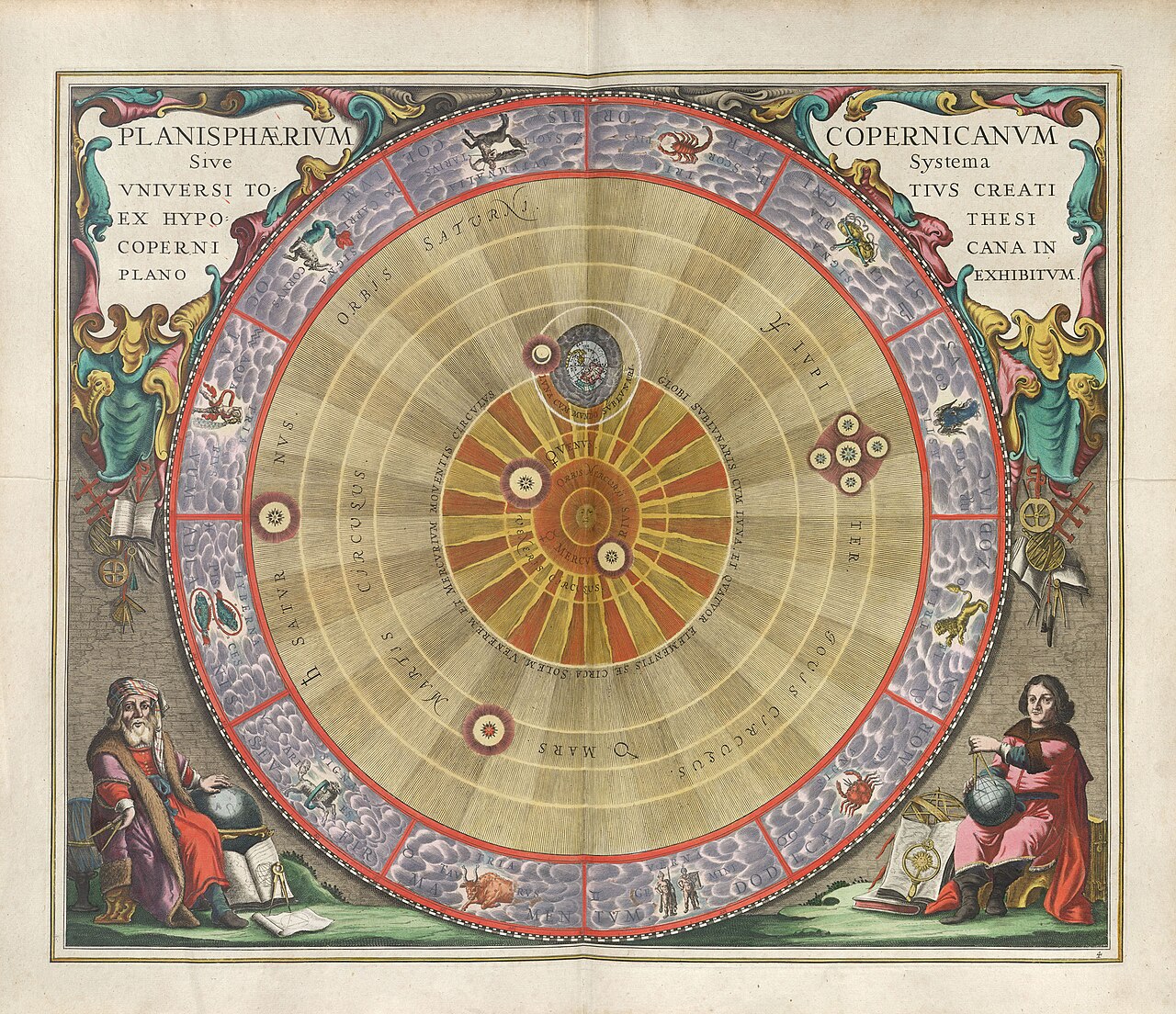
If the registry allows constellation selection, start with meaning and then check practicality. A zodiac constellation may connect to a birthday, Orion may be easy for a beginner to recognise, and a circumpolar northern constellation can remain above the horizon throughout the year at suitable latitudes. Explore the constellation directory before deciding.
Visibility depends on declination, the observer's latitude, season, local light pollution and the star's apparent magnitude. A star may be real yet too faint for the naked eye. If finding it matters, ask what equipment is required. A provider that offers a “bright star” option should state what that term means rather than relying on a decorative label.
Practical rule: choose a recognisable surrounding constellation and keep the star's coordinates. The constellation gets you into the right neighbourhood; a chart or app handles the final hop.
Step 5: write a short dedication message
A dedication works best when it says why this person and why this star. Two or three specific sentences usually feel more sincere than a page of cosmic clichés. Use the recipient's natural voice: romantic for a partner, proud for a graduate, gentle for a memorial, playful for a child.
Original message examples to adapt
- Partner: “For every ordinary evening that became unforgettable because you were there. When we look up, this will always be our place in the sky.”
- Birthday: “A light for every year behind you and every adventure still ahead. Happy birthday, Lina.”
- New baby: “Welcome, Noah. May curiosity guide you and love always show you the way home.”
- Graduation: “You worked for this horizon. Keep going—the world is larger and brighter because you are in it.”
- Memorial: “For David, whose kindness still helps us find our way. Loved, remembered and spoken of often.”
Replace the generic lines with one concrete memory, place or quality. “For the night we missed the last train and walked home laughing” belongs to one relationship; “you are my shining star” could belong to anyone.
Step 6: proofread the personalised order
Personalised goods may enter production quickly and can have narrower cancellation rights. Review every field before payment:
- Recipient's name, punctuation, accents and capitalisation;
- Dedication date and date format;
- Personal message, line breaks and character limits;
- Chosen constellation, brightness or package option;
- Email address, delivery address, postcode and phone number;
- Final price after tax, shipping and optional extras.
Save the order confirmation and a copy of the final preview. When the package arrives, check that the certificate, map and lookup record all show the same registration number and coordinates.
Step 7: turn the certificate into an experience
The certificate is the beginning of the gift, not necessarily the climax. Open the supplied map before the reveal, note when the constellation will be visible, and choose a location away from direct lighting. Our guide to finding a star in the night sky explains orientation, star hopping and equipment.
A simple presentation plan is often enough:
- Give the certificate indoors where the recipient can read it.
- Explain plainly that it is a symbolic private dedication of a real star.
- Show the constellation on the printed chart or app.
- Go outside together when conditions are suitable.
- Save the coordinates in a shared note for future anniversaries.
If your city sky is too bright, choose a location from our stargazing directory or plan a visit using the observatory directory. Even if the assigned star requires binoculars or a telescope, locating its surrounding constellation makes the dedication tangible.
Mistakes to avoid
- Calling it official or NASA-approved. Private dedications do not alter scientific records.
- Choosing only by package price. Verify the star data, terms and final delivered total.
- Assuming naked-eye visibility. Ask for magnitude and equipment guidance.
- Rushing the personalisation. A spelling error can be more memorable than the intended surprise.
- Ignoring the recipient's tastes. Some people prefer an experience or donation; others love a physical certificate.
- Making a memorial public without consent. Consider family preferences and privacy.
Common questions
Can I name a star after any person?
Usually yes, subject to the registry's content and character rules. Use the recipient's consent before publishing sensitive information, and be especially careful with children's full names.
Can two people have the same star name?
A provider may keep a chosen name unique within its own registry, but private registries are independent. Another company can associate the same name—or a different name—with the same astronomical object.
How long does it take?
Digital certificates may arrive within minutes or hours after the order is processed. Printed packages depend on production method, destination and shipping service. Check the promised delivery date at checkout, especially near holidays.
How much does it cost to name a star after someone?
Digital packages are often around $10–$50; printed or premium presentations commonly reach roughly $40–$100 or more. Shipping, frames, brightness options and taxes can change the total. Price does not change the name's scientific status.
Can the recipient find the star?
They can identify its position if the package includes valid coordinates or a catalogue number. Whether they can see it directly depends on brightness, location, season, weather and equipment.
Can I rename the star later?
Policies differ. Because certificates and records are personalised, corrections may be limited after production. Treat the final preview as permanent unless the provider's terms clearly say otherwise.
Sources and further reading
- International Astronomical Union — Buying Stars and Star Names.
- NASA StarChild — How can I buy a star?.
- American Astronomical Society — Can I buy a star?.
- LabelStars — How to name a star after someone, an example of the ordering process from a commercial provider.
- StarRegistration.net — Standard star gift, for another example of package information and presentation options.
When you are ready, compare the options on our name a star after someone page, check buy-a-star packages, or browse real positions in the star catalogue.