
Thompson's Harbor State Park

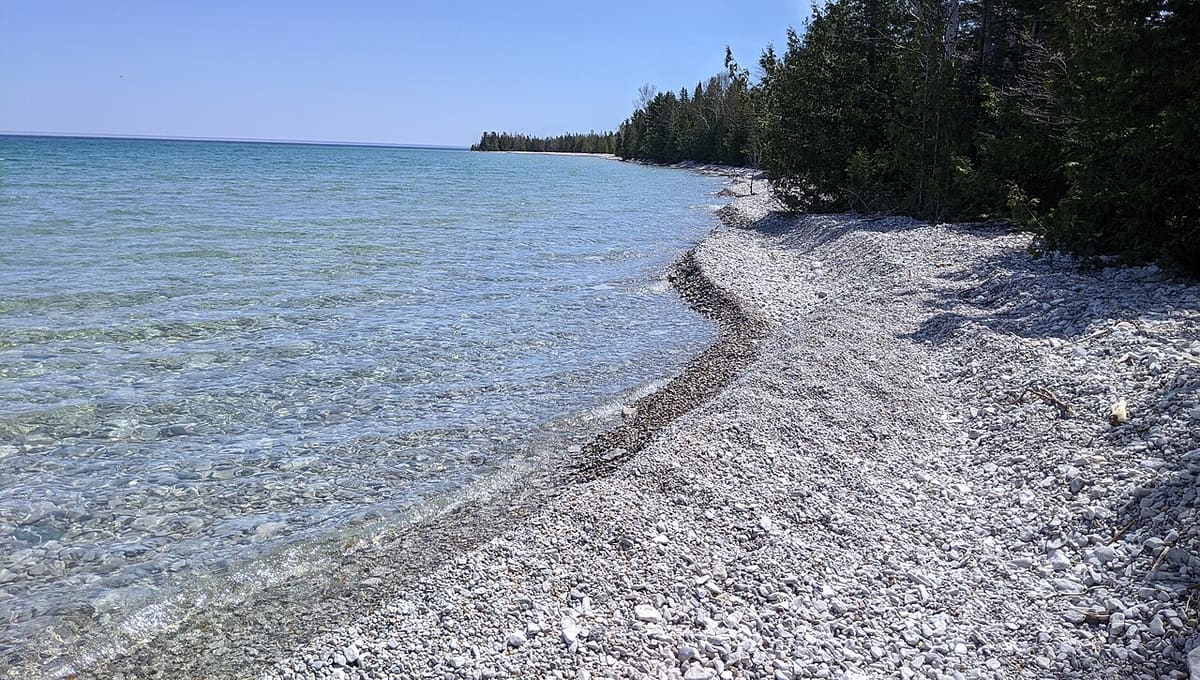
Image: DawnBreaksOverMarblehead · CC BY-SA 4.0 · Wikimedia Commons
Thompson's Harbor State Park is a remote, largely undeveloped stretch of Lake Huron shoreline in Presque Isle County, Michigan, designated a Michigan Dark Sky Preserve in 2016. Its 5,109 acres of second-growth forest, limestone cobble beaches, and sand dunes keep the park free of the light pollution that washes out the sky in nearby towns.
Why Thompson's Harbor State Park is a top stargazing spot
Michigan's Dark Sky Preserve designation, awarded in 2016, recognizes parks with unusually dark, undeveloped night skies, and Thompson's Harbor is one of just six sites in the state to hold it. It earns the status through sheer isolation: the park has no roads through its interior, no campground lighting, and 7.5 miles of pristine shoreline facing north across Lake Huron. With no artificial glow to compete with, the horizon over the lake stays genuinely black on a clear night.
What you can see
On a clear night the Milky Way arcs directly over the water, and the open lake horizon gives an unusually wide, uninterrupted view for stargazing this far north. Because the park faces north across Lake Huron, it is also one of the better spots in the region to watch for the Northern Lights when solar activity is high, alongside the usual run of seasonal meteor showers.
Visiting Thompson's Harbor State Park at night
The park has two year-round rustic cabins, each sleeping four to six guests, but no traditional campground, so most stargazers plan a day visit or book a cabin well ahead; the Michigan DNR opens bookings up to six months in advance. A Michigan Recreation Passport, the state's park pass, is required for vehicle entry. Six miles of trails, used for hiking in summer and cross-country skiing in winter, and opportunities for sea kayaking mean there's plenty to do before dark falls.
Best time to go
At this latitude in the Northern Hemisphere, the Milky Way's core sits fairly low in the southern sky but is still visible on clear, moonless nights roughly from June to August, appearing above the lake in the hours after dusk. The darker months either side of summer bring longer nights and better odds of catching the Northern Lights, along with the Perseid meteor shower in August, the Geminids in December and the Quadrantids in January. As with any dark-sky site, aim for a clear night near the new Moon, give your eyes at least twenty minutes to adjust, and use a red flashlight to protect your night vision.
Getting there
The park is about 24 miles north of Alpena along US Route 23 North, on Michigan's northeastern Lake Huron shoreline.
See your named star from here
A sky this dark reveals stars invisible from any city, which makes Thompson's Harbor a genuinely good place to track down a star you've had named through Star Register. Bring your certificate's coordinates and a stargazing app, and the shoreline's open horizon does the rest. Browse the full star catalogue to name one first, or check our list of observatories if you'd like an astronomer-led night instead.
Conditions and access vary by season. Check the official website and Google Maps before you travel, and aim for a clear night near the new Moon for the darkest sky.
Satellite imagery: Esri, Maxar, Earthstar Geographics

 57 kmPreserve
 107 kmDark Sky Park
 153 kmPreserve
 268 kmDark Sky Park