
Yerkes Observatory

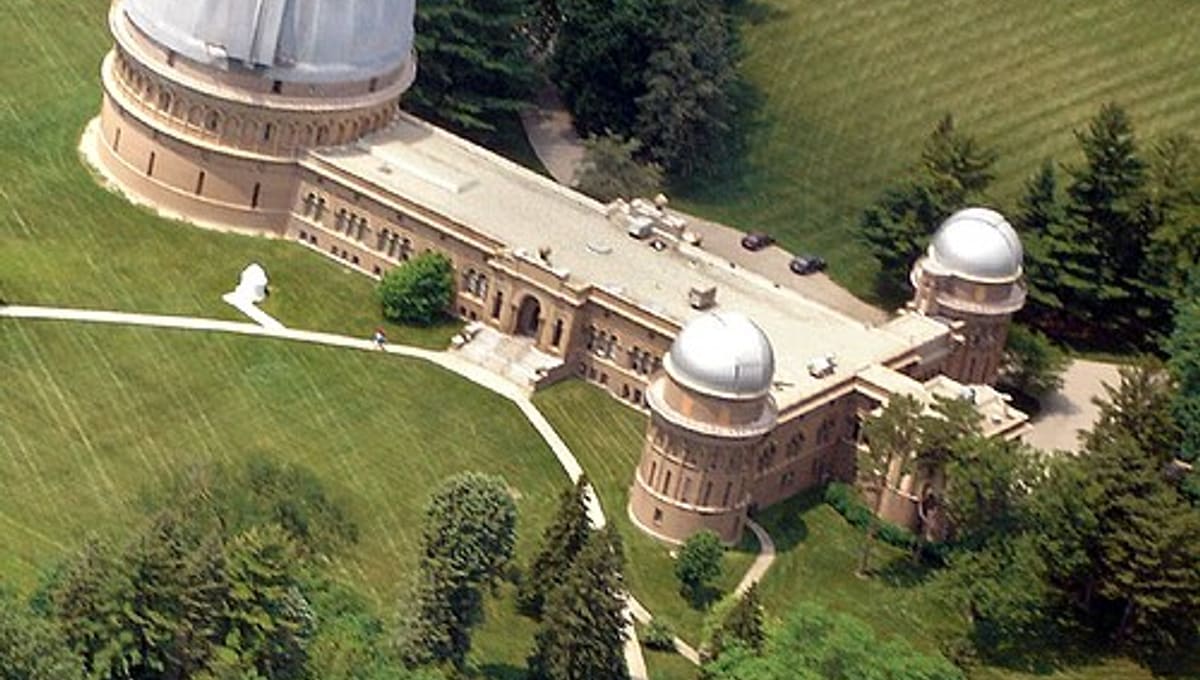
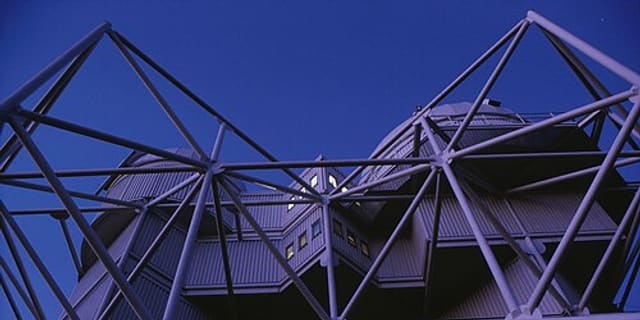
Image: Wikimedia Commons
Yerkes Observatory sits in Williams Bay, Wisconsin, at an elevation of 334 feet, and is known as the "birthplace of modern astrophysics."
About Yerkes Observatory
Founded in 1892 by astronomer George Ellery Hale and financed by businessman Charles T. Yerkes, the observatory was dedicated in 1897. It marked a shift in how observatories were conceived: rather than simple housing for telescopes and observers, Yerkes integrated observing equipment with laboratory space for physics and chemistry analysis.
History
The University of Chicago's Department of Astronomy and Astrophysics operated Yerkes from its 1897 founding until closing it in October 2018. In November 2019 the university announced the observatory would transfer to the non-profit Yerkes Future Foundation (YFF), with ownership changing hands on 1 May 2020. Following restoration work, Yerkes reopened for public tours and programming in May 2022.
Telescopes & research
The main dome houses a 40-inch (102cm) doublet lens refracting telescope — the largest refractor ever successfully used for astronomical observation. Two smaller domes hold 41-inch (104cm) and 24-inch (60cm) reflecting telescopes. The observatory also holds an archive of more than 170,000 photographic plates. When dedicated in 1897, the 40-inch refractor was the largest telescope of its kind in the world, having been shown at the World's Columbian Exhibition in Chicago before installation.
Location & getting there
Yerkes Observatory is located in Williams Bay, Wisconsin, in the North America region, at an elevation of 334 feet.
Visiting Yerkes Observatory
Yerkes reopened to the public in May 2022 with tours and programming under the Yerkes Future Foundation. Check the official Yerkes Observatory website for current tour schedules and tickets before visiting.
See your named star from here
Few places connect you to the history of astronomy quite like the site of the world's largest refracting telescope. If you've named a star with us, its coordinates can guide a telescope here toward it. Name a star or browse the catalogue of stars already registered.
Opening hours and public-visit programs vary by season. Check the official website and Google Maps for current times before you travel.
Institutional and reference sources used to verify this guide.
Satellite imagery: Esri, Maxar, Earthstar Geographics

 47 km
47 km
 85 km
85 km
 92 kmResearch
 92 kmResearch
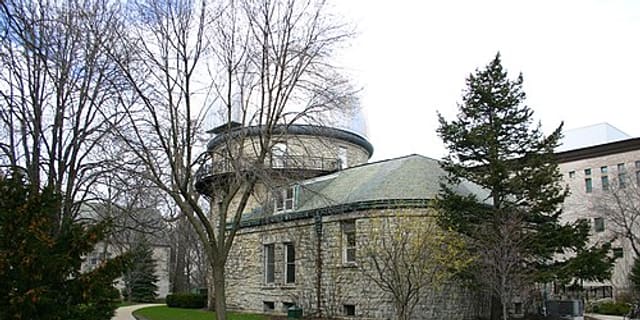
Lindheimer Astrophysical Research Center
former astrophysical observatory in Evanston, Illinois