
Xinjiang Astronomical Observatory


Image: Wikimedia Commons
Xinjiang Astronomical Observatory (XAO) is a major research institute of the Chinese Academy of Sciences, operating radio and optical telescopes across several sites in China's Xinjiang region.
About Xinjiang Astronomical Observatory
XAO carries out research across radio astronomy, optical astronomy, and applied astronomy, with particular strength in pulsars, star formation and evolution, galaxies and cosmology, and high-energy astrophysics. Its Radio Astrophysics Laboratory holds key-laboratory status both within the Chinese Academy of Sciences and the Xinjiang Uygur Autonomous Region.
History
The observatory was founded in 1957 as the Ürümqi Astronomical Observatory. It was renamed Xinjiang Astronomical Observatory in January 2011 to reflect its growth into a multi-site research institute.
Telescopes & research
XAO operates several sites, including Nanshan, Kashgar and Qitai, plus two further independent ground stations, supporting work that spans microwave receiver development, digital signal technology and GPS applications alongside its core astrophysics programme.
Location & getting there
The observatory's facilities are spread across Xinjiang in northwest China, an autonomous region whose dry climate and open terrain make it well suited to radio and optical astronomy. Visitors can find more detail on individual sites via the observatory's own website.
Visiting Xinjiang Astronomical Observatory
As a research institute rather than a public attraction, XAO does not run standard visitor tours across all its sites. Check the official website, english.xao.ac.cn, for the latest information before planning a visit.
See your named star from here
XAO's telescopes are built to point precisely at coordinates across the sky, the same right ascension and declination values that mark a star named through Star Register. Browse the star catalogue to see how a named star's position is recorded.
Opening hours and public-visit programs vary by season. Check the official website and Google Maps for current times before you travel.
Institutional and reference sources used to verify this guide.
Satellite imagery: Esri, Maxar, Earthstar Geographics
Nanshan Station, Xinjiang Observatory
astronomical observatory in Xinjiang, China
Xingming Observatory #3, Nanshan
astronomical observatory in Xinjiang, China

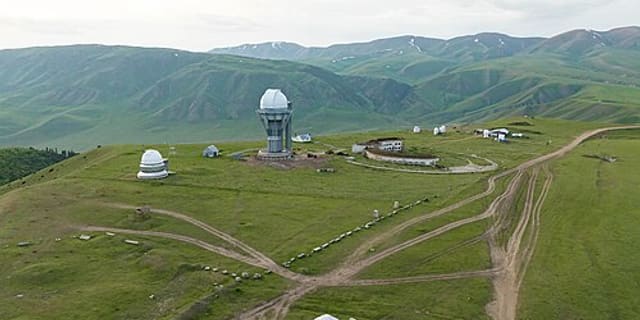 753 km
Assy-Turgen Observatory
observatory in Enbekshikazakh District, Almaty Region, Kazakhstan

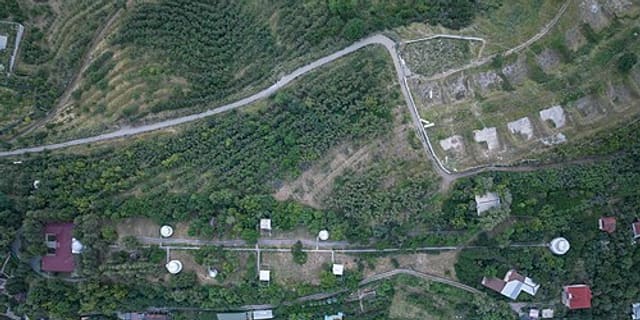 826 km