
Wilfred Hall Observatory


Image: Wikimedia Commons
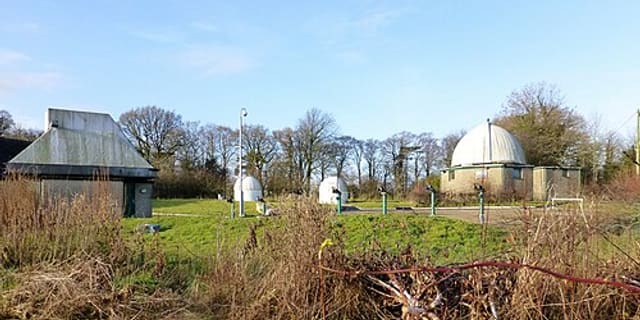
Wilfred Hall Observatory, also known as Alston Observatory, is a teaching and public-outreach observatory run by the University of Central Lancashire (UCLan) in Lancashire, England. It houses telescopes spanning more than a century of astronomical engineering, from a Victorian-era refractor to a modern research-grade reflector.
About Wilfred Hall Observatory
The site belongs to UCLan's Jeremiah Horrocks Institute and combines historic instruments with contemporary equipment for both students and the public. Its centrepiece, the Wilfred Hall Telescope, is a 15-inch Grubb refractor built in 1894 and hosted on behalf of the Royal Astronomical Society. Alongside it stands the Moses Holden Telescope, a 0.7-metre Planewave CDK700 that arrived in the summer of 2015 and was, at the time, described as one of the most modern telescopes in the UK.
Telescopes & research
Beyond its two flagship instruments, the observatory operates a set of robotic telescopes ranging from 20 to 30 centimetres in aperture, used for imaging and monitoring projects, plus a Discovery Dome planetarium system for public shows and teaching sessions. The historic Wilfred Hall dome itself was renovated in 2013 and now doubles as an exhibition space.
Location & getting there
Wilfred Hall Observatory sits in Lancashire, in the north-west of England, as part of the University of Central Lancashire's estate. Because the site combines teaching facilities with public events, the university publishes access details for each open evening rather than fixed daily hours.
Visiting Wilfred Hall Observatory
Public access is generally through UCLan's scheduled open evenings and outreach events rather than casual walk-ins, so it's worth checking the university's current events listing or contacting the Jeremiah Horrocks Institute before planning a visit.
See your named star from here
With telescopes covering a huge range of apertures, an observatory like this can, in principle, be pointed at the coordinates of any star, including one carrying a name from Star Register. Browse the catalogue to see how a named star's position is recorded, or choose a naming package to give someone a star of their own.
Opening hours and public-visit programs vary by season. Check Google Maps for current times before you travel.
Institutional and reference sources used to verify this guide.
Satellite imagery: Esri, Maxar, Earthstar Geographics

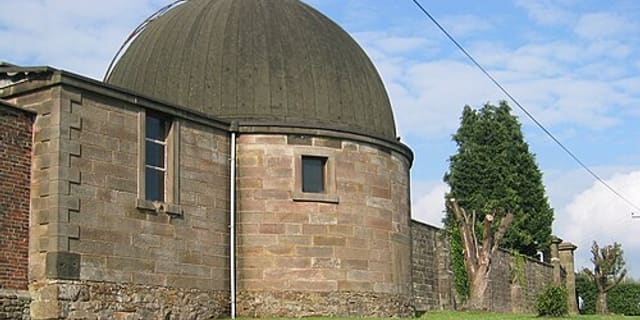
 8 km
8 km
 14 km
14 km
 37 km
37 km