
Wettzell 20m radio telescope

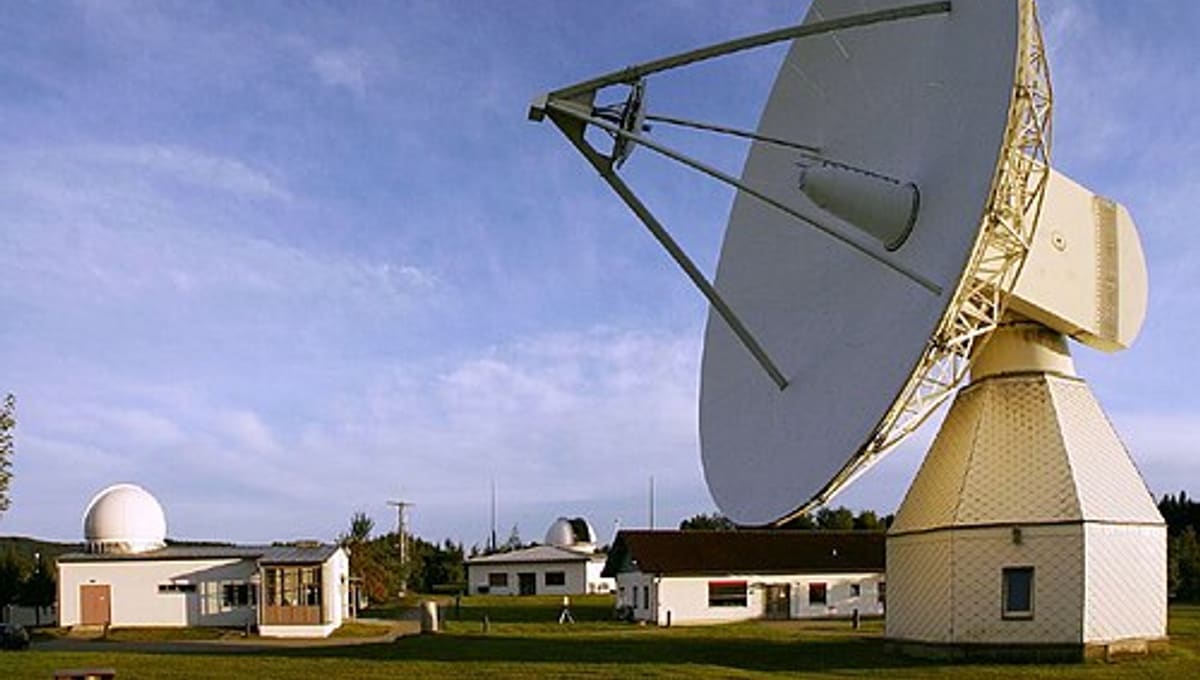
Image: Wikimedia Commons
The Wettzell 20 m radio telescope stands in the Bavarian Forest of southeastern Germany, at the heart of the Geodetic Observatory Wettzell — one of the world's leading stations for measuring the Earth's shape, rotation and position in space.
About Wettzell 20m Radio Telescope
The 20 m radio telescope is one of several instruments at the Geodetic Observatory Wettzell, run by the Bundesamt für Kartographie und Geodäsie (Federal Agency for Cartography and Geodesy, BKG) together with the Technical University of Munich. Rather than studying distant stars for their own sake, the telescope is a core tool of geodesy: measuring Earth itself with extreme precision.
History
The observatory at Wettzell was founded in 1970, and has grown over the following decades into a dense cluster of geodetic instruments sharing the same remote, radio-quiet site in the forest.
Telescopes & research
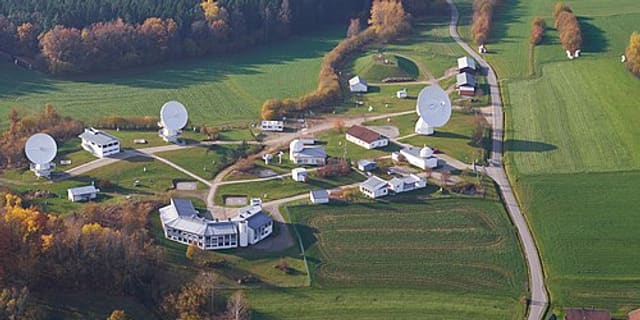
Alongside the 20 m radio telescope, the site hosts laser telescopes, gravity measurement devices, instruments for monitoring solar activity, and precision clocks used to track changes in the Earth's rotation. The radio telescope itself is used for Very Long Baseline Interferometry (VLBI), working with radio telescopes elsewhere in the world to fix Earth's orientation in space with millimetre precision. Combined with satellite laser ranging (SLR), GNSS and DORIS tracking, Wettzell forms one of the few sites on Earth capable of tying together all four major geodetic space techniques at a single location, underpinning the global reference systems used for navigation, mapping and climate research.
Location & getting there
Wettzell lies in a quiet, forested part of Bavaria in southeastern Germany, chosen for its distance from radio interference and its geological stability. The rural setting that makes it ideal for precision measurement also means dark, relatively unpolluted night skies over the surrounding countryside.
Visiting Wettzell 20m Radio Telescope
As an active research facility, Wettzell is not a conventional public observatory with regular opening hours. Visitors interested in touring the site or learning more should contact the BKG directly through its official website before planning a trip.
See your named star from here
Wettzell's instruments are built for measuring Earth rather than viewing individual stars, but the coordinates on a Star Register certificate work anywhere the sky is dark — including the quiet skies above the Bavarian Forest. Explore the catalogue or visit our packages to name a star of your own.
Opening hours and public-visit programs vary by season. Check Google Maps for current times before you travel.
Institutional and reference sources used to verify this guide.
Satellite imagery: Esri, Maxar, Earthstar Geographics

 under 1 km
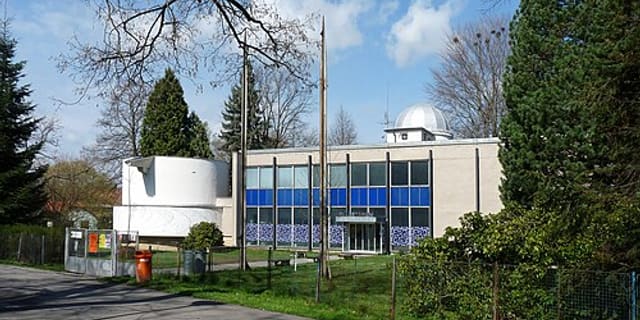
Observatorium Michaeligasse 13 in Passau
cultural heritage monument D-2-62-000-393 (1) in Passau, Bavaria

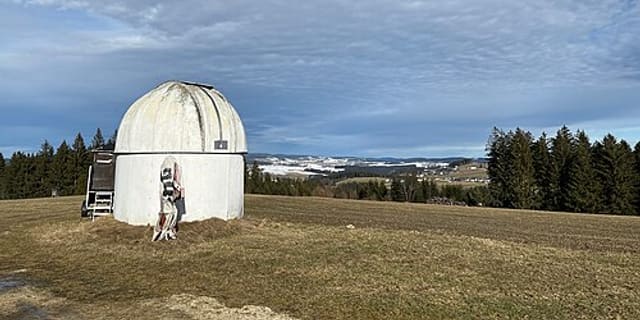
 118 kmPlanetarium
 129 km