
Ward Observatory

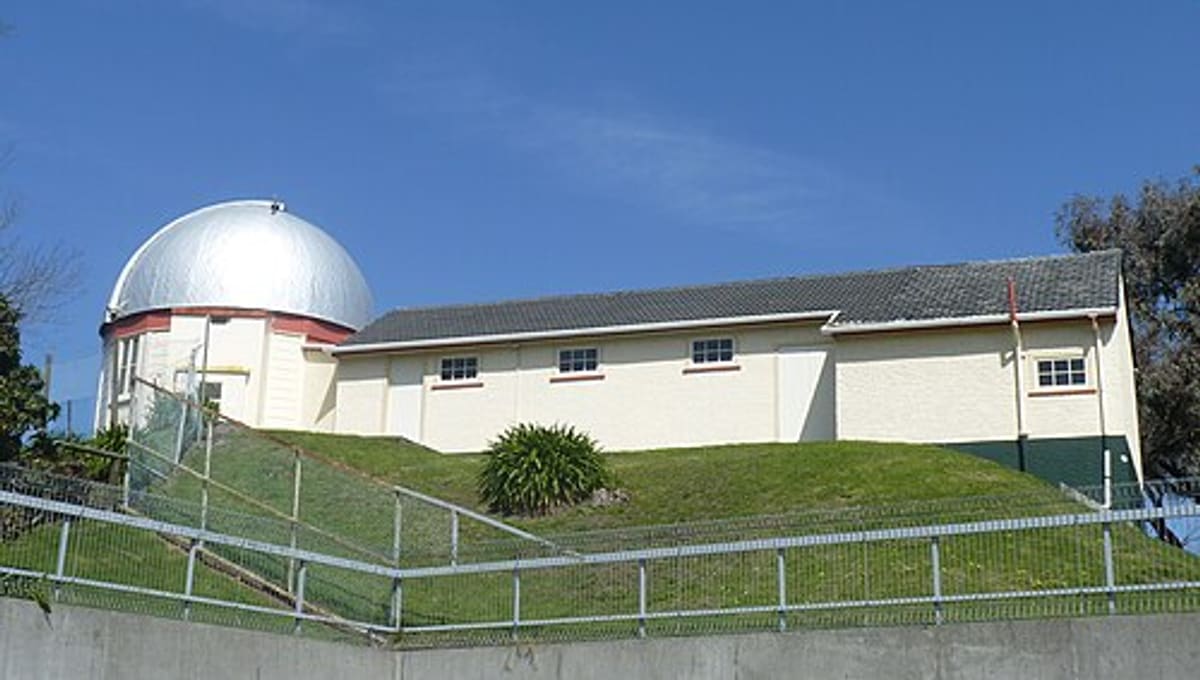
Image: Wikimedia Commons
Set in Cooks Gardens in Whanganui, New Zealand, Ward Observatory is a heritage-listed astronomical site built in 1901 and still active with regular public viewing nights.
About Ward Observatory
The observatory is named after Joseph Ward (1862–1927), the Wanganui Astronomical Society's first president and longtime director. It is administered by the society and houses a 9.5-inch (24 cm) refractor, the largest unmodified refractor telescope still in use in New Zealand.
History
Designed by A. Atkins to Joseph Ward's specifications and built for £290, the observatory was formally opened by Premier Richard Seddon on 25 May 1903, though construction dates to 1901. Its telescope was bought secondhand from England for £450 and, with its mounting, weighs three tons. During the Astronomical Society's heyday before and through the First World War, Joseph Ward served as Honorary Director while Charles Whitmore Babbage, grandson of computing pioneer Charles Babbage, held the roles of President, Secretary, and Treasurer. In 1926 the society gifted the observatory, debt-free, to the Wanganui City Council. Joseph Ward's son, William Herschel Ward, then served as honorary director from 1927 to 1959, and the site has held a Heritage New Zealand Category I rating since 1984.
Telescopes & research
Beyond its historic refractor, Ward Observatory has a notable research legacy: Joseph Ward and his assistant Thomas Allison catalogued more than 200 double stars from the site, 88 of which are still recognised in astronomical literature as “Ward doubles.”
Location & getting there
The observatory is located in Cooks Gardens in Whanganui, New Zealand, with public access from St Hill Street, in the heart of the city and easy to reach on foot.
Visiting Ward Observatory
Public viewing is held on Friday evenings after dark, weather permitting, or by arrangement with the Wanganui Astronomical Society. School groups can also visit by appointment.
See your named star from here
Ward Observatory's long tradition of public stargazing makes it a fitting place to look for a star of your own. If you name a star with Star Register, its right ascension and declination will be on your certificate, ready for a telescope operator to find, and you can see other named stars in our catalogue.
Opening hours and public-visit programs vary by season. Check Google Maps for current times before you travel.
Institutional and reference sources used to verify this guide.
Satellite imagery: Esri, Maxar, Earthstar Geographics

 128 km
 137 km
 137 kmMuseum