
Universitäts-Sternwarte München

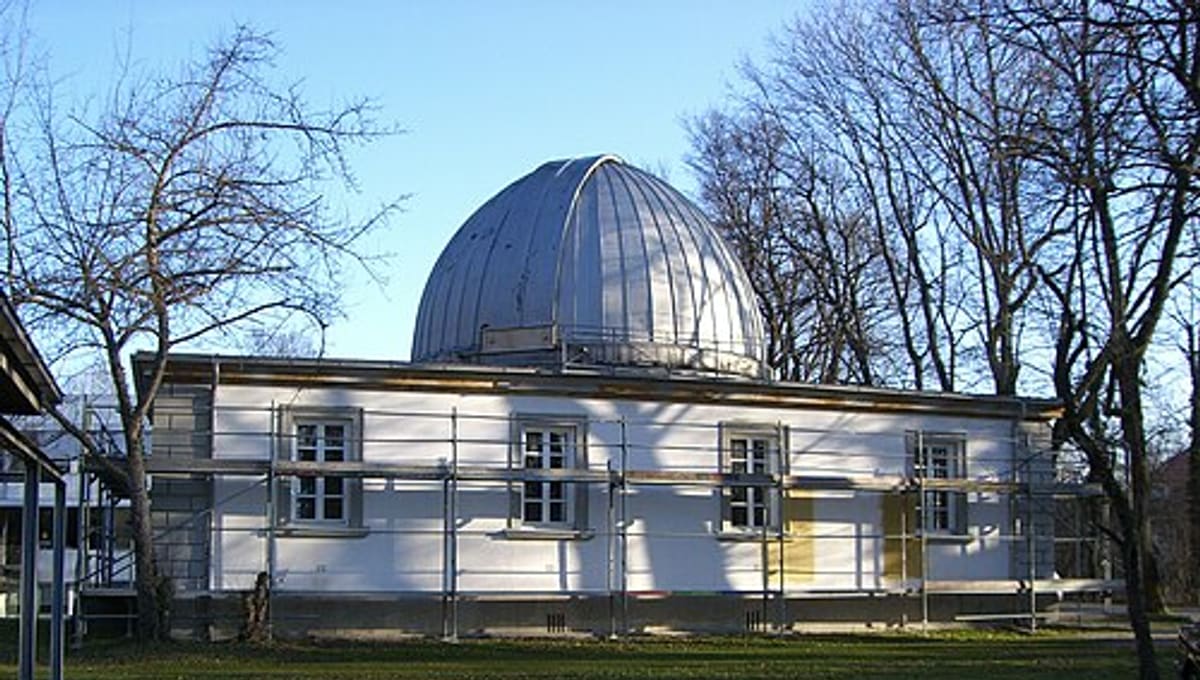
Image: Wikimedia Commons
The Observatorium in Munich's Bogenhausen district is the historic astronomical observatory of Ludwig-Maximilians-Universität (LMU), one of Germany's oldest working observatory sites. Founded in 1807, it has hosted more than two centuries of astronomical research in Bavaria, from early meridian-circle work to today's astrophysics programme.
About the Observatorium
The Observatorium is operated by Ludwig-Maximilians-Universität München (LMU) as the home of its University Observatory Munich (USM). It stands in the Bogenhausen district as a protected cultural heritage site (listed as monument D-1-62-000-6129), reflecting its long standing as one of Bavaria's key scientific institutions.
History
The observatory was founded in 1807 as an official institute of the Bavarian Academy of Sciences, with its prestigious main building erected between 1816 and 1817. A meridian circle built by Reichenbach and Ertel began routine observations there in December 1819, and in 1820 Joseph von Fraunhofer carried out pioneering spectroscopic observations on the site - some of the earliest of their kind. The original, 150-year-old structure was eventually replaced by a modern building constructed between 1964 and 1966.
Telescopes & research
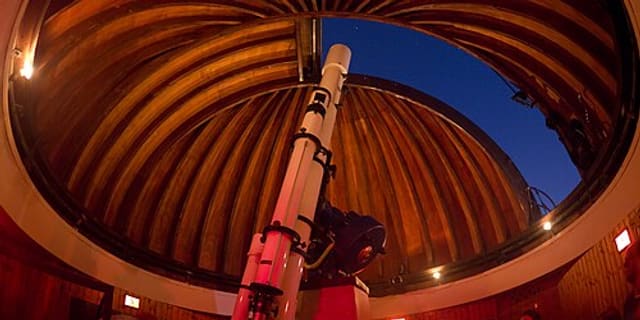
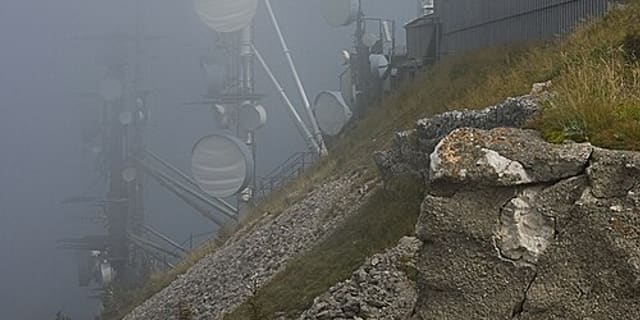
Today the institute's research spans hot stars and stellar winds, cool stars, extragalactic astronomy, computational astronomy and plasma astrophysics. LMU also operates the Wendelstein Observatory, a mountain-top facility at 1,838 metres in the Bavarian Alps, extending the Munich institute's reach to darker, higher-altitude skies.
Location & getting there
The Observatorium sits in Bogenhausen, on the eastern side of Munich, Germany, well within the city and easily reached by public transport.
Visiting the Observatorium
As a working university institute, the Observatorium is primarily a research and teaching facility rather than a public visitor attraction. Check the LMU University Observatory Munich website before planning a visit, since access and any open days are managed directly by the institute.
See your named star from here
Every star named through Star Register comes with precise coordinates, and an observatory like this one can, in principle, point a telescope at exactly that spot in the sky. Name a star or browse the catalogue to get started.
Opening hours and public-visit programs vary by season. Check Google Maps for current times before you travel.
Institutional and reference sources used to verify this guide.
Satellite imagery: Esri, Maxar, Earthstar Geographics

 3 kmPublic
 58 km
58 km
 99 km
99 km
 100 kmResearch