
Uccle Solar Equatorial Table

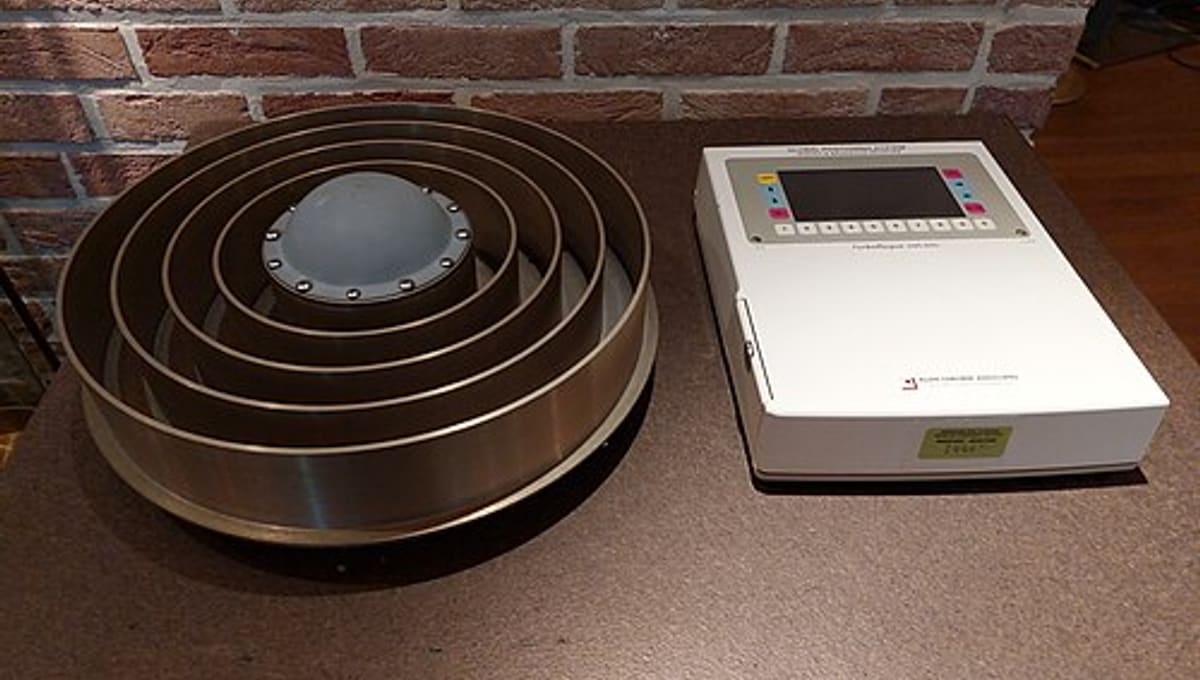
Image: Wikimedia Commons
The Uccle Solar Equatorial Table is a dedicated solar-watching instrument at the Royal Observatory of Belgium, just south of Brussels.
About Uccle Solar Equatorial Table
Built in 1955-56 in preparation for the International Geophysical Year of 1957-58, the installation was, at the time, one of the most advanced solar patrol instruments anywhere.
History
The equatorial table takes the form of a large optical bench carrying telescopes on a single equatorial mount, housed inside a copper dome dating from the late 19th century.
Telescopes & research
Today the table operates three CCD-equipped telescopes: one for white-light observations of the Sun's visible surface, and two tuned to H-alpha and Ca II-K wavelengths for studying the solar chromosphere. The whole system is fully automated, run by an electro-mechanical programmer that has watched the Sun for decades.
Location & getting there
The instrument sits within the grounds of the Royal Observatory of Belgium in Uccle, a southern suburb of Brussels.
Visiting Uccle Solar Equatorial Table
Check the Royal Observatory of Belgium's visitor information for tours and open days, as access to specific instruments like the solar equatorial table may be limited outside organised visits.
See your named star from here
Solar astronomy is a reminder that our own star is just one among billions catalogued in the sky. If you've named a star of your own, explore it and others in the star catalogue.
Opening hours and public-visit programs vary by season. Check the official website and Google Maps for current times before you travel.
Institutional and reference sources used to verify this guide.
Satellite imagery: Esri, Maxar, Earthstar Geographics

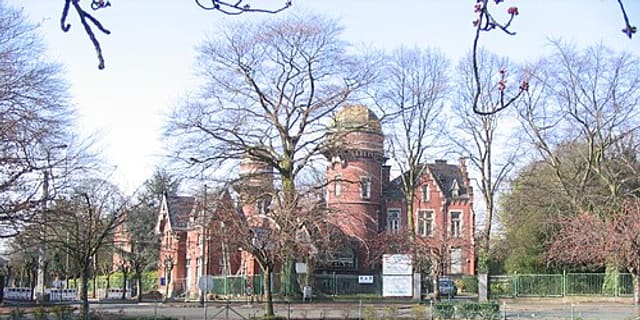 87 km
87 km
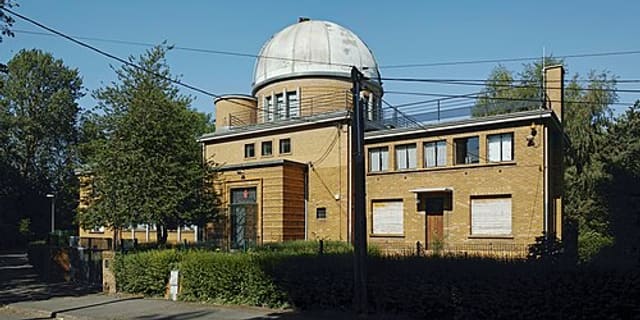 93 km
93 km
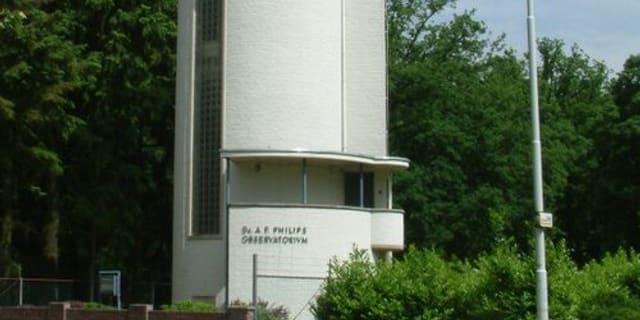 105 km