
Lille observatory of astronomy

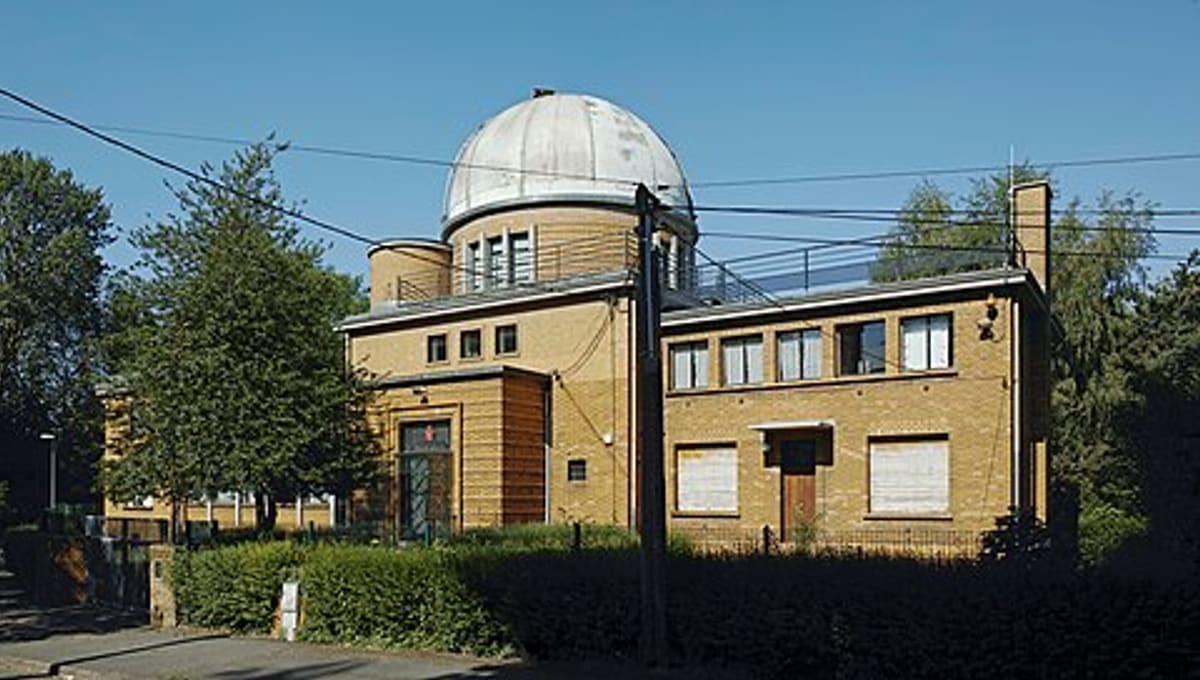
Image: Wikimedia Commons
The Lille Observatory of Astronomy stands in Lille, in northern France, a legacy of one astronomer's fascination with double stars. Founded by Robert Jonckhèere, it has grown from a modest private facility into a recognised centre for public astronomy and small-scale research.
About Lille Observatory of Astronomy
Robert Jonckhèere, born in 1888, was captivated by the observation of double stars from an early age. His first observatory, at Hem near Lille, was inaugurated in 1909. The observatory as it stands today was built in 1932, designed by architect Marcel Boudin, a student of Robert Mallet-Stevens. In 2001 the building was added to the French inventory of historical monuments.
History
The observatory's dome houses a 32-centimetre telescope, among the largest of its kind in France. Alongside the telescope, the site's museum preserves a collection of historic scientific instruments, including anemometers, barometers, sextants, wire micrometers, receiver stations, and clocks, documenting more than a century of observational astronomy. A separate, older observatory building at the Université Catholique de Lille has also been restored in recent years.
Telescopes & research
Today the site is home to the Laboratory of Astronomy of Lille (LAL), which carries out research into space debris, the natural satellites of other planets, transneptunian objects, and the detection of exoplanets.
Location & getting there
The observatory sits in the city of Lille, in the Hauts-de-France region of northern France, easily reached as part of a visit to the city.
Visiting Lille Observatory of Astronomy
Because opening hours and tour schedules for the museum and dome can change, it is best to check the observatory's official website or contact them directly before planning a visit.
See your named star from here
A site with a long tradition of tracking double stars is a fitting place to think about the exact coordinates of a star named in someone's honour. Every Star Register name comes with its own right ascension and declination, viewable from telescopes like the one in Lille's dome. Browse our naming packages or search the star catalogue to find out more.
Opening hours and public-visit programs vary by season. Check Google Maps for current times before you travel.
Institutional and reference sources used to verify this guide.
Satellite imagery: Esri, Maxar, Earthstar Geographics

 162 kmPublic