
Tour de la Babotte


Image: Wikimedia Commons
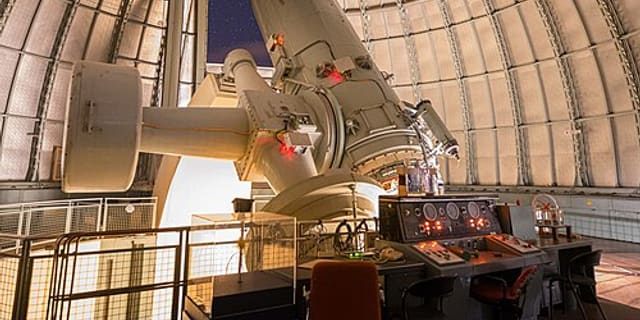
The Tour de la Babotte is a medieval tower in Montpellier, France, whose upper floors have served as an astronomical observatory since the 18th century.
About Tour de la Babotte
The tower's lower portion dates back to 1363, when it formed part of the city's ancient ramparts. It was topped with a balcony resting on machicolations in 1741, giving it the profile it still has today.
History
In 1745 the tower was converted into an official observatory under the Académie des Sciences and the Société Royale des Sciences, turning a piece of defensive medieval architecture into a scientific instrument. The building is also linked to an unusual episode in the history of flight: on 26 December 1783, Sébastien Lenormand tested an early parachute by jumping from it, in one of the first recorded parachute descents. In 1832 the tower passed to the telegraph department, ending its long run as a dedicated observatory. Today it is occupied by the Fédération d'Astronomie Populaire Amateur du Midi, an amateur astronomy federation for the south of France, keeping the tower connected to the sky it once studied.
Location & getting there
The Tour de la Babotte stands in the historic centre of Montpellier, in southern France, easily reached on foot from the city's old town.
Visiting Tour de la Babotte
As a historic monument now used by an amateur astronomy association, opening times and any public observing sessions are best confirmed directly with the association or the city's tourism office before visiting.
See your named star from here
A tower that has watched the sky for over 250 years is a fitting place to think about your own named star - its coordinates can be located on any clear night, from Montpellier or anywhere else. Explore the star catalogue to find out more.
Opening hours and public-visit programs vary by season. Check Google Maps for current times before you travel.
Institutional and reference sources used to verify this guide.
Satellite imagery: Esri, Maxar, Earthstar Geographics

 152 km