
Haute-Provence Observatory

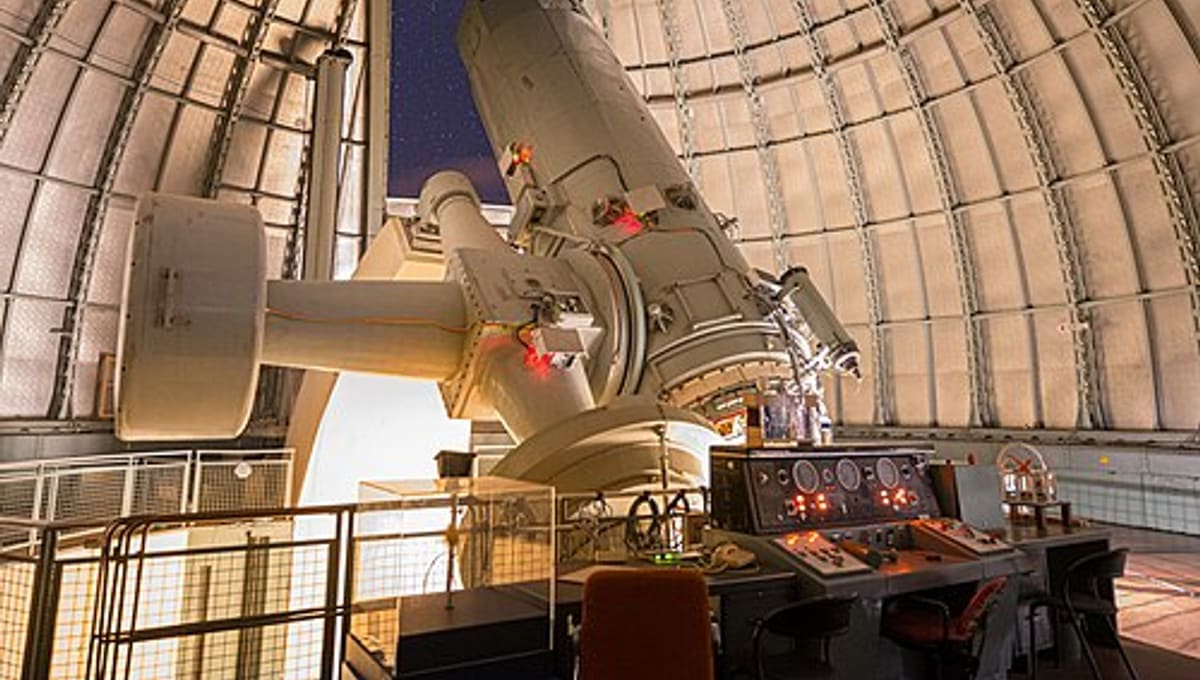
Image: Wikimedia Commons
Haute-Provence Observatory sits on a plateau near the village of Saint-Michel-l'Observatoire in southeastern France, a national astronomical facility with one of the most consequential discoveries in modern astronomy to its name.
About Haute-Provence Observatory
Known in French as the Observatoire de Haute-Provence (OHP), the site was established in 1937 as a national facility for French astronomers and is operated by the CNRS, France's national research organisation. Astronomical observations began in 1943 with its 1.20 m telescope, and the observatory's first research papers appeared in 1944; foreign astronomers, including Geoffrey and Margaret Burbidge, began visiting in 1949.
Telescopes & research
OHP operates four main telescopes, of 1.93 m, 1.52 m, 1.20 m, and 0.80 m aperture. The 1.93 m reflector, built by Grubb Parsons, was installed in 1958 and became the instrument used in 1995 to discover 51 Pegasi b, the first exoplanet found orbiting a Sun-like star. That discovery earned astronomers Michel Mayor and Didier Queloz the 2019 Nobel Prize in Physics. The main-belt asteroid 7755 Haute-Provence, discovered in 1989 by Eric Elst, was named for the region in the observatory's honour.
Location & getting there
The observatory sits at an altitude of about 650 m in the Alpes-de-Haute-Provence département, roughly 90 km east of Avignon and 100 km north of Marseille. The site was chosen for its favourable weather: on average about 60% of nights are suitable for observing and around 170 nights a year are completely cloudless, with seeing typically around 2 arcseconds. Conditions can degrade sharply when the cold Mistral wind blows in from the northwest, which happens on roughly 45 days a year, mostly in winter, though clear skies often follow soon after.
Visiting Haute-Provence Observatory
Guided tours of the observatory are available; check the official OHP website for current schedules and booking details before travelling.
See your named star from here
A site that helped discover a planet around another star is a fitting place to look for your own named star's coordinates. Browse the naming packages or search the star catalogue to find one to trace from Provence.
Opening hours and public-visit programs vary by season. Check the official website and Google Maps for current times before you travel.
Institutional and reference sources used to verify this guide.
Satellite imagery: Esri, Maxar, Earthstar Geographics

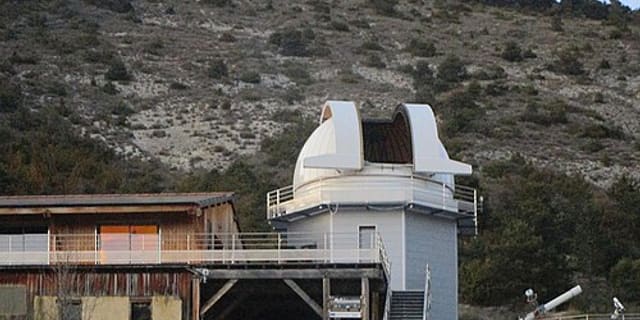 55 km
55 km
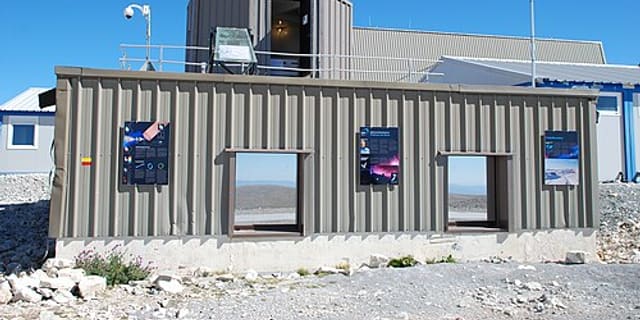 80 km
80 km