
Toulouse Observatory

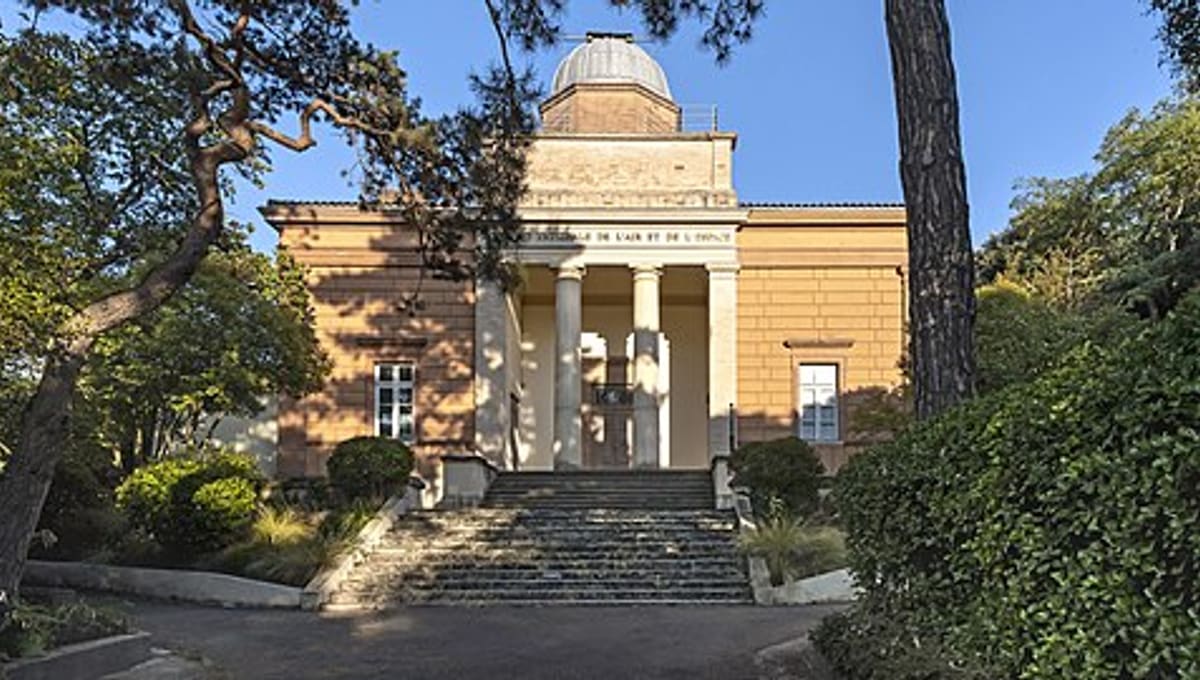
Image: Wikimedia Commons
The Toulouse Observatory (Observatoire de Toulouse) has watched the sky over southwestern France since 1733, making it one of the country's longest-running centres of astronomical work.
About Toulouse Observatory
The observatory was founded by the Académie des Sciences, Inscriptions et Belles-Lettres de Toulouse, giving the city its own scientific institution dedicated to tracking the stars and planets. It has since relocated twice, first in 1841 and again in 1981, following the growth of the city and the search for better observing conditions.
History
In its early decades the observatory used refractors and a 28-inch quadrant to record transits of Mercury in 1736, 1743 and 1753. Astronomers François Garipuy and Antoine Darquier worked from the site, with Darquier credited with comet discoveries from 1777 onward. In 1841 the observatory moved to Jolimont hill on the eastern edge of Toulouse, seeking clearer skies away from the growing city centre.
Telescopes & research
Toulouse Observatory's astronomers have continued to contribute to modern astrophysics. In 1987, Geneviève Soucail and collaborators presented data on a blue, ring-like structure in the galaxy cluster Abell 370 and proposed a gravitational lensing explanation, a discovery that helped establish lensing as a tool for studying the universe. In the 1990s, the observatory took part in the multi-institution MEGACAM imaging project.
Location & getting there
The observatory sits in Toulouse, in southwestern France, a region known for its aerospace industry and long scientific heritage. Its current site on Jolimont hill offers a clear vantage point over the city below.
Visiting Toulouse Observatory
For current opening times, public talks or any organised visits, check the observatory's official site before you travel, as access for the general public can vary by season and by programme.
See your named star from here
Once you've named a star, its coordinates are fixed and can be located from almost anywhere with a clear sky, including from a site with as much observing history as Toulouse. Browse the star catalogue to see how a named star's position is recorded.
Opening hours and public-visit programs vary by season. Check the official website and Google Maps for current times before you travel.
Institutional and reference sources used to verify this guide.
Satellite imagery: Esri, Maxar, Earthstar Geographics

 131 km
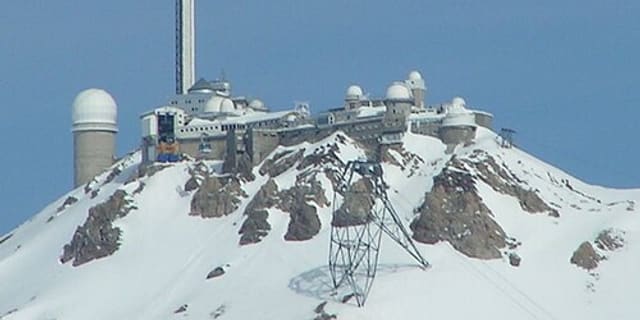
Pic du Midi Observatory
astronomical observatory in Bagnères-de-Bigorre (Hautes-Pyrénées)

 184 km