
Sydney Observatory

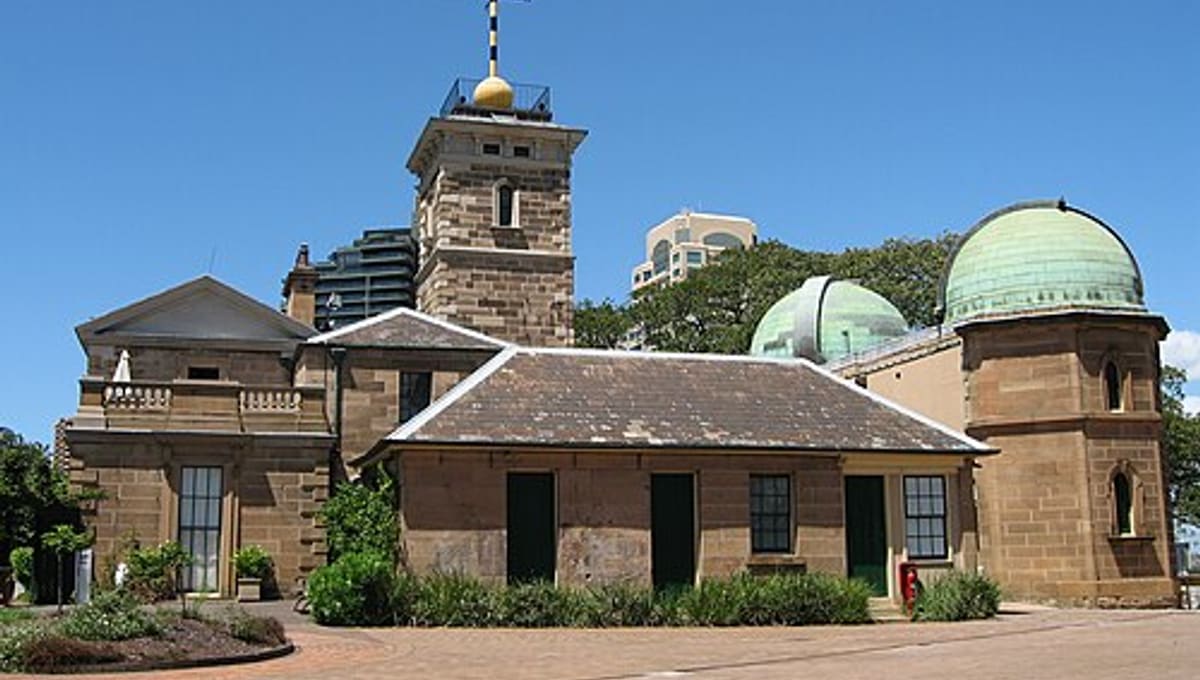
Image: Wikimedia Commons
Perched on Observatory Hill above Millers Point, Sydney Observatory has watched over the harbour city since the 1850s, evolving from a colonial fort into one of Australia's best-loved astronomy museums.
About Sydney Observatory
Built between 1857 and 1859 to a design by William Weaver and supervised by Alexander Dawson, the sandstone building stands on a site once known as Windmill Hill, Fort Phillip and Flagstaff Hill before it became home to the colony's astronomers. William Scott, appointed the first Government Astronomer in 1856, oversaw its early work. The site's heritage runs deep enough that it was added to the New South Wales State Heritage Register in December 2000.
History
For decades the observatory's time ball dropped daily at 1:00pm, giving ships in the harbour and the wider city an official signal of the correct time — a role that made it central to Sydney's daily life long before radio or the internet. In 1982 the building was converted into a public museum of astronomy, and it's now managed as part of the Powerhouse Museum group.
Telescopes & research
Visitors can look through two very different instruments: a modern 40cm Schmidt-Cassegrain telescope and a historic 29cm refractor built in 1874, which is the oldest telescope in Australia still in regular use.
Location & getting there
The observatory sits at around 40 metres elevation on Observatory Hill, Upper Fort Street, in the inner-city Sydney suburb of Millers Point — a short walk from Circular Quay and the Harbour Bridge, with sweeping views back over the harbour.
Visiting Sydney Observatory
Sydney Observatory is open to the public as a science museum and function venue, with evening sessions letting visitors observe stars and planets through its telescopes. There's an entry fee, and wheelchair access is limited in places, so it's worth checking the current visiting details on the Powerhouse Museum's website before you go.
See your named star from here
Standing where Sydney's astronomers have tracked the sky since the 1850s, it's easy to picture pointing a telescope toward your own star. After you name a star with Star Register, its coordinates appear in our star catalogue — a good starting point for asking observatory staff whether it's visible on a Sydney night.
Opening hours and public-visit programs vary by season. Check the official website and Google Maps for current times before you travel.
Partially wheelchair accessible
Institutional and reference sources used to verify this guide.
Satellite imagery: Esri, Maxar, Earthstar Geographics

 9 km
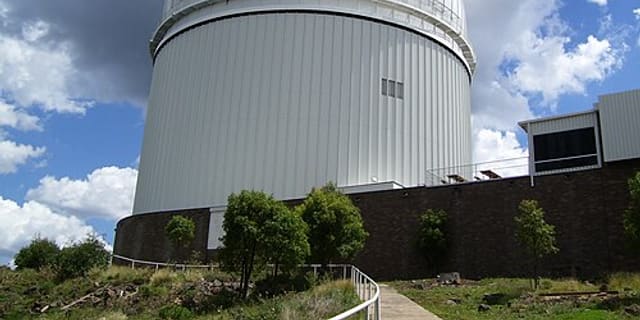
9 kmAustralian Astronomical Observatory
optical/near-infrared astronomy observatory with its headquarters in North Ryde in suburban Sydney, Australia

 68 km
68 km