
Australian Astronomical Observatory

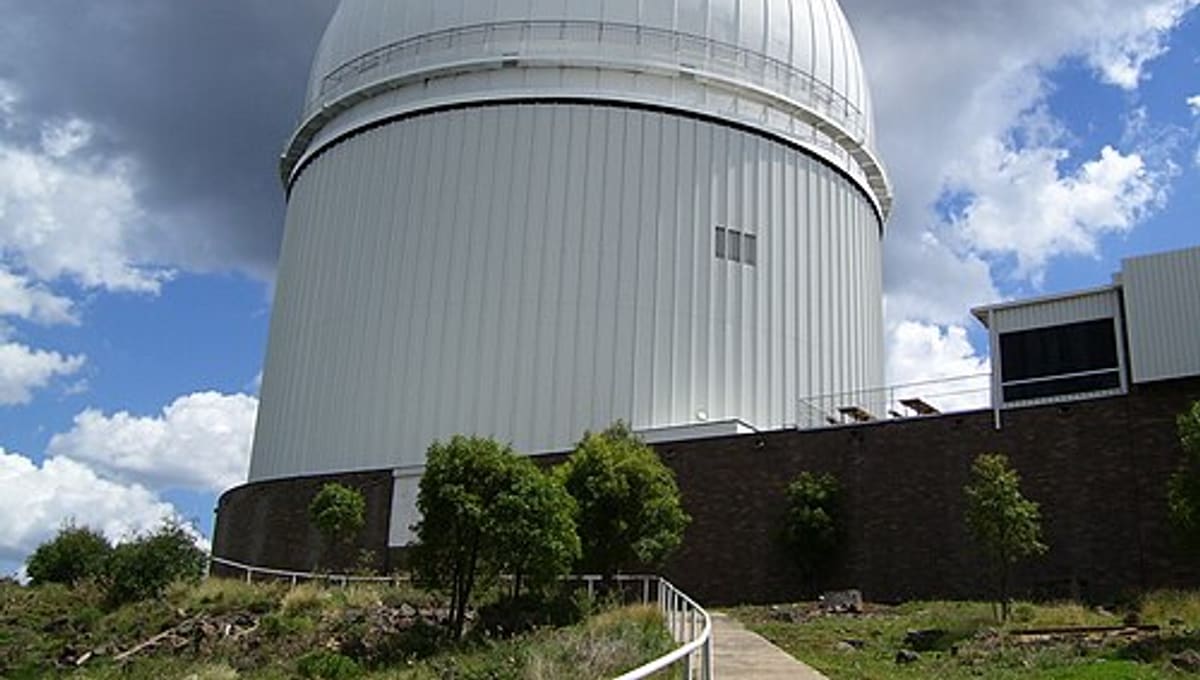
Image: Wikimedia Commons
Headquartered in North Ryde, a suburb of Sydney, Australia, the Australian Astronomical Observatory (AAO) spent years managing the country's flagship optical telescopes before its functions were handed to new operators in 2018.
About the Australian Astronomical Observatory
The AAO began life as the Anglo-Australian Observatory, a joint UK–Australian project, and was renamed the Australian Astronomical Observatory in 2010 after the UK ended its funding role. From its North Ryde offices, AAO staff carried out astronomical research and designed instrumentation used not only on its own telescopes but also on facilities such as the European Southern Observatory's Very Large Telescope in Chile and Japan's Subaru Telescope in Hawaii.
History
For most of its life the AAO operated the 3.9-metre Anglo-Australian Telescope (AAT) and the 1.2-metre UK Schmidt Telescope at Siding Spring Observatory near Coonabarabran, New South Wales. In July 2018, the Australian government abolished the AAO through dedicated transition legislation, splitting its work between two new operators: the Anglo-Australian Telescope passed to a consortium led by the Australian National University, while its instrument-building capability moved to a Macquarie University-led group.
Location & getting there
The AAO's former headquarters were in North Ryde, in Sydney's northern suburbs - an administrative and technical base rather than an observing site. The telescopes it once ran are about 500 kilometres away, at Siding Spring Observatory near Coonabarabran.
Visiting
The former North Ryde headquarters is not a public observing site. Visitors wanting to see the telescopes once run by the AAO can instead look into Siding Spring Observatory, which still hosts the Anglo-Australian Telescope under its current operators and has its own visitor facilities; check directly with Siding Spring before travelling.
See your named star from here
Although the AAO itself no longer exists, the telescope it once ran continues to point at the sky under new custodians. Wherever you view the stars, you can bring the coordinates of a named star from the Star Register catalogue and ask an observatory to help find it.
Opening hours and public-visit programs vary by season. Check the official website and Google Maps for current times before you travel.
Institutional and reference sources used to verify this guide.
Satellite imagery: Esri, Maxar, Earthstar Geographics

 61 km
61 km