
SUNY Oneonta College Observatory
Satellite imagery: Esri, Maxar, Earthstar Geographics
Tucked away from the main campus at the Oneonta College Camp in Oneonta, New York, the SUNY Oneonta College Observatory is home to the state's largest optical telescope and one of the largest publicly accessible instruments east of the Mississippi.
About SUNY Oneonta College Observatory
The observatory's centerpiece is a one-meter (40-inch) Newtonian reflector built by JMI Telescopes of Lakewood, Colorado, mounted on a cost-effective Dobsonian system. SUNY Oneonta acquired the telescope in 2006 for less than $150,000, and after a dedicated observatory building was constructed around it, the instrument had its "first light" ceremony on May 30, 2009.
Telescopes & research
Alongside the giant 40-inch reflector, the observatory houses a 16-inch Meade LX200 Schmidt-Cassegrain telescope and a 14-inch Celestron CGE1400 SCT, each under its own dome. Students and visitors can also use two 8-inch Celestron NexStar SCTs, a 10-inch Orion XT10 Dobsonian, an 11-inch Celestron CGE1100, and JMI RB-66 reverse binoculars. For imaging and spectroscopy, the facility is equipped with a research-grade SBIG STL-1001E CCD camera, an SBIG spectrograph, and a photoelectric photometer.
Location & getting there
The observatory sits off the main SUNY Oneonta campus at the Oneonta College Camp in upstate New York, away from the brightest campus lighting, which helps for both student research and public stargazing sessions.
Visiting SUNY Oneonta College Observatory
The college hosts regular public viewing sessions, generally on one designated date each month throughout the year. Check the observatory's website before you go, since sessions depend on clear skies and the academic calendar.
See your named star from here
With a 40-inch reflector on site, staff and student astronomers here have the aperture to seek out fainter targets across the sky, including the coordinates of a star you've named through Star Register. Bring your certificate's right ascension and declination along on a public night, or browse other named stars in our catalogue.
Opening hours and public-visit programs vary by season. Check Google Maps for current times before you travel.
Institutional and reference sources used to verify this guide.
Satellite imagery: Esri, Maxar, Earthstar Geographics

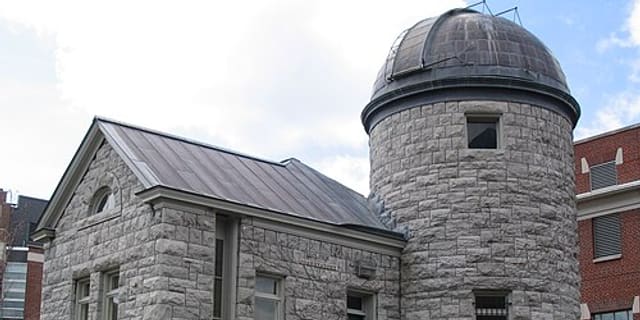 107 kmResearch
Holden Observatory
observatory on Syracuse University campus in Syracuse, New York

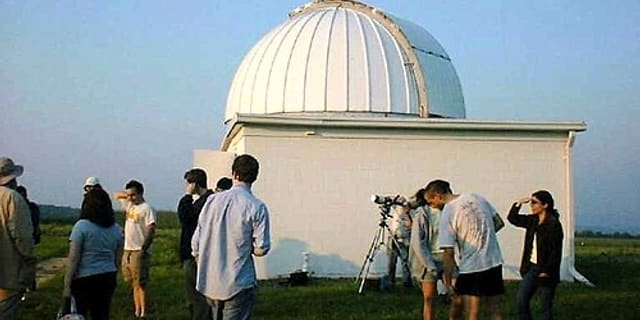 109 km
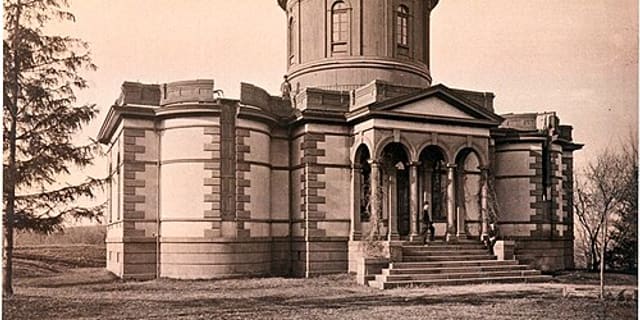 110 km
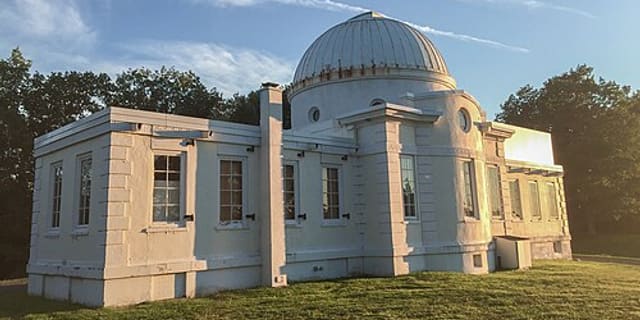 116 kmResearch
Fuertes Observatory
historical astronomical observatory at Cornell University, Ithaca, New York