
Hartung–Boothroyd Observatory

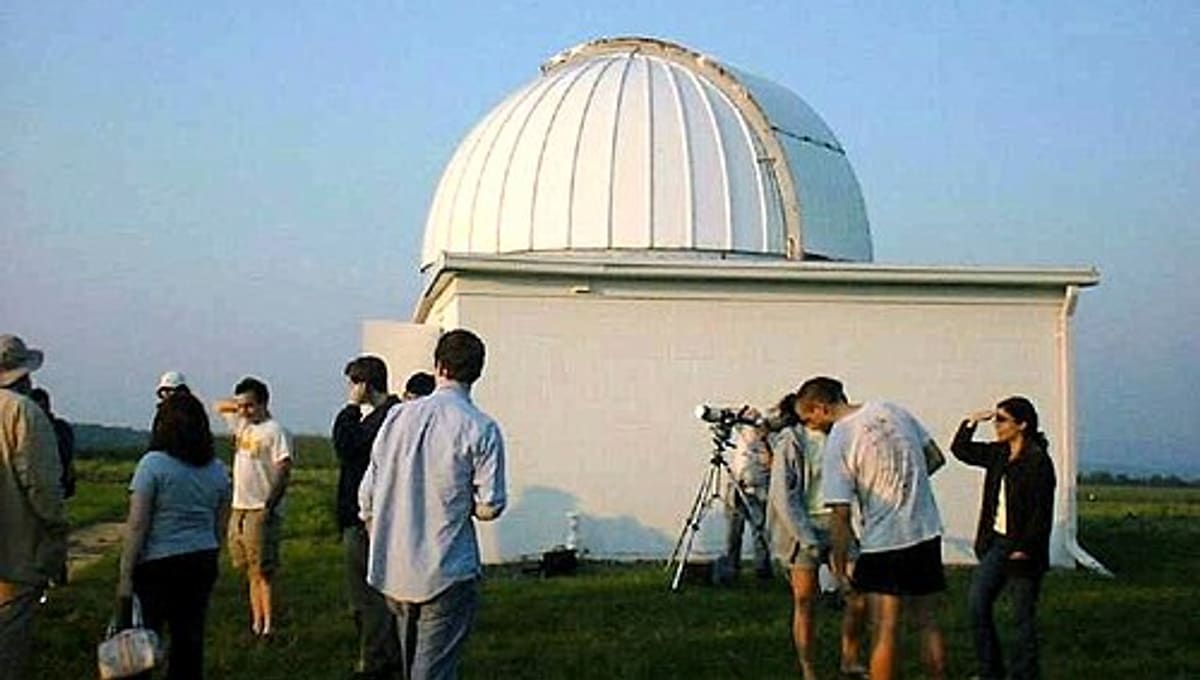
Image: Wikimedia Commons
Hartung–Boothroyd Observatory crowns Mount Pleasant near Cornell University outside Ithaca, New York, where its telescope traces its origins to the testing programme behind the famous Palomar 200-inch telescope.
About Hartung–Boothroyd Observatory
The observatory is used mainly as a teaching facility for Cornell's upper-level undergraduate astronomy classes. Its name recognises two people: M. John Hartung, a 1908 Cornell graduate and later chemical industrialist whose funding supported the facility, and Samuel L. Boothroyd, founder of Cornell's Department of Astronomy.
History
The observatory's primary 0.6-metre mirror began as a Pyrex 1/8-scale test pouring made during technology development for the Palomar Observatory's 200-inch telescope. Under Boothroyd's direction, the mirror was polished and mounted in a lightweight tube in the late 1930s, but the Second World War delayed its planned use in a high-altitude observatory. The facility as it stands today, complete with an equatorial fork mount for the telescope, was finally completed in 1974. From 1974 to 2012 it was designed and directed by James R. Houck.
Telescopes & research
The heart of the observatory is its 0.6-metre mirror, a rare surviving piece of the Palomar 200-inch telescope's development history, now mounted on an equatorial fork and used chiefly to train Cornell's undergraduate astronomy students.
Location & getting there
Hartung–Boothroyd Observatory sits atop Mount Pleasant, just outside Ithaca, New York, close to the Cornell University campus, at an elevated site suited to teaching-level observation.
Visiting Hartung–Boothroyd Observatory
As a Cornell teaching facility, access is generally tied to university courses and organised events. Check Cornell's astronomy department website for information on any public open nights before planning a visit.
See your named star from here
A telescope with a lineage tied to the Palomar 200-inch is well equipped to find precise sky coordinates, including the right ascension and declination of a star named through Star Register. Look up your star's details in the catalogue.
Opening hours and public-visit programs vary by season. Check Google Maps for current times before you travel.
Institutional and reference sources used to verify this guide.
Satellite imagery: Esri, Maxar, Earthstar Geographics

 7 kmResearch
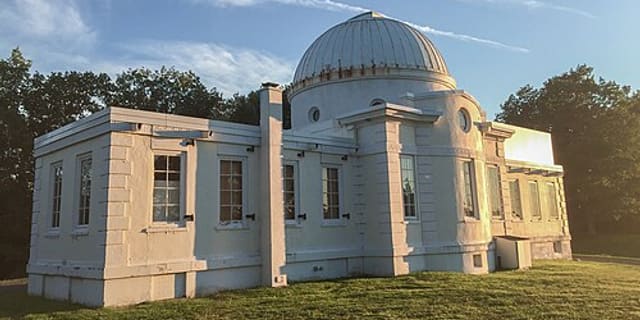
Fuertes Observatory
historical astronomical observatory at Cornell University, Ithaca, New York

 8 kmResearch
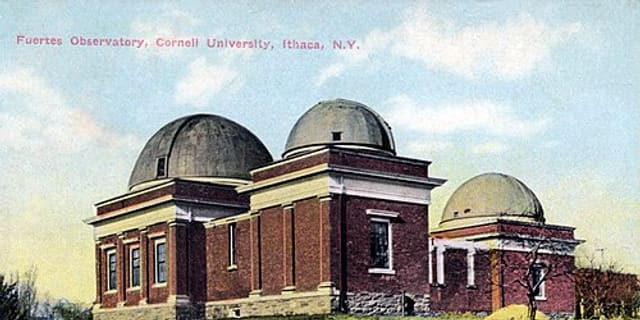
A.C. Barnes Observatory
former astronomical observatory at Cornell University, Ithaca, New York

 68 kmResearch
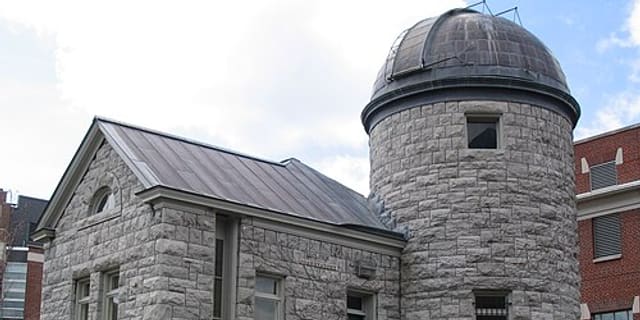
Holden Observatory
observatory on Syracuse University campus in Syracuse, New York
C. E. K. Mees Observatory
astronomical observatory at the University of Rochester