
Stjärneborg

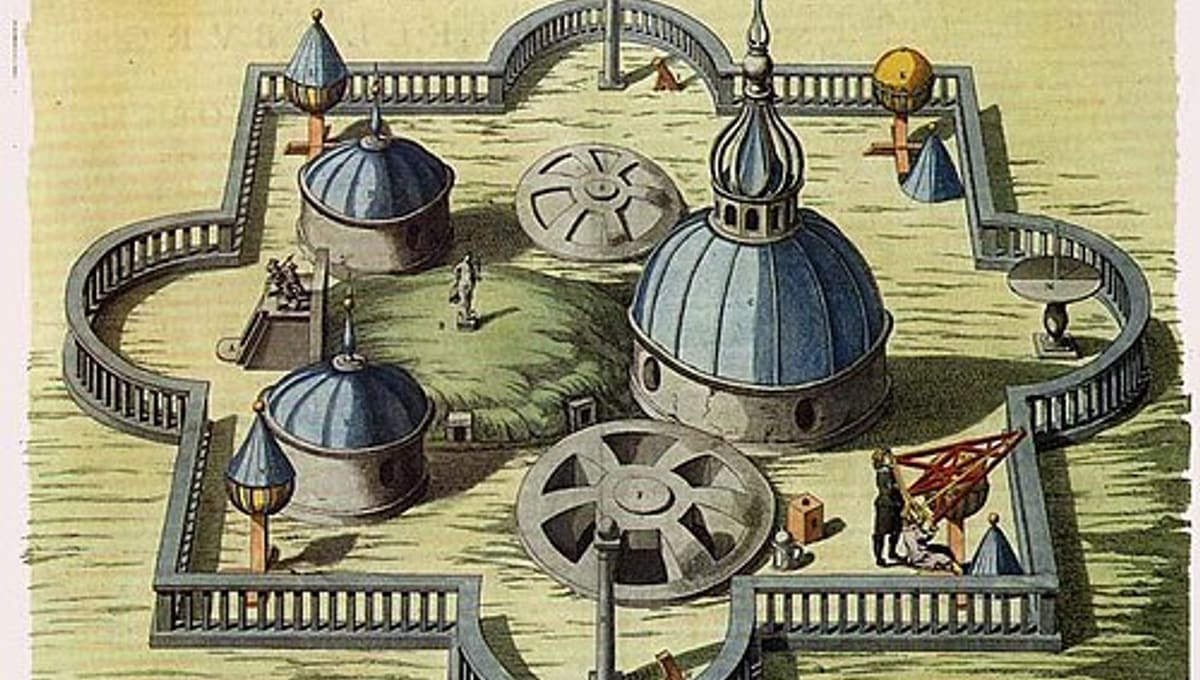
Image: Wikimedia Commons
On the small island of Ven, in the Öresund strait between Sweden and Denmark, the astronomer Tycho Brahe built one of the most remarkable observatories of the Renaissance: Stjärneborg, whose name means "Star Castle".
About Stjärneborg
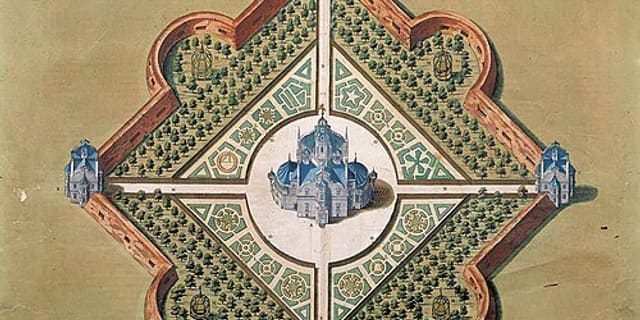
Unlike a conventional building, Stjärneborg was constructed largely underground, next to Brahe's palace-observatory Uraniborg. Brahe designed it this way to shield his instruments from the disturbing effects of wind and to let several assistants take independent observations in separate chambers without interfering with one another.
History
Tycho Brahe built Stjärneborg around 1581, at a time when Ven was part of Denmark. Its underground chambers originally housed a range of precision instruments, including an equatorial instrument, elevation and azimuth quadrants, an armillary sphere, and sextants for measuring distances between celestial objects. After Brahe left the island in 1597 the structure fell into disuse and was largely lost, until Swedish archaeologists excavated its underground portions in the 1950s. The site is now part of the Tycho Brahe Museum on Ven, with reconstructed chambers housing a multimedia presentation for visitors.
Location & getting there
Stjärneborg is located on Ven, a small island in the Öresund between Zealand and Scania, reachable by ferry, and today lies within Sweden.
Visiting Stjärneborg
The reconstructed underground chambers are open to visitors as part of the Tycho Brahe Museum on Ven; check the museum's current opening hours and ticketing before travelling.
See your named star from here
Tycho Brahe used the instruments at Stjärneborg to chart the positions of stars with unprecedented precision for his era - and today, any telescope that can track the sky can be aimed at the coordinates on your own star certificate. Browse the full star catalogue to find yours.
Opening hours and public-visit programs vary by season. Check Google Maps for current times before you travel.
Institutional and reference sources used to verify this guide.
Satellite imagery: Esri, Maxar, Earthstar Geographics

 under 1 km
 26 kmResearch
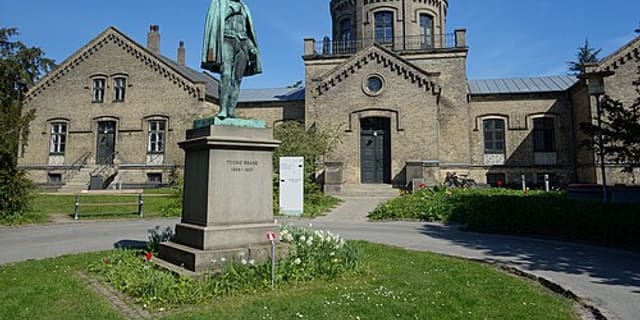
Østervold Observatory
former astronomical observatory of the University of Copenhagen in Denmark

 35 km
35 km
 38 km
38 km