
Lund Observatory


Image: Wikimedia Commons
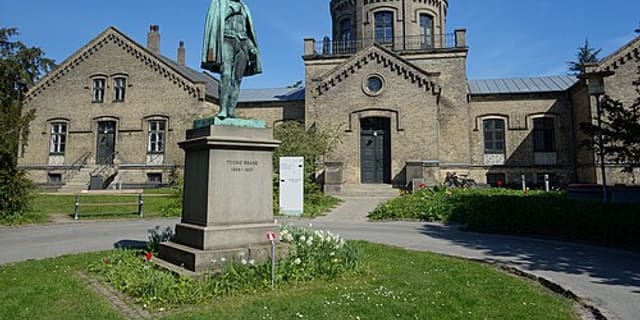
In the university city of Lund, Sweden, Lund Observatory traces astronomical research back to 1749, with a landmark 19th-century building still standing in the city's protected observatory park.
About Lund Observatory
Lund Observatory is the name for the astronomy department and research network at Lund University, Sweden, tracing its institutional roots to 1749. An even earlier observatory was built in 1672 by professor Anders Spole, but it was destroyed during the Battle of Lund in 1676.
History
The observatory building familiar today, designed by architect Helgo Zettervall, was inaugurated in 1867 and stood in what is now Observatorieparken, a protected park within the city's old medieval wall. It housed a 25-cm refractor from 1867 and a meridian circle added in 1874. In the mid-20th century, astronomer Knut Lundmark created the Lund Panorama of the Milky Way, a two-by-one-metre star map completed in 1955. The astronomy department relocated to Lund University's northern campus in 2001, after which the 1867 building ceased to be an active observing site, though it still stands in the park today. In 2023, the Department of Astronomy and Theoretical Physics merged with the Department of Physics.
Location & getting there
The historic observatory building sits within Observatorieparken in central Lund, Sweden, in the Europe region, while current research is based at the university's northern campus, which also uses a nearby old water tower for observations. Use the map on this page for directions.
Visiting Lund Observatory
The historic 1867 building and its park are part of Lund's cityscape; for current access to research facilities or any public events, it is best to check with Lund University directly before visiting.
See your named star from here
An institution that has been mapping the sky since the 18th century understands better than most how star coordinates work. If you've named a star with Star Register, you can find its exact position in our catalogue — the same kind of data behind Lund's own centuries of star charts.
Opening hours and public-visit programs vary by season. Check the official website and Google Maps for current times before you travel.
Institutional and reference sources used to verify this guide.
Satellite imagery: Esri, Maxar, Earthstar Geographics

 38 km
38 km
 38 kmResearch
Østervold Observatory
former astronomical observatory of the University of Copenhagen in Denmark

 38 km
38 km
 55 km
55 km