
South African Astronomical Observatory

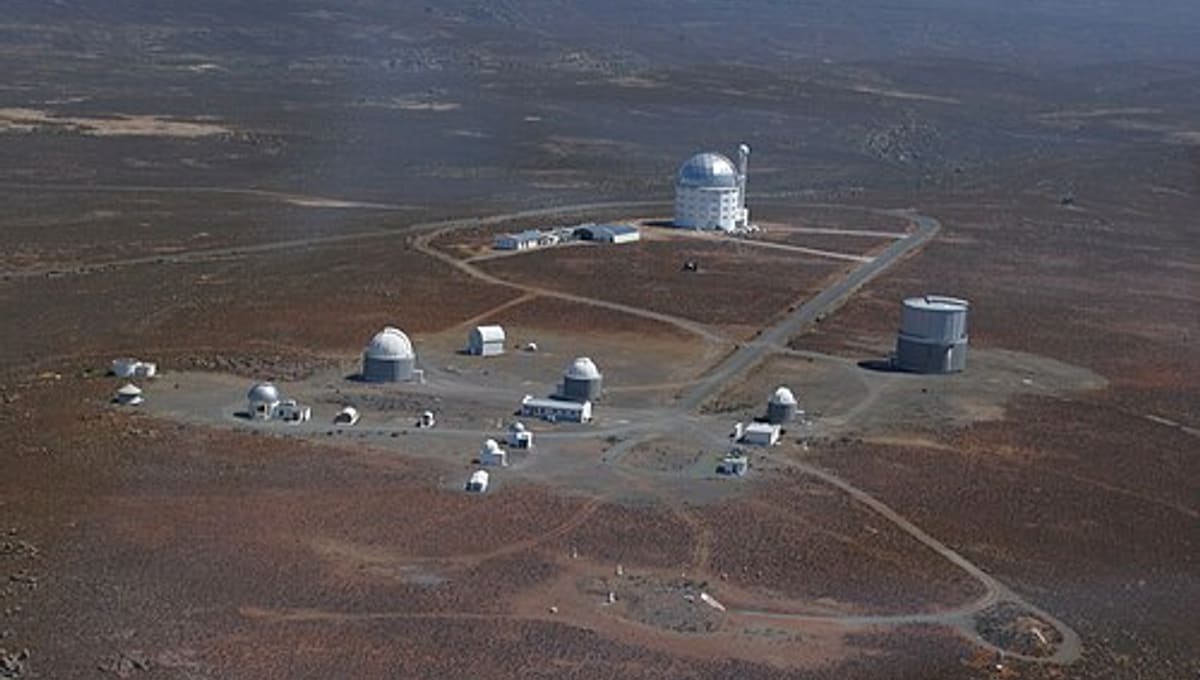
Image: Wikimedia Commons
Headquartered in Cape Town and operating its main telescopes 370 kilometres away in Sutherland, the South African Astronomical Observatory (SAAO) is the national centre for optical and infrared astronomy in South Africa, with roots reaching back two centuries.
About South African Astronomical Observatory
The SAAO is run by South Africa's National Research Foundation and conducts research across astronomy and astrophysics, drawing on international scientific and technological collaborations. Among its best-known contributions are a spherical aberration corrector and the development of the Southern African Large Telescope (SALT), one of the largest single optical telescopes in the southern hemisphere.
History
The observatory traces its origins to 1820, and the modern SAAO was established in 1972, bringing South Africa's optical and infrared astronomy under one national institution. A lasting piece of that history survives in downtown Cape Town: the Noon Gun on Signal Hill is still fired remotely by a time signal sent from the Observatory.
Location & getting there
SAAO's headquarters sit at just 15 metres elevation in the Observatory suburb of Cape Town, while its primary telescopes are 370 kilometres away at the high, dry site of Sutherland, chosen for its dark skies and clear air.
Visiting South African Astronomical Observatory
Because opening hours, tours, and ticketing can change, anyone planning to visit the Cape Town headquarters or the Sutherland telescope site should check the SAAO's official website before travelling.
See your named star from here
Every star named through star-register.eu comes with exact right ascension and declination, and a national research observatory like the SAAO, home to some of the southern hemisphere's most capable telescopes, could in principle be pointed at exactly those coordinates. Explore our star catalogue or choose a naming package.
Opening hours and public-visit programs vary by season. Check the official website and Google Maps for current times before you travel.
Institutional and reference sources used to verify this guide.
Satellite imagery: Esri, Maxar, Earthstar Geographics

 278 km
 278 km
 278 km
 278 km
ATLAS–SAAO observatory
astronomical observatory at Sutherland Observatory in South Africa