
MeerLICHT


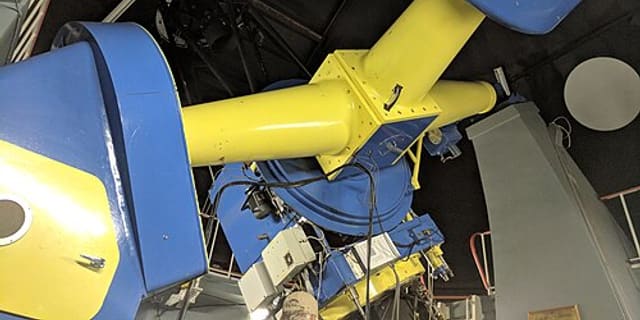
Image: Wikimedia Commons
MeerLICHT is a fully robotic optical telescope at the Sutherland station of the South African Astronomical Observatory, built to watch the sky in visible light at the same time as one of the world's leading radio telescope arrays.
About MeerLICHT
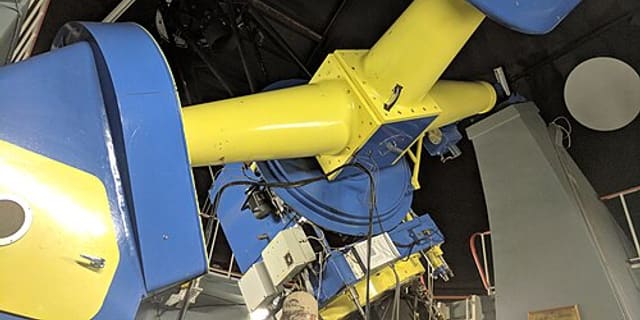
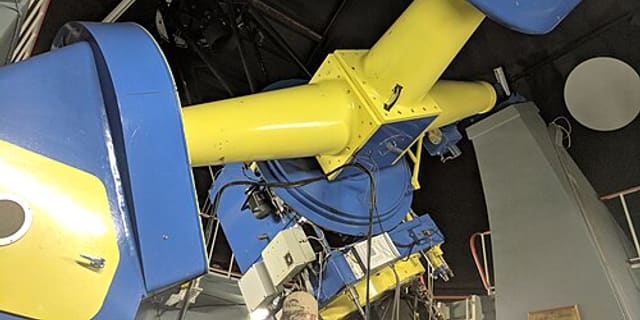
MeerLICHT is a 0.65-metre robotic telescope with a wide 2.7 square degree field of view, deliberately matched to that of the MeerKAT radio telescope, a precursor to the Square Kilometre Array. Its purpose is to provide a simultaneous optical view of the same patch of sky that MeerKAT is scanning for radio transients, helping astronomers connect radio signals with visible-light counterparts in real time.
History
The telescope arrived at Sutherland on July 7, 2017, and was formally inaugurated on May 25, 2018 — Africa Day — by South Africa's Director General of the Department of Science and Technology. The project is run by an international consortium including Radboud University Nijmegen, the University of Cape Town, the Netherlands' NWO, the South African Astronomical Observatory (SAAO), the University of Oxford, the University of Manchester, the University of Amsterdam, SARAO, the European Research Council, and NOVA.
Location & getting there
MeerLICHT sits at the Sutherland site in the semi-desert Karoo region of South Africa, considered one of the darkest astronomical sites in the world and home to several major telescopes run by SAAO.
Visiting MeerLICHT
As a fully robotic instrument, MeerLICHT itself is not designed for in-person viewing, but the Sutherland site as a whole welcomes visitors through SAAO's public tour programme. Check SAAO's official website for current tour times and tickets.
See your named star from here
MeerLICHT's whole purpose is scanning the sky by precise coordinates, a perfect illustration of how a named star's exact right ascension and declination, found in the star catalogue, can be used to pinpoint it among the stars.
Opening hours and public-visit programs vary by season. Check the official website and Google Maps for current times before you travel.
Institutional and reference sources used to verify this guide.
Satellite imagery: Esri, Maxar, Earthstar Geographics

 under 1 km
 under 1 km
 under 1 km
ATLAS–SAAO observatory
astronomical observatory at Sutherland Observatory in South Africa